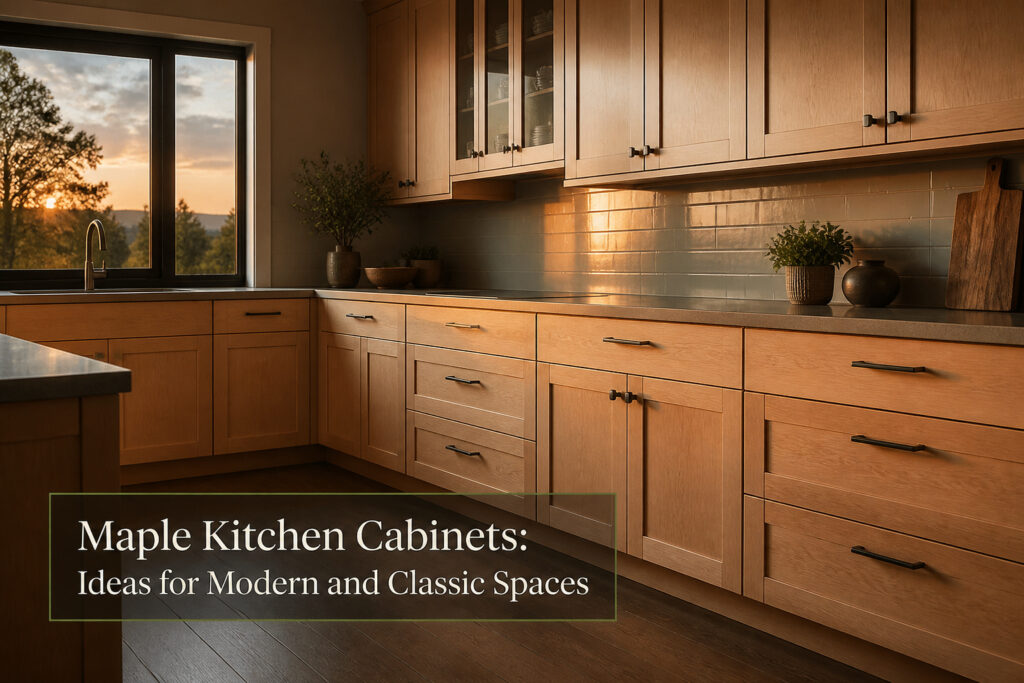
Maple kitchen cabinets are hardwood storage units built from a tight-grained, pale wood that sits between oak and cherry in both price and hardness.
The catch is that same density: scratches telegraph visibly on the smooth face, and the wood yellows under UV light unless you protect it.
Stock maple runs $80 to $200 per linear foot, which puts the warm, quiet grain within reach of most refinishing budgets.
Modern Maple Kitchen Cabinets
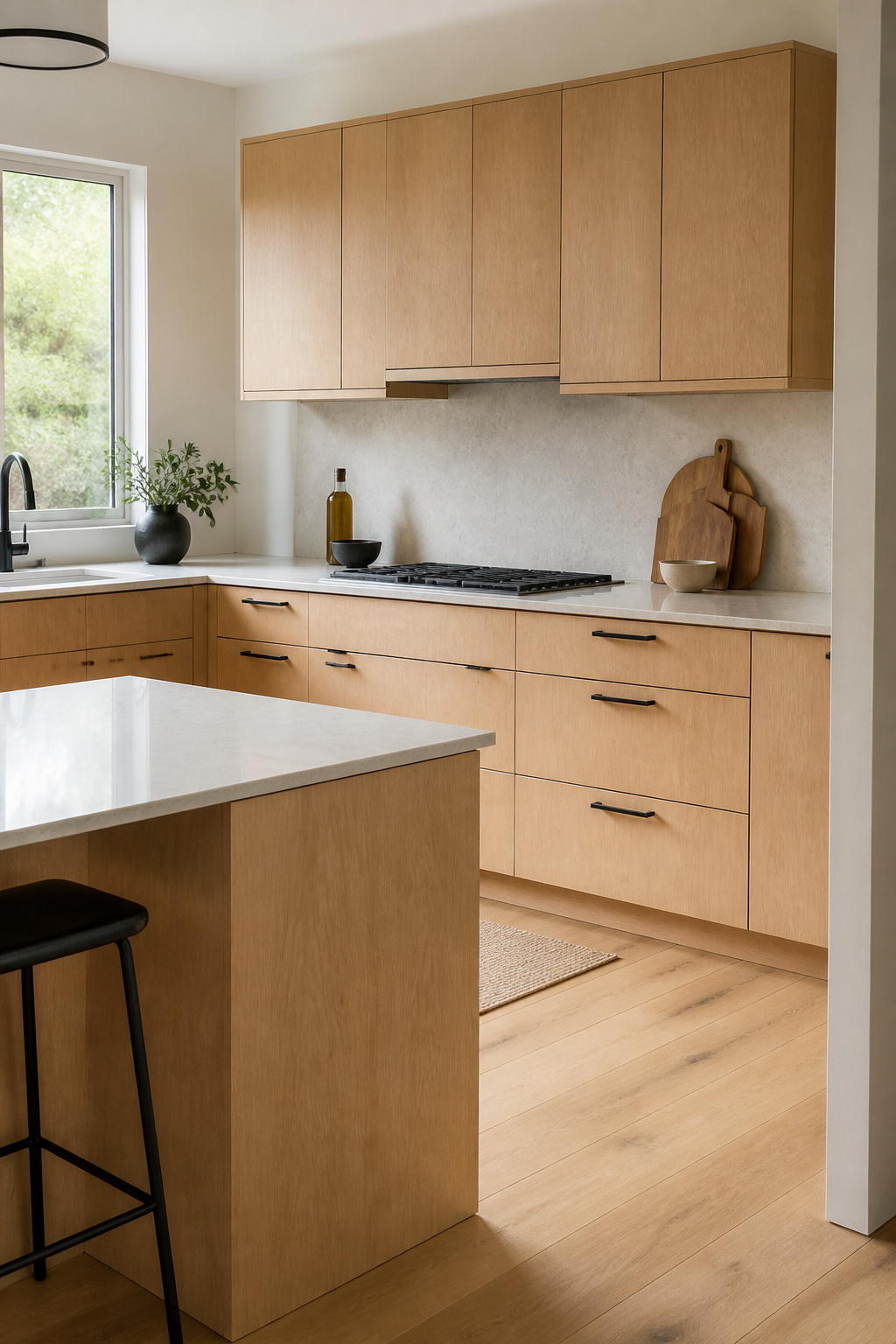
Flat-panel maple doors read as modern because the wood itself does the only decorating.
I learned this the hard way after swapping raised-panel fronts for slabs in a rental kitchen: the grain stayed quiet, the lines stayed clean, and the room finally felt like one continuous surface rather than a grid of frames.
A light stain works here, or a painted finish in white or gray if you want the maple to disappear entirely behind a sleek shell.
Quartz or marble countertops pair cleanly with either treatment; the flat planes talk to each other across the room. For hardware, black handles or knobs give the warm maple a deliberate edge without fighting the minimalism.
I skipped the chrome on that rental after seeing how black pulled the cabinets toward contemporary rather than transitional.
Soft maple carries this look fine for most kitchens, though hard maple holds up longer if the cabinets see heavy daily use. Ten years is a reasonable lifespan with regular cleaning, mild detergent and water, dried thoroughly afterward.
Recommended Products

Premium Solid Maple Wood: Crafted from 100% solid maple for lasting durability. Smooth-sanded and splinter-free, ideal for painting, staining, or sealing. The perfect upgrade for high-end cabinet refacing or DIY projects

VARIOUS UTILITY USES: The rotating swivel turntable works great for monitors,computers, TV screens,cake making or decorating, pottery making, floral designs,Statues, large house plants, bonsai tree, stereo speakers, and anything that needs to rotate objects scenes.
Contemporary Two-Tone Maple Cabinets
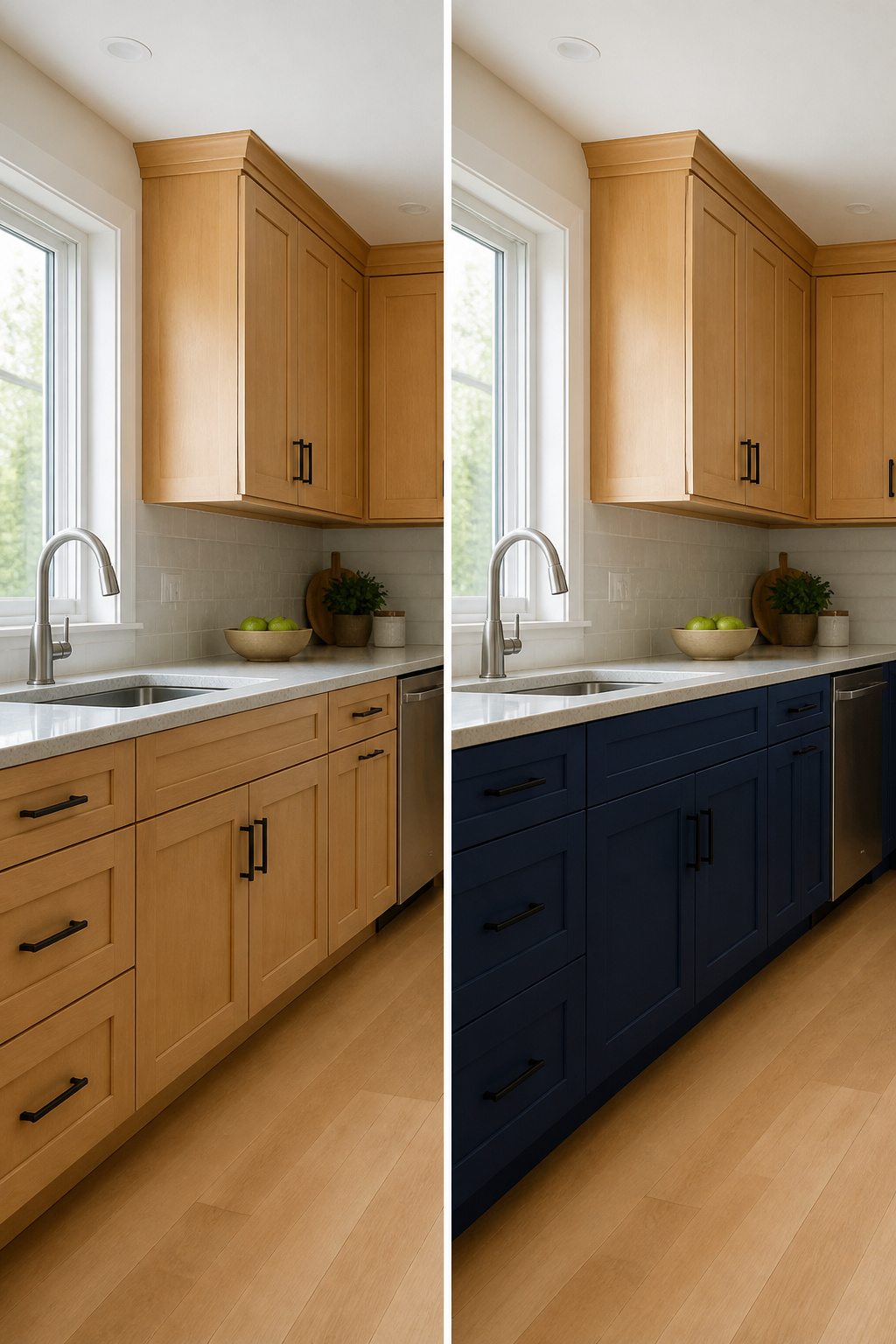
Two-tone maple cabinets lean on contrast to keep the warmth from going flat. The common move runs natural maple uppers against painted lowers or a painted island, often in navy, charcoal, or black.
Black hardware sharpens the edge even further and keeps the look current rather than country.
Floor choice matters more than people expect. The same undertone rule applies: warm maple wants warm or neutral flooring, though a shade or two lighter or darker keeps it from matching into boredom.
Slate grey works if you want the contrast loud, but most kitchens read calmer with the undertones aligned.
What sold me on this pairing, reading through enough of these builds, is how the painted element lets you shift the mood without touching the uppers.
Renters especially win here; the island can be a later swap or a repaint while the maple boxes stay put.
Recommended Products

Soft Close Hardware - Protect your cabinet from wear and tear with the help of our soft close hardware. Enjoy a quiet and gentle close every time.

Size Information: Single Hole Knobs, Overall length: 3-1/10inch(32mm). Please measure and confirm the SIZE of the replaceable cabinet handles you need before purchasing.

Size Information: Hole centers: 5inch(128mm); Overall length: 6-1/10inch(155mm). Please measure and confirm the SIZE of the replaceable cabinet handles you need before purchasing.
Natural Maple Kitchen Cabinets
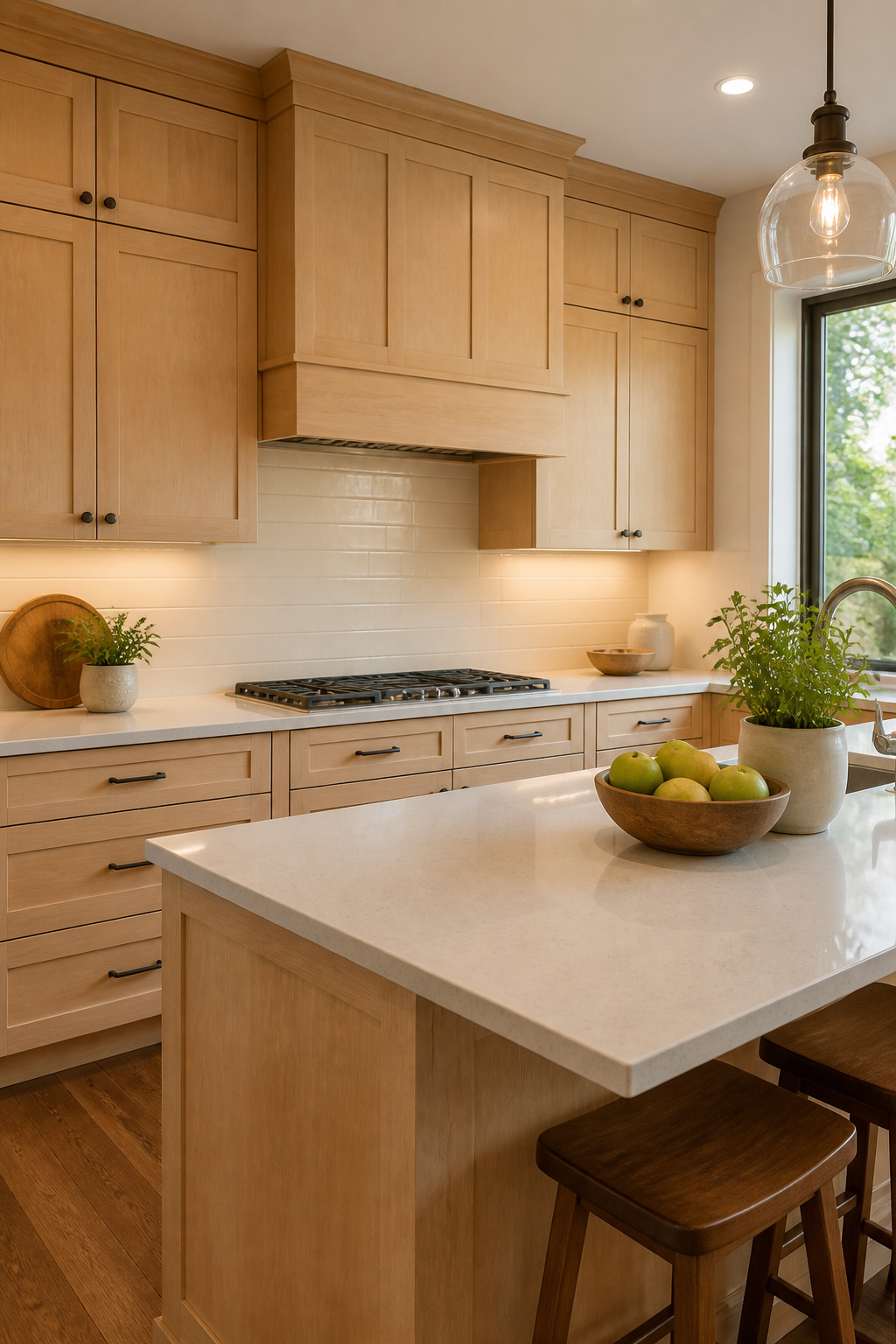
A clear finish on maple does something paint never quite manages: it lets the wood’s own character stay visible without shouting. The grain stays subtle, almost shy, and the fine texture reads as smooth even from across the room.
That uniformity is what makes natural maple feel calm rather than busy in a kitchen.
The durability matters more than the looks over time.
Maple ranks slightly stronger than oak as a hardwood, and it handles the temperature swings and humidity shifts that kitchens throw at it without the warping or cracking that softer woods risk.
A natural finish also ages differently than stained oak; the patina shifts toward golden tones slowly and gently, never hitting the orange cast that sends people searching for cabinet paint.
Ten years is a reasonable lifespan for natural maple cabinets kept with ordinary care. Wiping them down with mild dish soap and water, then drying thoroughly, is enough to protect the finish.
Skip the maintenance and the timeline shrinks, but the wood underneath is forgiving enough that refinishing is usually an option when the surface finally wears.
Recommended Products
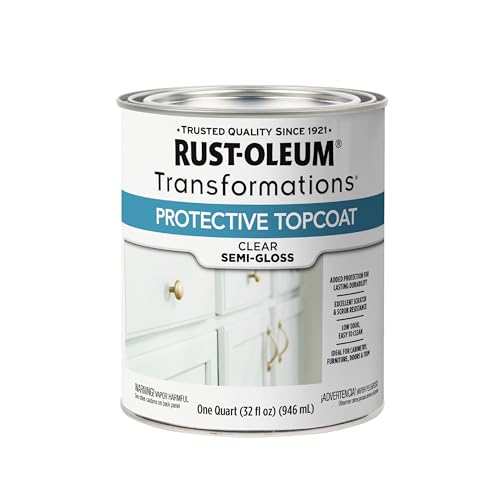
SCRATCH & STAIN RESISTANT PROTECTION: Resistance to everyday scratches and stains, providing a durable protective layer for interior painted, stained, or bare wood surfaces

SPECIALLY FORMULATED FOR DEEPER PENETRATION: Our small particle size wood filler gel formula penetrates and seals pores and grains, minimizing topcoat absorption to help achieve a glass-smooth finish with fewer coats.
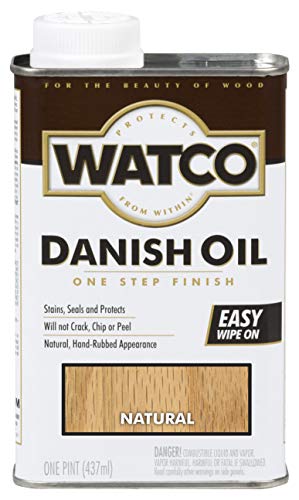
Ideal for use on a variety of indoor wood surfaces including bare, stripped or sanded; not recommended for floors
Light Maple Cabinets for Small Kitchens
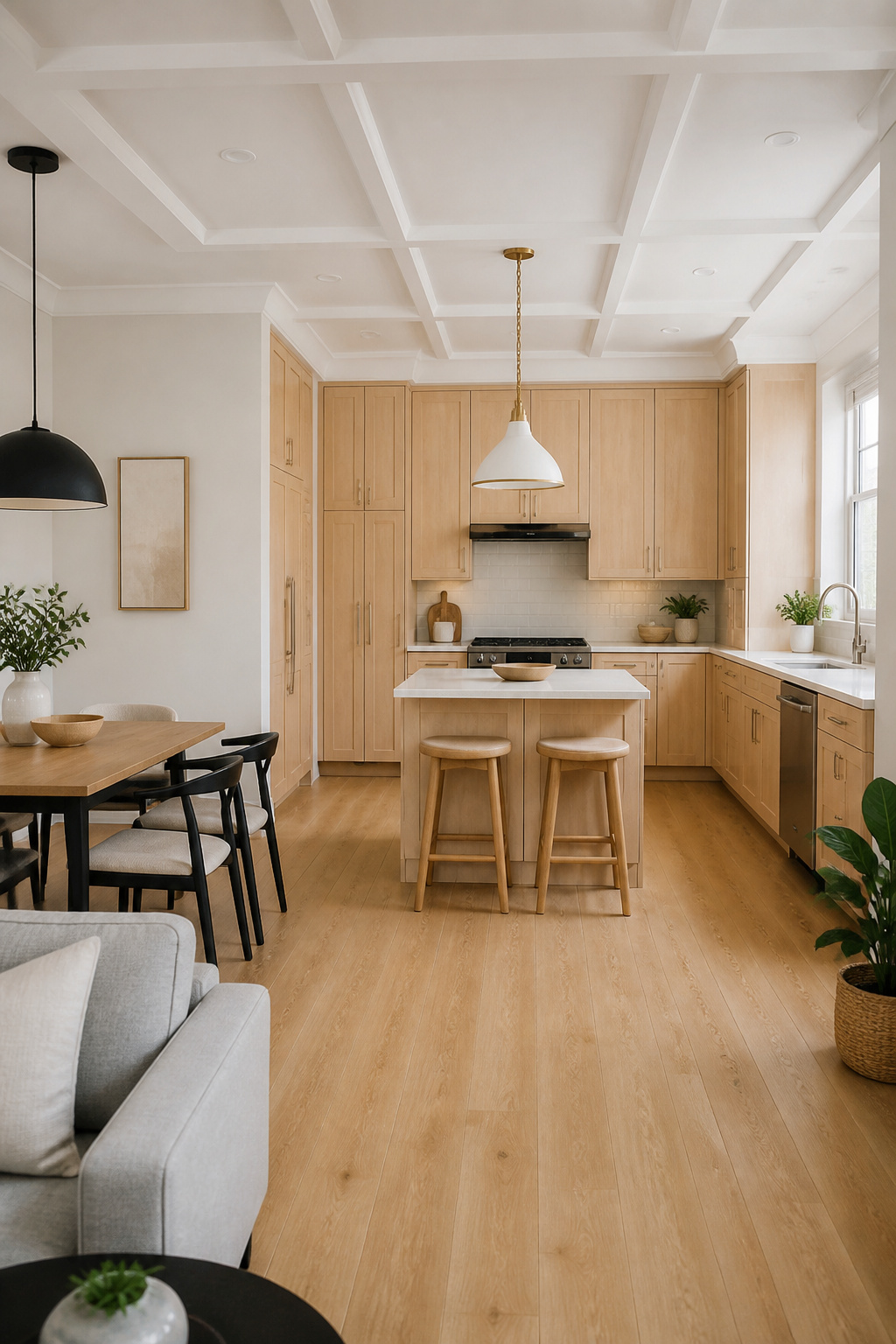
Pale maple cabinets carry enough warmth to keep a kitchen from feeling sterile, but their real strength in a small space is how they handle light.
The tone sits light enough to prevent a cave-like effect while still reading as finished wood, not a painted-over compromise.
In a darker kitchen or one with a single window, that reflectivity buys you visual square footage you do not actually have.
I used to assume small kitchens needed white everything to feel open. What changed my mind was noticing how flat white can turn shadowy corners into dead zones, whereas pale maple catches and softens the same light.
The grain adds just enough movement to keep the eye traveling, which reads as space.
The ceiling matters as much as the cabinets. A coffered ceiling works wonders here by drawing the eye upward and breaking the boxy feeling of a tight room.
Pair that overhead structure with pale maple below, and the kitchen feels layered rather than cramped. The wood keeps it from reading as a blank loft, the ceiling keeps it from feeling like a galley with nowhere to look.
If your kitchen is both small and north-facing, this is the maple tone to start with. Darker stains absorb what little light you have; painted cabinets can feel flat.
Pale maple splits the difference, and the difference is usable space.
Recommended Products

One Mohawk Finishing Products Pro-Mark Capillary Marker in Antique Maple M267-0194 for furniture and wooden surfaces

【Premium Solid Wood & Handcrafted Durability】Made from natural solid pine wood, this real wood mantel shelf is hand-finished for exceptional sturdiness and resistance to cracking. The floating fireplace mantel features a smooth, scratch-resistant surface that maintains its rustic charm for years, making it a timeless addition to your home
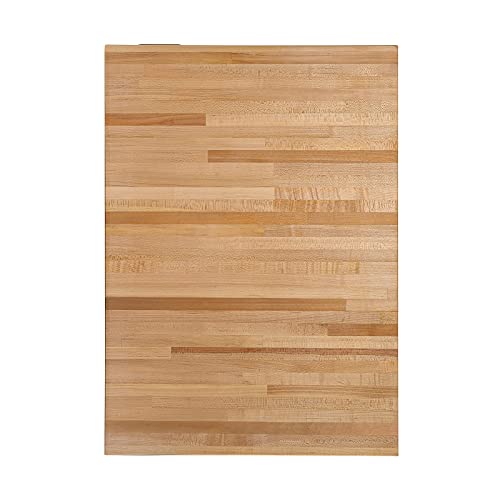
USA Grown Hardwood: Only made from USA grown hard maple solid wood.
Honey Maple Cabinets
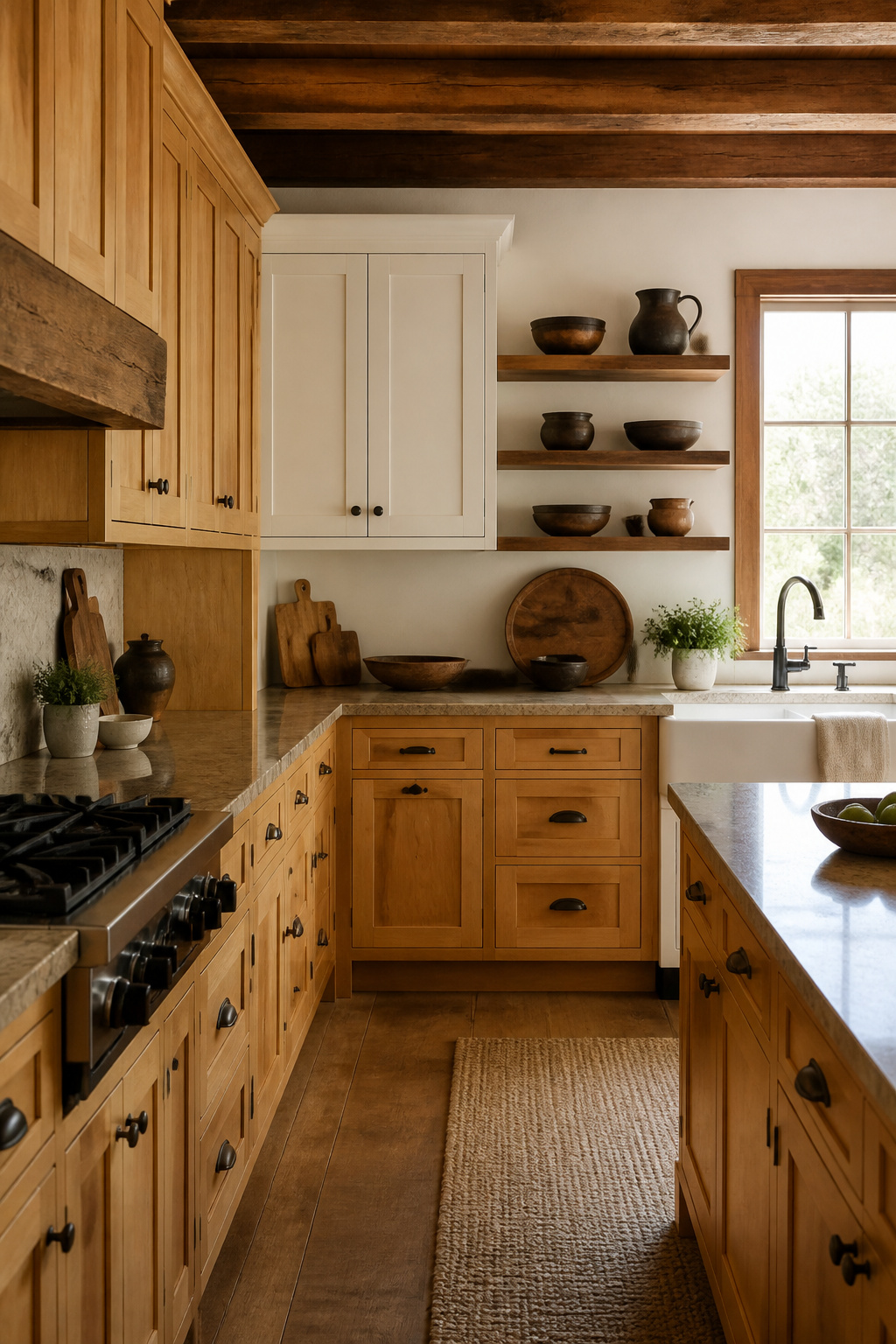
Honey maple carries a warmth that reads as lived-in rather than staged, and that makes it the go-to tone when you want a kitchen that feels like it has history.
The color sits in the middle of the maple range, amber without drifting orange, and it does its best work in spaces that borrow from rustic or traditional design rather than fighting toward sleek minimalism.
In a rustic setting, honey maple plays well against the heavier elements that define the look. Wood beams overhead, open shelving in a darker stain, and black hardware all settle in beside it without clashing.
Some kitchens break up the honey tone with a few white cabinets for contrast, which keeps the space from feeling like a cabin in the woods and nudges it toward that modern country balance that works in suburban homes and small towns alike.
The earthy palette, honey maple included, is what lets those rustic touches feel intentional rather than themed.
Recommended Products
365-Day Evaluation: We believe you'll value these cabinet knobs. Use them for a full year, and if they don't meet your needs, we're here to assist

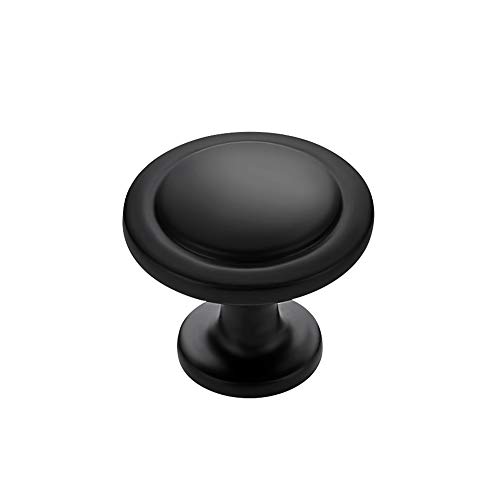
Measurement: Single Hole Cabinet Knob, Top Diameter: 1.18inch(30mm); Base Diameter: 0.5in (15mm); Height: 0.86 inch(22mm)

365-Day Evaluation: We believe you'll find value in your Ravinte handles. Use them for a full year, and if they don't meet your needs, we're here to help
Shaker Maple Cabinets
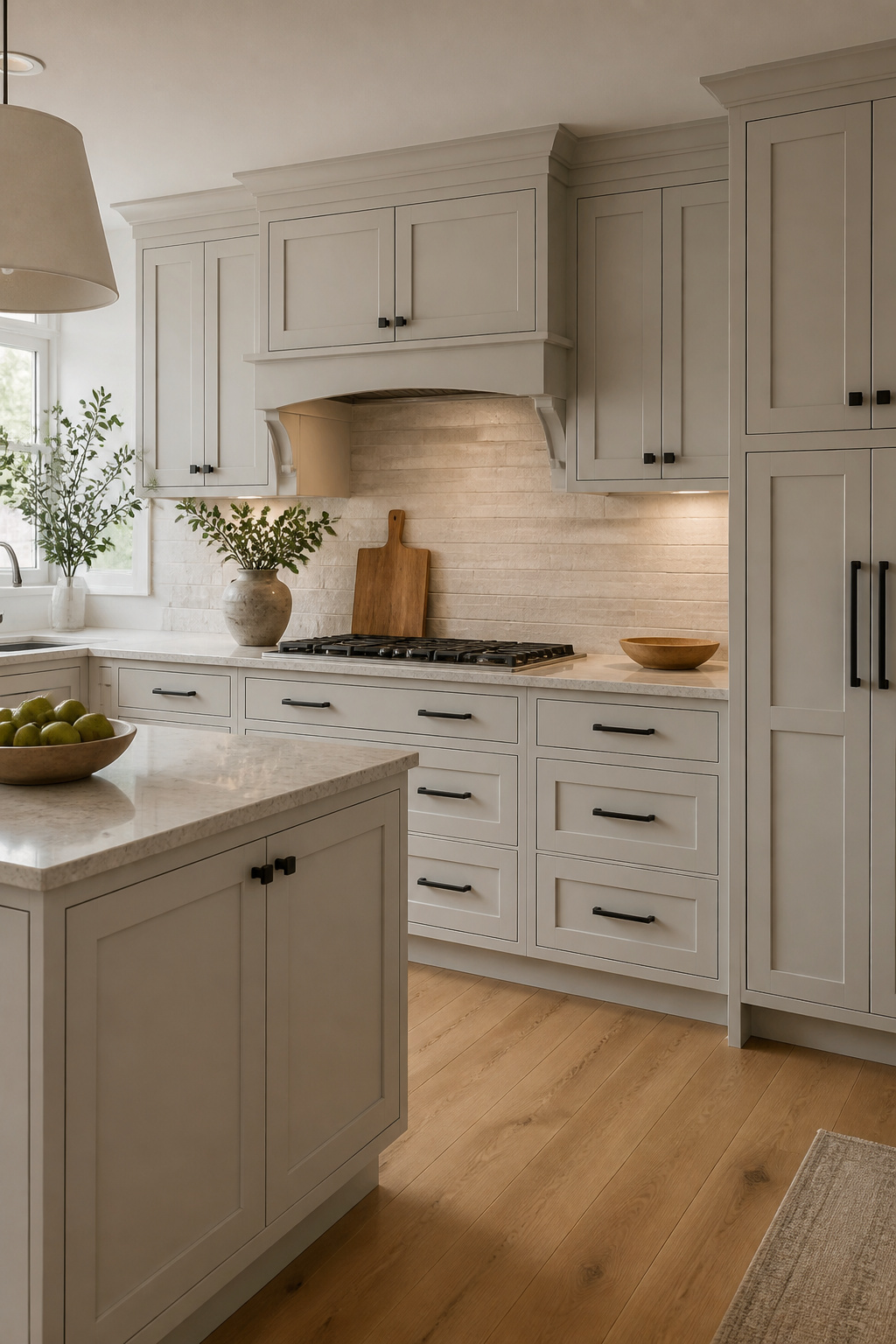
The five-piece door is what makes a Shaker cabinet recognizable: a flat center panel sits inside a frame of four rails and stiles with clean, square edges and no decorative beveling.
That simplicity is why the style has stayed current since the 1800s while raised-panel doors with arched tops now read as dated.
In maple, the Shaker profile gains a warmth that keeps it from feeling sterile, but the lines are still crisp enough for a kitchen that leans modern.
Painted finishes on maple Shaker cabinets have overtaken stained ones in recent years, with white and grey leading the choices.
The wood takes paint smoothly, and the flat panel shows color evenly without the shadow lines you’d get from more elaborate routing.
Black hardware against white or grey painted maple has become a common pairing; the contrast reads as intentional rather than trendy, and it balances maple’s natural warmth with something sharper.
What convinced me, reading through the trends, is that Shaker maple works across kitchen types without forcing a full style commitment.
The same cabinets read traditional with a wood stain and oil-rubbed bronze pulls, transitional with grey paint and nickel, or contemporary with a slimmed-down rail and matte black.
That flexibility matters for a project done on a weekend budget; you’re not boxed into one look if your taste or your home’s architecture shifts later.
Recommended Products

VARIOUS UTILITY USES: Rotating swivel turntable works great for monitors,computers, TV screens,cake making or decorating, pottery making, floral designs,Statues, large house plants, bonsai tree, stereo speakers, and anything that needs to rotate objects scenes.

STYLISH STORAGE SOLUTION - This two-door storage cabinet enhances your home decor while providing essential storage for kitchen essentials and craft supplies

Walnut Contact Paper and 3D Wall Panels: 17.71" X 236" each roll. Thick material, durable, waterproof and easy to clean
Painted Maple Cabinets
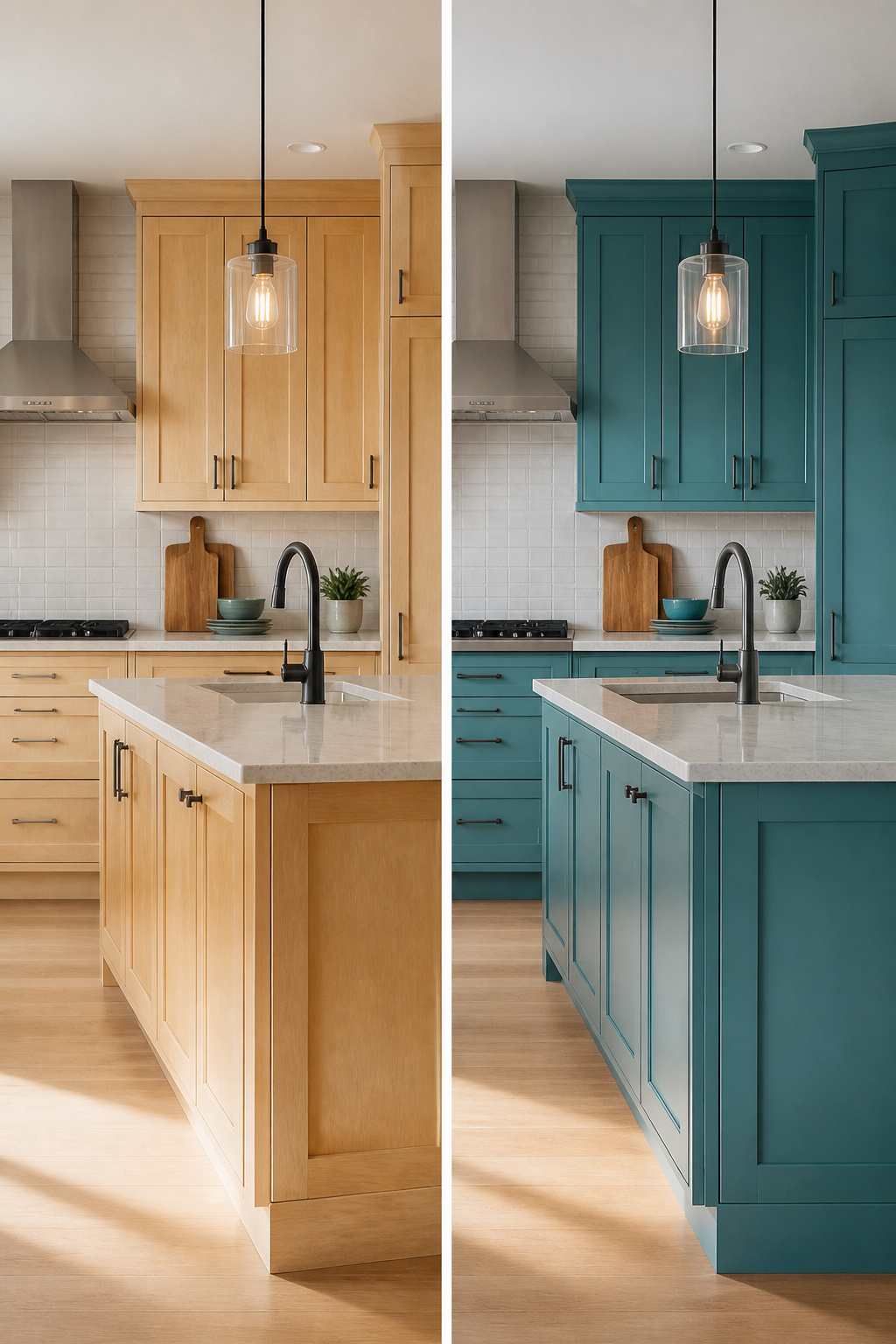
Maple’s tight, even grain is what makes it one of the better woods to paint yourself.
The surface takes paint smoother and shows less texture than an open-grained wood like oak, so you get that clean, factory-finished look without the factory.
The colors I see ordered most often are American White, Chantilly Lace, White Dove, and Aegean Teal, all by Benjamin Moore.
The three whites read slightly different in morning light: American White runs warm, Chantilly Lace stays crisp, and White Dove sits in between with a soft gray undertone.
Aegean Teal is the outlier, a deep blue-green that pairs well with brass hardware and still feels bright rather than heavy.
A kitchen I came across used it on maple cabinets against white walls, and the wood grain barely showed through, just enough to keep the color from looking flat.
If you are refreshing cabinets from an older home, maple is likely what you already have. It was popular in previous decades, and painting beats replacing when the boxes are still solid.
Recommended Products

Size Information: Single Hole Knobs, Overall length: 3-1/10inch(32mm). Please measure and confirm the SIZE of the replaceable cabinet handles you need before purchasing.

Size Information: Hole centers: 3-3/4inch(96mm); Overall length: 4-13/16inch(123mm). Please measure and confirm the SIZE of the replaceable cabinet handles you need before purchasing
Size Information: Single Hole Knobs, Overall length: 3-1/10inch(32mm). Please measure and confirm the SIZE of the replaceable cabinet handles you need before purchasing.
Stained Maple Cabinets
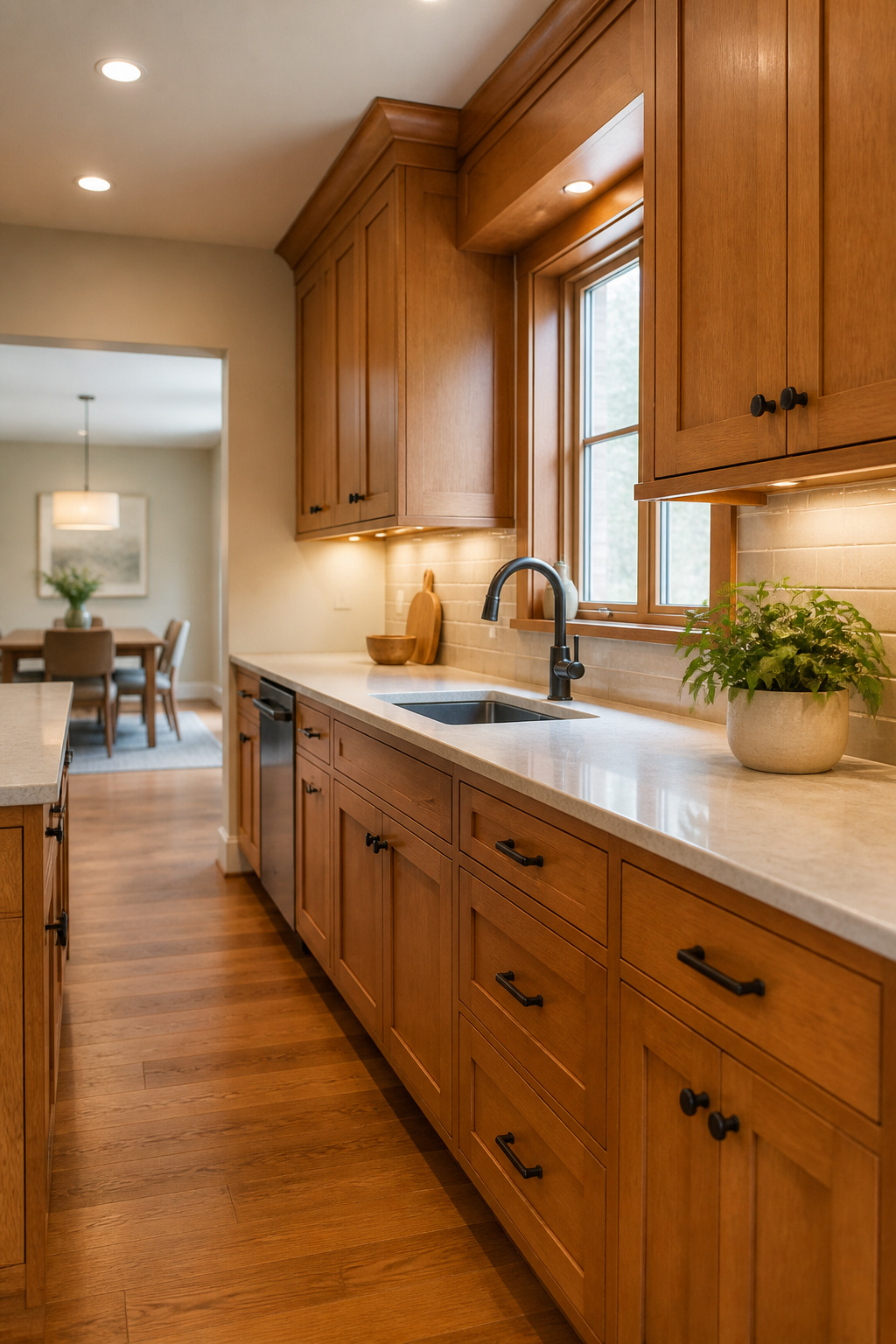
Staining maple asks more patience than oak because the grain is tight and closes up in spots, so the color goes down blotchy if you rush it.
A wood conditioner, applied first and given time to penetrate, is the usual fix; without it, the same can of honey stain pools on one door and fades on the next.
Honey, espresso, and gray are the stains showing up most now, with about one in five homeowners choosing a stained maple finish over paint or a natural clear coat.
Honey still reads warm but the current versions are softer than the orange-tinged cabinets from fifteen years ago. Espresso works for kitchens where you want the wood to disappear into something darker without the flat look of paint.
Gray stains, driftwood and warm greige among them, have pulled ahead of amber tones for anyone trying to cool down a kitchen that gets too much yellow light.
The neutral stains are the ones that keep maple worth buying in the first place.
Something like the Terrance line, a clear stain with a soft even tone, lets the grain stay visible while pairing with either white countertops or stone and with brass or matte black hardware either way.
That flexibility matters if you are choosing hardware after the cabinets are in and the light hits them differently than you expected.
Recommended Products

Eco-Friendly, Low VOC: Green Wise Certified. Crafted with an ultra-low VOC formula, our 16oz clear coat keeps your creative space fresh and inviting. Enjoy sealing your projects without worrying about harsh smells or chemicals.

Formulated with polyurethane and acrylic resins in a single, easy-to-use solution, this wood coating delivers enhanced scratch resistance and weatherproof performance for long-lasting wood protection
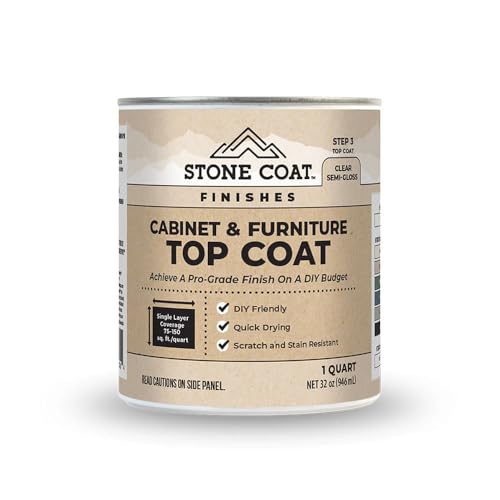
Durable Semi-Gloss Protection: Enhance the longevity of your paint job with a clear, non-yellowing semi-gloss finish that resists chips, stains, scratches, and peeling for years of protection.
Rustic Maple Cabinets
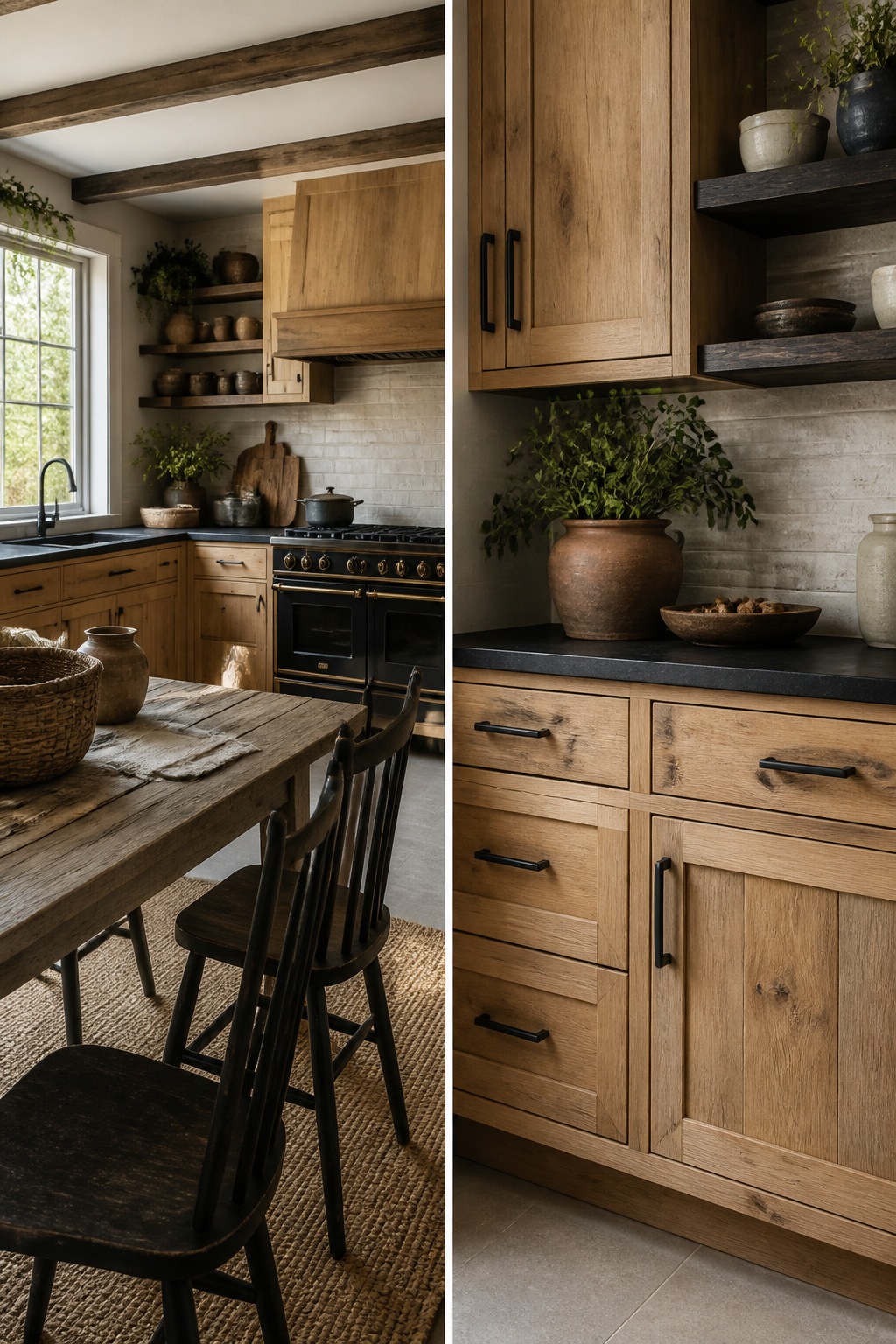
Rustic maple cabinets work because the wood itself is light enough to keep a kitchen from feeling closed in, yet the natural grain still reads warmth. The trick is in the finish, not the species.
Modern construction holds the clean lines and square joints, but a distressed or weathered surface treatment ages the look instantly.
What separates a convincing rustic kitchen from costume-drama territory is mixing wood tones deliberately. A varied maple palette across base cabinets, uppers, and the island keeps the eye moving so nothing feels staged.
Wood beams overhead or open shelving in a darker stain do more than decorate; they break up the single-tone risk that makes some maple kitchens feel flat.
Black hardware against the lighter wood adds contrast without shouting, and a few painted cabinets, maybe a run of white uppers, keep the mix from turning into a hunting lodge.
The result reads more suburban farmhouse than cabin in the woods, which is where most of us actually live.
Recommended Products

A Versatile Shelf for Every Need — This 72-inch rustic decorative fireplace mantel is ideal for showcasing anything from books, awards and candles to cherished photos. Create a stunning display by placing a wall-mounted mirror,it elevates your living space

Floor Repair Kit Wide Applications: Wood Floor Repair Kit is suitable for all types of wooden furniture, including furniture, flooring, cabinets, tables, doors, etc. Using furniture repair kit for home restoration is a simple and effective way.
【Premium Solid Wood & Handcrafted Durability】Made from natural solid pine wood, this real wood mantel shelf is hand-finished for exceptional sturdiness and resistance to cracking. The floating fireplace mantel features a smooth, scratch-resistant surface that maintains its rustic charm for years, making it a timeless addition to your home
Monochromatic Maple Kitchens
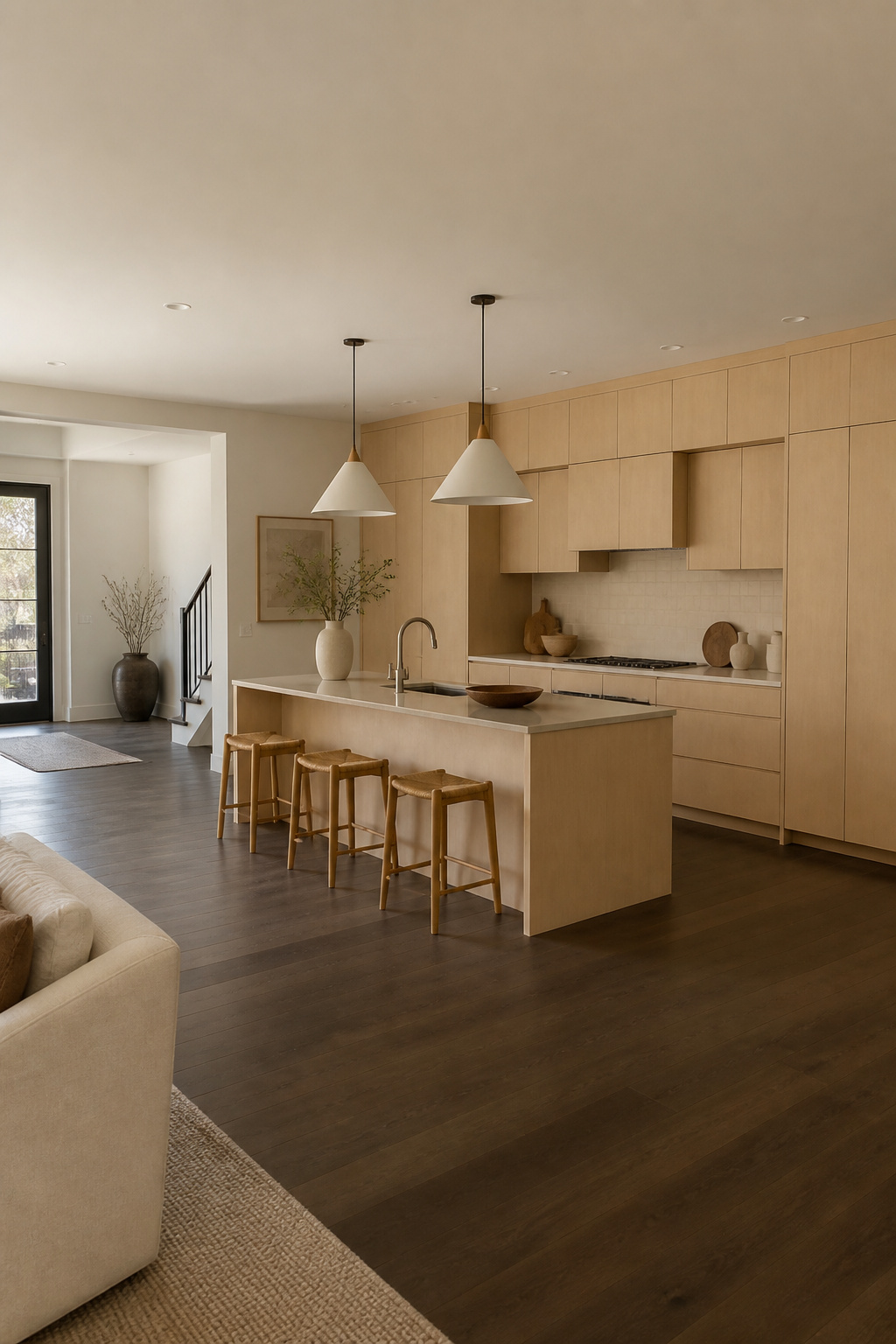
A single-tone kitchen asks the cabinets to do the heavy lifting, and maple answers better than most woods because its grain is quiet.
When the walls, floors, and countertops all sit in the same warm family, the cabinets read as built-in architecture rather than furniture that wandered in. The trick is keeping the values close enough that nothing jumps forward.
I have seen kitchens where the maple and the paint were technically the same hue but two steps apart in lightness, and the result felt off in a way the owner could not name.
Bring samples home and look at them in morning light and after dark; the same greige reads peach at noon and mud at six.
For countertops, a honed limestone or a matte quartz in a tone that matches the cabinet’s lightest streak usually works. The floor can go a shade darker for grounding, but keep the undertone identical.
A yellow-based maple against a pink-based tile will fight all day. The payoff is a room that feels larger than it is, because the eye travels without stopping on contrast.
Renters especially benefit here: one continuous skin makes cheap appliances and dated backsplashes disappear into the whole.
Recommended Products

STYLE: Easily update your kitchen and bathroom cabinets or furniture with our casual cabinet hardware collection.

Unparalleled Customer Care: If you have any questions before or after your purchase, feel at ease to reach out to us

100-Day Evaluation: We're confident you'll appreciate the craftsmanship of the Ravinte knobs. Enjoy using it, and if it doesn't meet your expectations, we're here to assist
What Maple Cabinets Cost
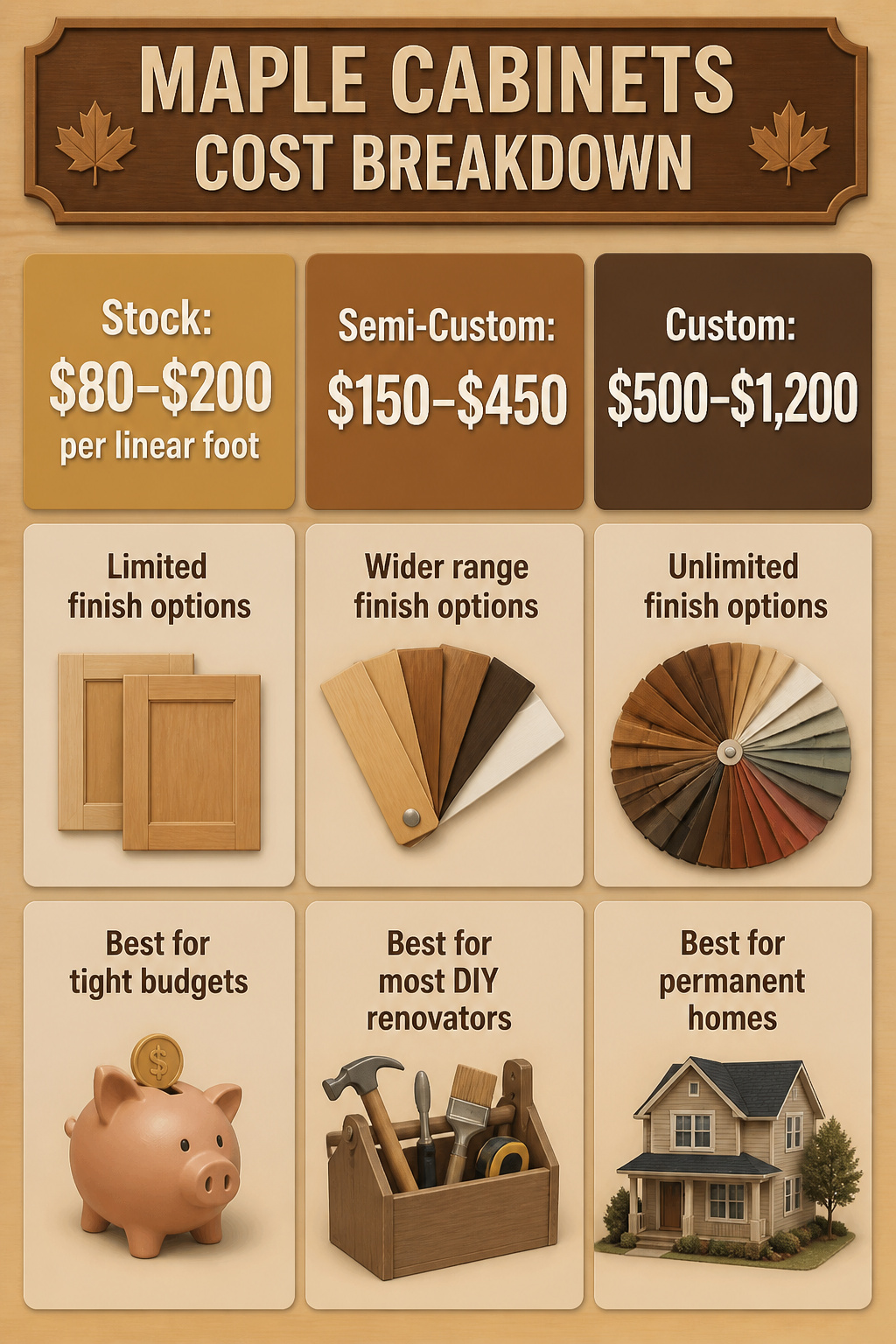
Stock maple cabinets run $80 to $200 per linear foot, which puts them in reach for most weekend budgets. Semi-custom jumps to $150–$450, and custom work lands anywhere from $500 to $1,200 depending on how far you push the joinery and finish.
Maple sits mid-range among hardwoods: it costs more than oak but less than cherry or walnut, which makes it a practical compromise when you want the grain without the sticker shock of darker species.
| Stock | Semi-Custom | Custom | |
|---|---|---|---|
| Price per linear foot | $80–$200 | $150–$450 | $500–$1,200 |
| Finish options | Limited | Wider range | Unlimited |
| Best for | Tightest budgets | Most DIY renovators | Permanent homes |
If you are renting or planning to sell in five years, stock or semi-custom stained maple gives you the look without overcapitalizing.
Custom only earns its price if you are staying long enough to care about exact drawer depths and a finish that matches your floor down to the undertone.
Countertops That Work With Maple
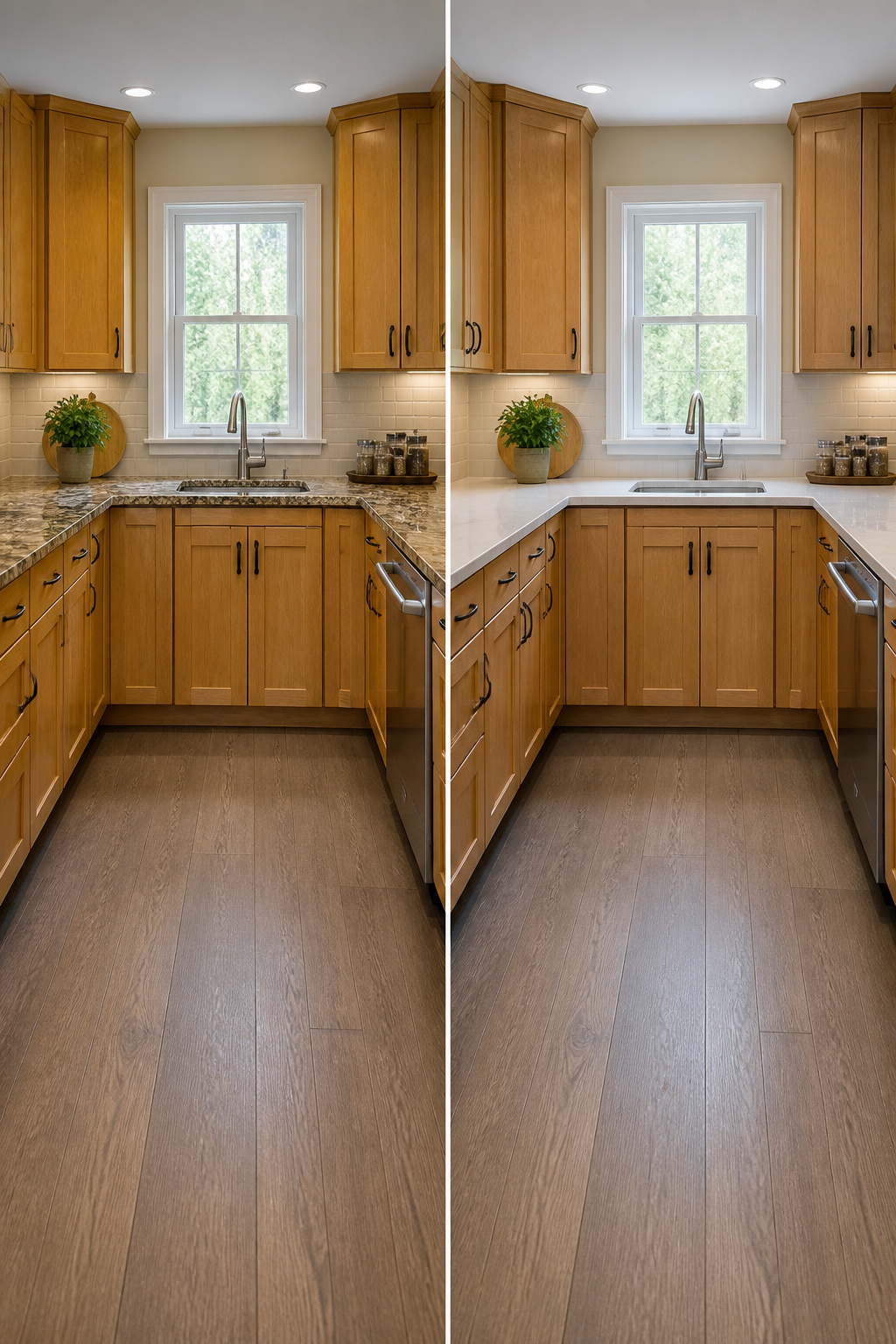
White quartz or marble countertops against maple cabinets give a kitchen that clean, open feeling without fighting the wood’s natural warmth.
The reflective surface bounces light around, which matters more than I expected in smaller spaces where every inch of visual breathing room counts.
Gray tones hit a different note. Because gray sits closer to blue on the color wheel, it cools down maple’s warmth without turning the room cold.
A light to medium gray stone keeps the palette quiet and lets the grain stay the focus.
I have seen this pairing go flat when the gray gets too dark or too brown; the contrast starts to compete instead of balance.
For painted maple in white or gray, the same rule holds. A cool countertop against those cabinets reads fresh and traditional, especially with wood flooring underneath to keep the space from feeling sterile.
The neutral stain options that are outperforming traditional wood finishes right now, like Decor’s Terrance, were designed for exactly this flexibility.
They pair as easily with white countertops as with stone, and they work with either warm brass or cool matte black hardware without clashing.
Green countertops can work, but only with a slab door style and modern fixtures. Otherwise the effect overwhelms the maple instead of complementing it.
Keeping Maple Cabinets Looking Right
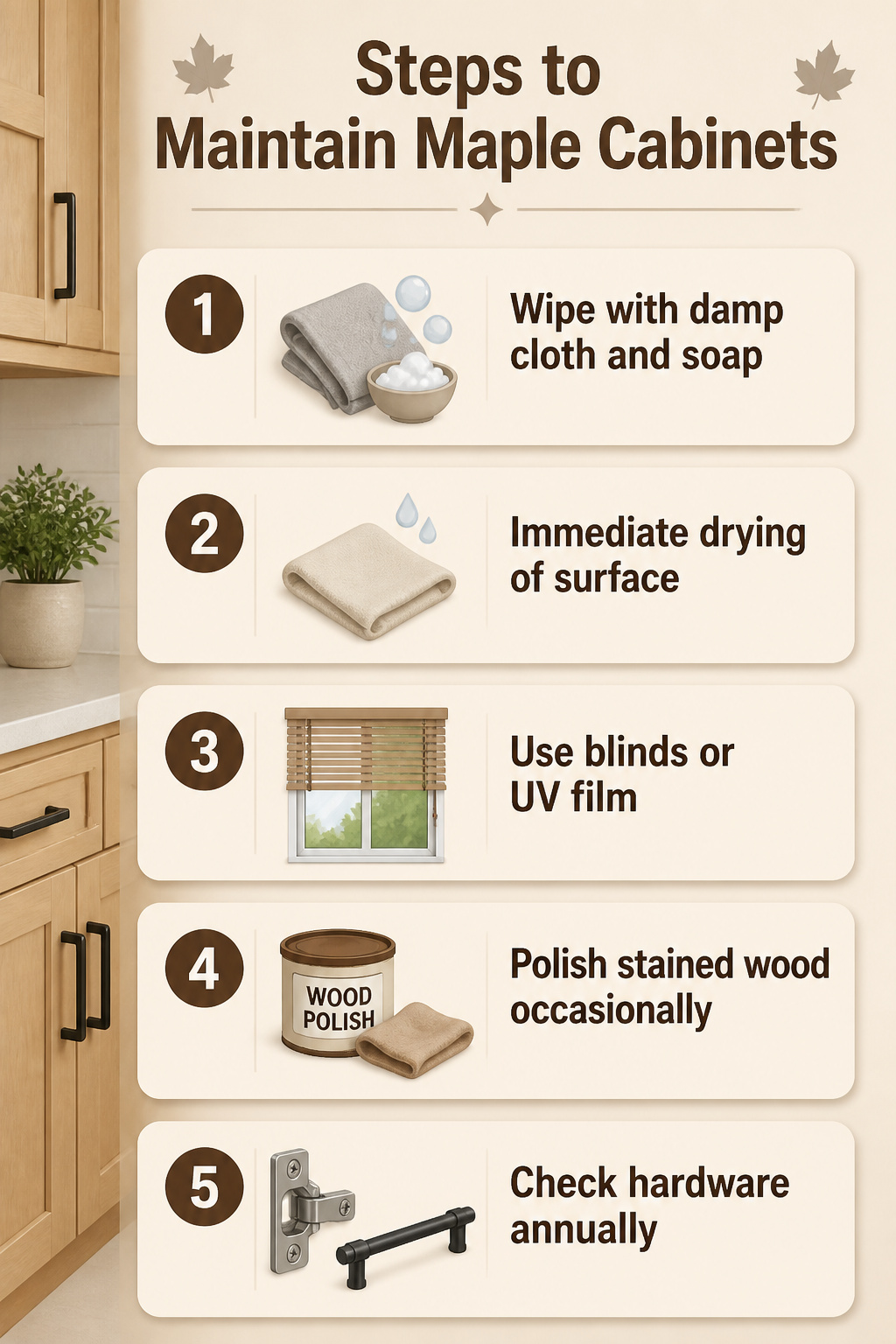
A damp cloth and mild soap are enough for daily cleaning on maple cabinets, dried immediately so water never sits on the surface.
Harsh cleaners strip the finish faster than you’d expect, something I learned the hard way after ruining a cabinet door with an all-purpose spray that was too strong.
UV light is what turns light maple yellow over time, so blinds or UV film on windows near the cabinets pays off.
The yellowing happens slowly enough that you notice it only when you move a toaster and see the original color underneath.
Polishing occasionally keeps stained maple looking fresh, though painted maple needs a lighter hand; the paint film doesn’t take oil-based polishes the same way stained wood does, and you risk a cloudy buildup.
For hardware, especially black handles against light maple, wiping off oil buildup keeps the contrast sharp. Check hinges and drawer slides once a year; loose hardware wears the holes and turns a small fix into cabinet damage.
Problems With Maple Cabinets
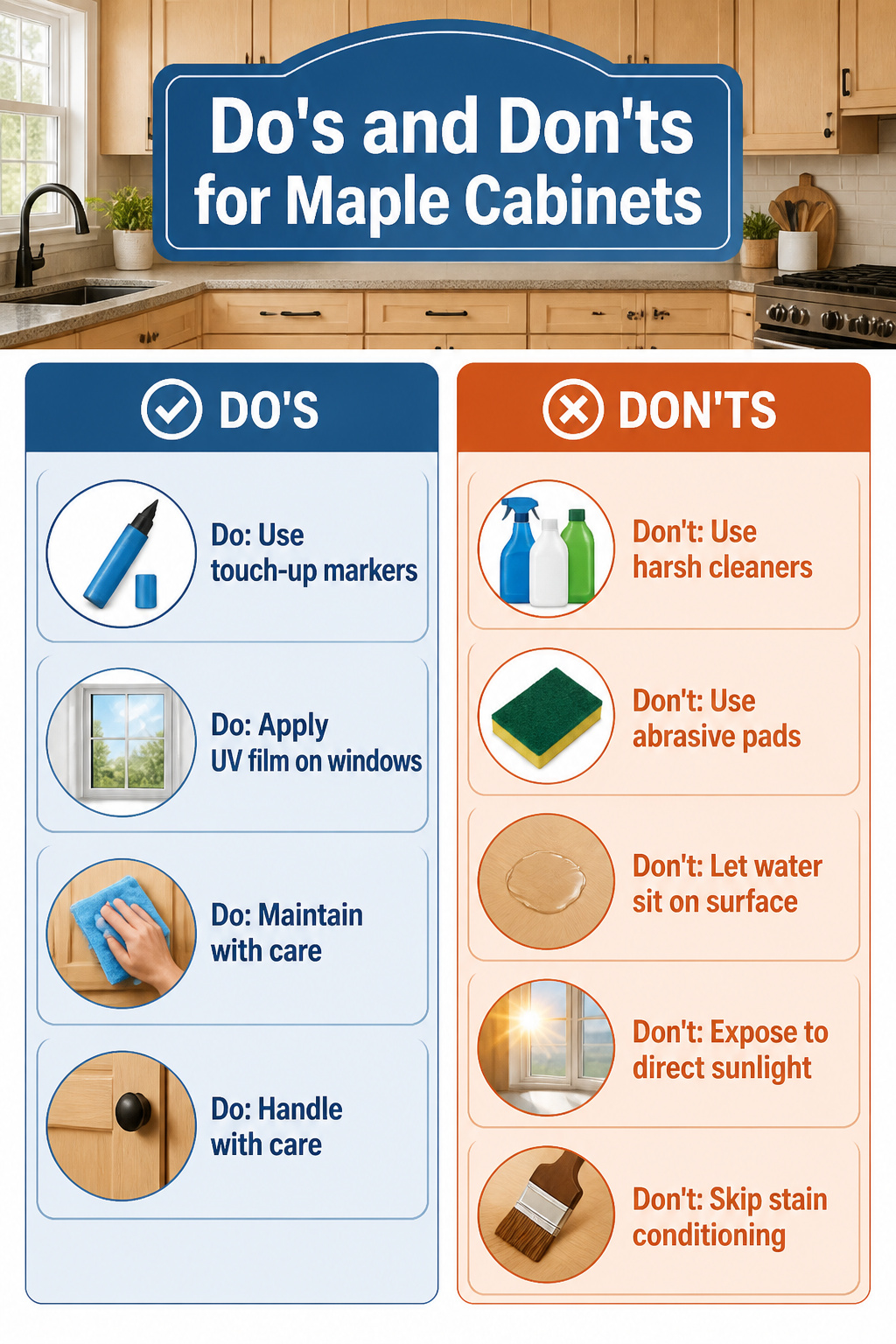
Maple’s tight, uniform grain takes finish beautifully, but that same density creates problems once the cabinets are in daily use. Scratches show up fast on the fine surface, especially around the sink and stove where hands and hardware collide.
The wood is hard enough to resist dents, yet the smooth face turns every nick into a visible line against the light tone.
Sun exposure shifts the color over time, and not in a subtle way. Natural maple yellows noticeably near windows or under strong LED strips, leaving cabinets that once matched looking mismatched across the kitchen.
Staining brings its own trouble: the tight grain doesn’t absorb pigment evenly, so darker stains can read blotchy without a pre-stain conditioner and careful sanding between coats.
I have seen stain pool at joints and dry pale on the flat panels, and fixing it means stripping back to bare wood.
None of this makes maple a bad choice. The same hardness that telegraphs scratches also survives decades of door slams and drawer loads, and the mid-range price holds steady against premium hardwoods.
The trade is accepting maintenance as part of the deal: touch-up markers for surface marks, UV film on south-facing glass, and stain work that demands patience or a professional spray booth.
Frequently Asked Questions
Are maple kitchen cabinets still in style?
u003cpu003eYes. Maple never went out of style; the finishes did.u003c/pu003e u003cpu003eCooler, more neutral stains and paints have replaced the amber, honey-toned looks that once dated the wood, so maple now fits u003ca href=u0022/modern-kitchen-with-cherry-cabinets/u0022u003emodern kitchensu003c/au003e cleanly.u003c/pu003e
What are the benefits of choosing maple cabinets?
u003cpu003eMaple is hard, durable, and takes both stain and paint evenly thanks to its tight, uniform grain. It costs less than cherry or walnut while outlasting softer woods, and its subtle grain reads calm rather than busy in a kitchen.u003c/pu003e
How expensive are maple kitchen cabinets?
u003cpu003eStock maple runs $80 to $200 per linear foot, semi-custom lands at $150 to $450, and custom work ranges from $500 to $1,200. That puts maple in the mid-range among hardwoods: more than oak, less than cherry or walnut.u003c/pu003e