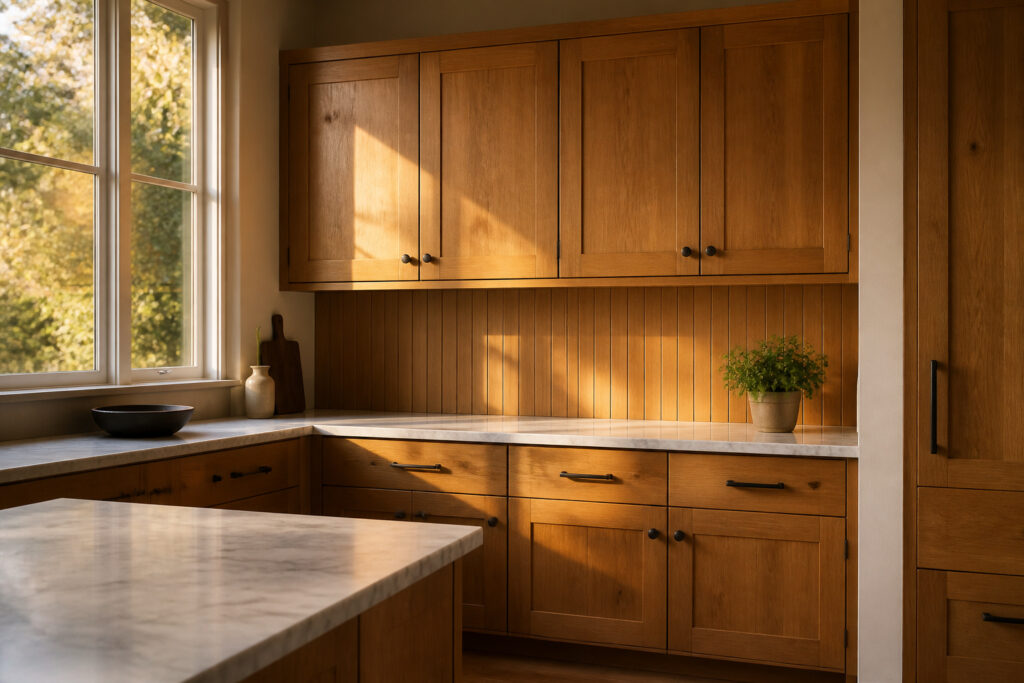
Clear alder kitchen cabinets are the higher grade of alder wood, stripped of knots and burls so the grain stays even and smooth.
That uniformity costs less than cherry or walnut but still reads as deliberate warmth, which is why the species earned its old nickname, "poor man’s cherry."
At 590 on the Janka hardness scale, the wood is soft enough to dent under heavy use, yet those same dents sink into the warm tone and read as patina rather than damage.
Clear Alder
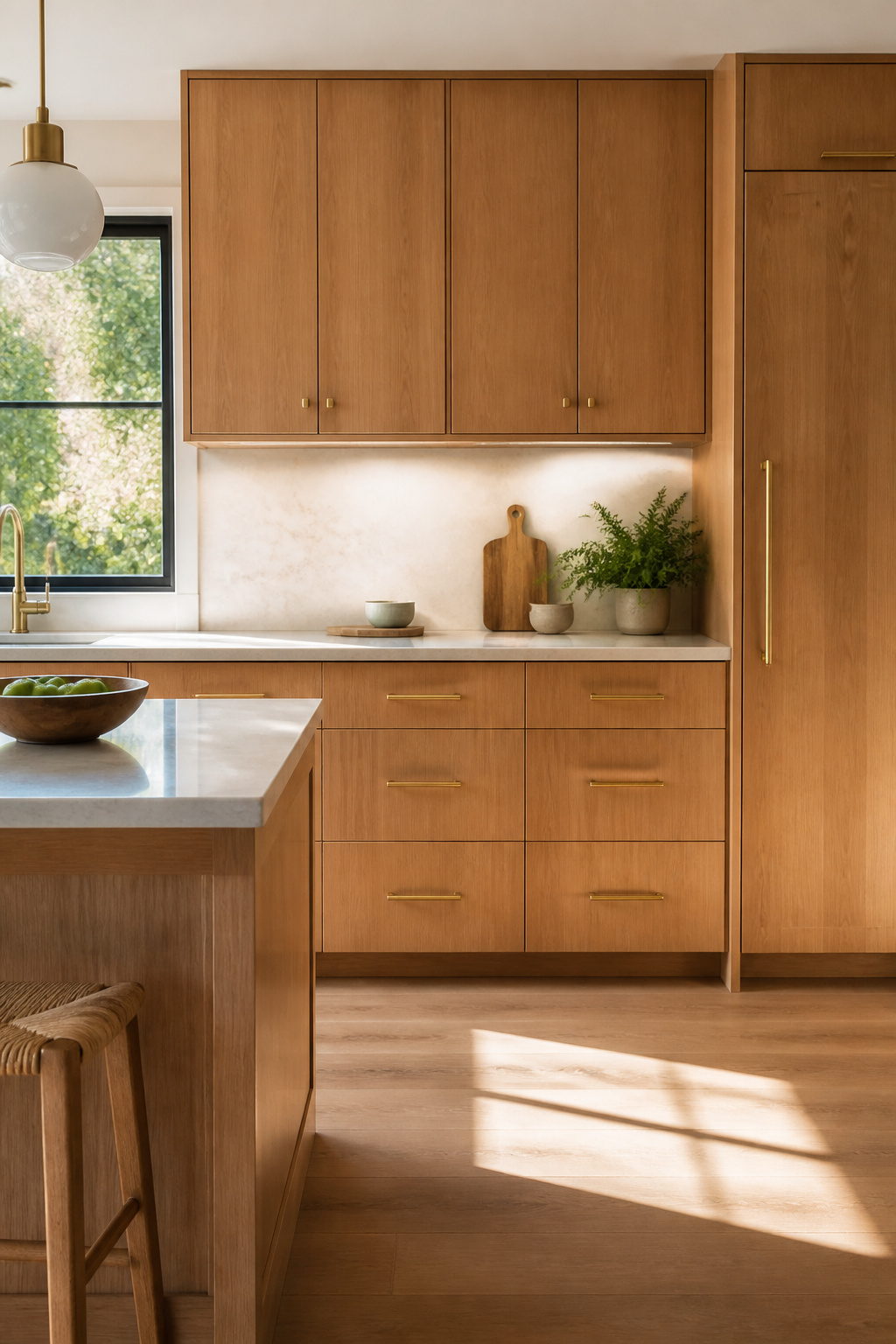
Clear alder keeps the warmth of the species without the visual noise. The grain stays even and smooth, running in soft, straight lines with barely a pin knot or burl to break the surface.
That uniformity matters when you want the cabinet faces to read as one plane rather than a collage of natural features.
The color starts at light tan and warms into reddish brown, a range that plays well against both cool hardware and warm brass.
At 590 on the Janka scale, alder sits softer than maple or hickory. For clear grade in particular, that relative softness is less of a liability than it sounds because the absence of knots means no weak points where impact concentrates.
Still, a kitchen with heavy traffic from kids or dogs might show dents over time.
The closed grain and small pores take stain evenly, so the finish you choose in year one tends to stay true rather than blotching or streaking with age.
Design-wise, the controlled grain and warm undertone push clear alder toward modern and transitional kitchens. It has enough character to avoid looking manufactured, enough restraint to avoid reading rustic.
If your taste runs farmhouse or mountain lodge, knotty alder is the better match. Clear alder wins when you want warmth that stays quietly in the background.
Recommended Products

【Vast Storage Capability】- Overall dimensions: 15.5"D x 66.3"W x 34.2"H. Boasting 4 generously sized doors, this fluted sideboard houses an impressive storage capacity. The spacious countertop of the storage cabinet is a highly practical feature. It offers a wide area for serving food and drinks during gatherings or for displaying decorative items. The 4 adjustable shelves offer customizable organization for items of all shapes and sizes, be it large kitchen appliances or delicate tableware.

Click "Customize Now " and follow the steps to create your custom cabinet doors today!

【Flexible Storage Solutions】This sideboard buffet cabinet features adjustable shelves, allowing you to customize the space for all your favorite items, from oversized serving platters to delicate décor pieces. Imagine hosting a family gathering and effortlessly storing everything from snacks to dinnerware, maximizing your storage potential. Plus, the soft-close pads on the cabinet doors ensure a quiet closing, making your home a peaceful haven for you and your loved ones.
Knotty Alder
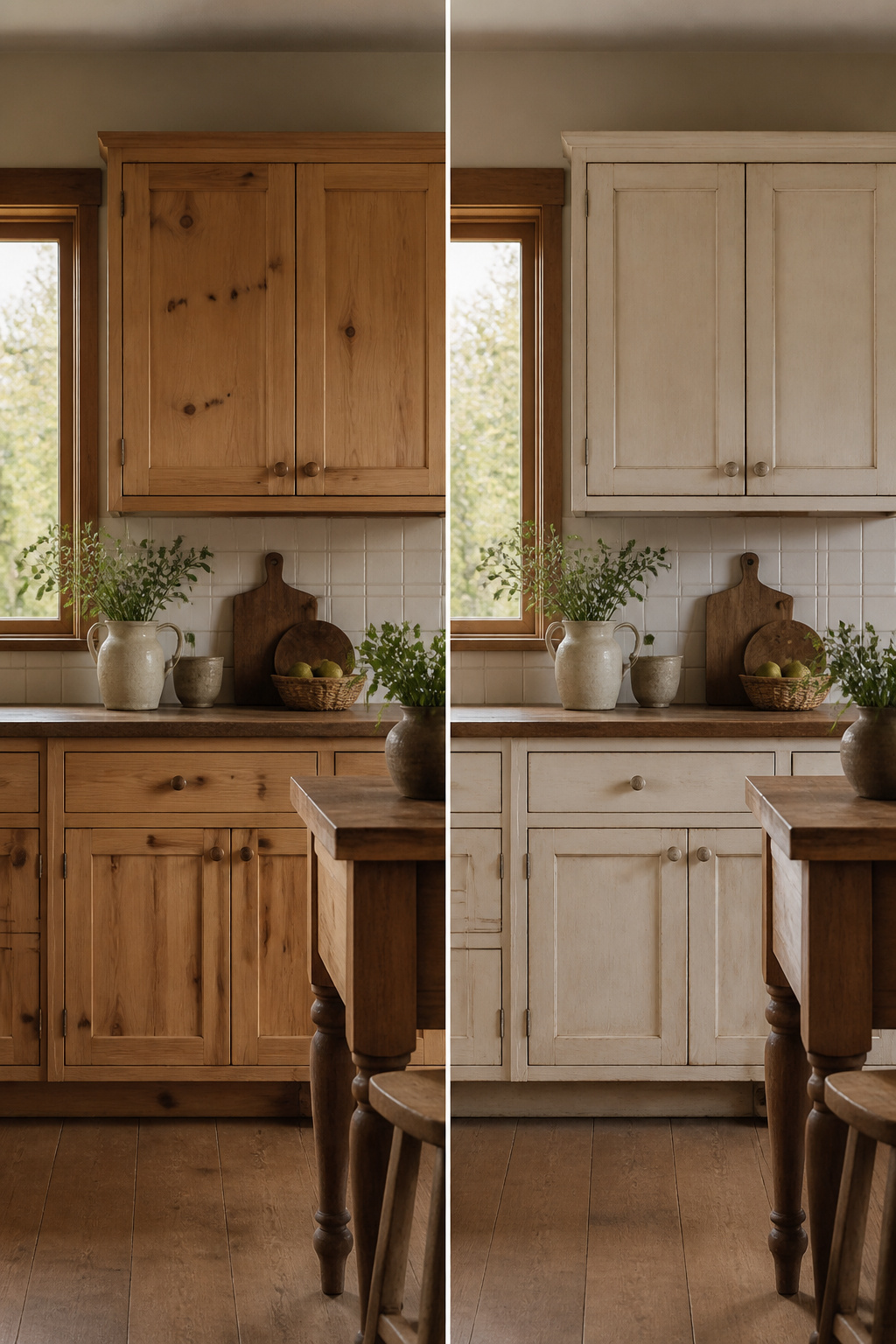
Knotty alder keeps every mark the tree ever made.
Sound and unsound knots, burls, pin knots, and mineral streaks all stay in the cut, and the larger open knots can run clean through a door, leaving holes up to about three-quarters of an inch across.
Stain sinks differently around each defect, so no two doors ever match.
The look is closer to pine than to furniture-grade hardwood, which is exactly why it works in farmhouse or mountain kitchens where everything is meant to feel found rather than finished.
Clear alder and knotty alder come from the same species; the grade is the only difference. The base wood is equally soft, equally easy to dent, and takes stain with the same willingness.
What changes is the personality. Where clear alder photographs evenly and reads as polished warmth, knotty alder reads as casual and lived-in.
For a weekend project on a few hundred dollars, that distinction matters more than the species name on the spec sheet. Pick clear if you want the kitchen to feel designed; pick knotty if you want it to feel grown.
Recommended Products

Versatile Storage Space: This barn door storage cabinet features a spacious tabletop, perfect for storing cleaning supplies of various heights. It also includes three small storage drawers to help you keep smaller items organized and easily accessible.

Solid Rustic Hickory Front with Handcrafted Detail: Features solid hickory doors, a faux drawer front, and a face frame that highlights rich natural grain and tonal variation. Brings authentic rustic character to kitchens, cabins, or RVs with a one-of-a-kind, hardwood finish.

Rustic Black Cabinet Knobs Dimensions: diameter:=1-3/4 inch(43mm),Widdth=1-1/4 inch(32mm),Projection=1-3/8 inch(38mm)
Durability
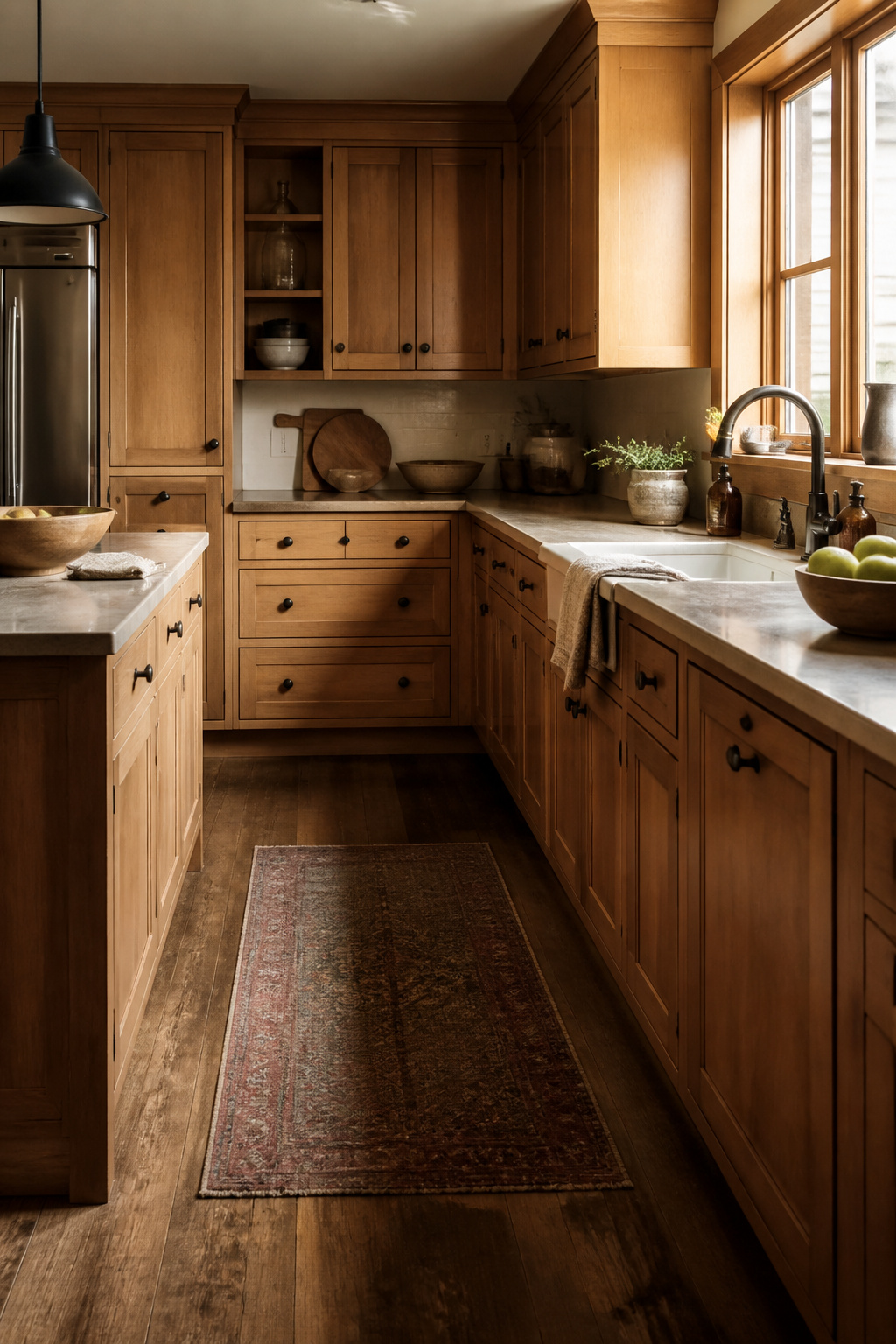
Alder sits at 590 on the Janka hardness scale, well below maple at roughly 1,450 and oak around 1,290. That gap matters in a kitchen.
A dropped can or a belt buckle swung at drawer height will leave a mark on alder that harder species would shrug off. Scratches accumulate faster around pulls and handles where hands grab daily.
What happens over the years depends on what you call damage. The dents do not glare out the way a gouge in painted maple does; they sink into the wood’s warm tone and become part of the surface.
Sources describe this as patina, and that word fits. The wear reads as age rather than accident, which is either the point of choosing a natural material or a rationalization for a soft one, depending on your tolerance.
For renters doing a weekend cabinet refresh or first-home owners with a few hundred dollars and a toddler, the softness is a genuine tradeoff. Toy trucks and dogs’ claws are not kind to alder.
If you need cabinets to look new at year ten, this is the wrong wood. If you want a kitchen that looks lived-in by year three without trying, alder gets there on its own.
Recommended Products

Item Description: 3 3/4"W x 3 3/4"D x 35 1/2"H Legacy Tapered Cabinet Column (Top Block: 6 7/8", Bottom Block: 6 7/8"), Alder

Upgrade Your Kitchen Storage: Kings Brand Furniture White/Walnut Buffet Cabinet is the perfect addition to any kitchen, providing ample storage space for all your essentials.

Natural Elegance, Built to Last: Get your home beautifully organized with this freestanding pantry cabinet crafted from 100% solid Brazilian pine. Its clean design and timeless Navy Blue color finish bring refined style to any kitchen, dining or living room. Wooden Shaker doors and premium construction make this cabinet a durable and elegant addition to your home
Staining Options
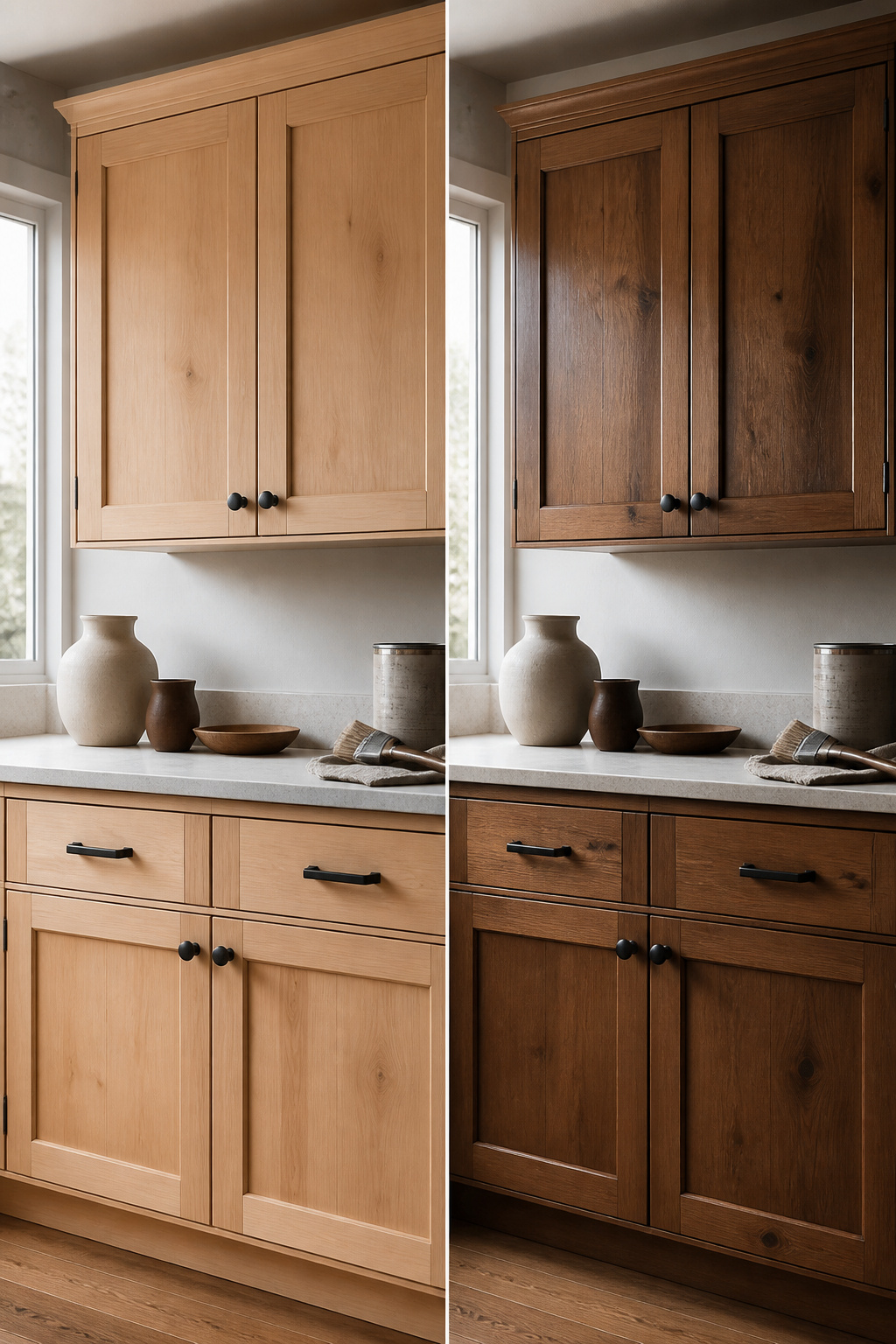
Alder takes stain so evenly that the finish almost disappears into the wood itself, which is exactly why stained finishes outperform paint on this species.
The grain stays visible, the warm undertones deepen rather than flatten, and you avoid the problem paint creates: it pools in open knots and turns what should be character into uneven blotches. KraftMaid puts this plainly.
We don’t recommend paint or paint-based specialty finishes because those finishes would cover Alder’s interesting appearance and unevenly settle into any open knot holes.
That settled the question for me. On clear alder in particular, where the grain is already subtle and straight, stain adds depth without introducing drama the wood doesn’t have.
Lighter stains suit farmhouse or lodge kitchens because they leave the knots and striations readable for an organic look.
Mid-tone and dark stains push the same boards toward urban or contemporary spaces, and the naturally occurring rustic marks can read as reclaimed factory wood rather than flaw.
The color range runs wide enough that alder earns its old nickname, "poor man’s cherry"; with the right deep stain, the two woods become hard to tell apart.
Recommended Products

Durability: Heavy-duty zinc alloy material gives cabinet handles exceptional durability, capable of withstanding wear and tear from daily use. Compared to plastic or lighter materials, zinc alloy offers greater strength, making handles less prone to deformation or damage even with frequent use, significantly extending their lifespan.
365-DAY TRIAL PERIOD: We're confident you'll love these cabinet handles, so we're offering a 365-day trial. If they don't meet your satisfaction, return them for a replacement.

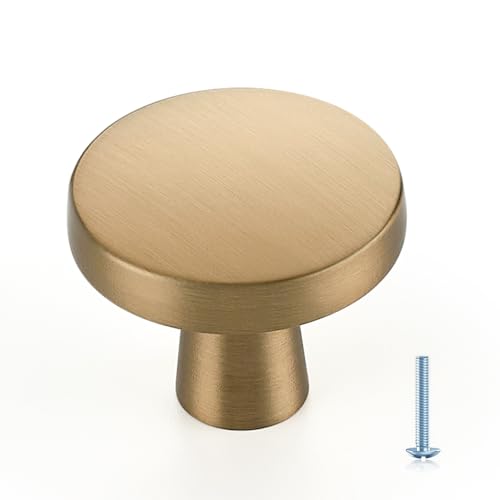
【Material】The drawer knobs made of high quality zinc alloy, durable and heavy, hard to get rust. With elegant brushed brass finished, it is ideal knob to decorate cabinets.
Cost
Alder lands in the lower-mid to mid-range for hardwood cabinetry, which is where the budgeting gets interesting.
Cherry and walnut sit above it, sometimes dramatically depending on the year and your supplier, while birch runs roughly in the same neighborhood and maple or oak edge slightly higher in most regions.
That gap between alder and the premium tier is real money you can redirect toward countertops, hardware, or a better range.
What sold me, reading through the pricing breakdowns, is how little visual compromise that savings actually costs. Alder still reads as a warm, deliberate hardwood choice.
It does not scan as economy the way some painted MDF or thermofoil options eventually do once you start opening drawers and touching edges. The grain has enough character to carry a kitchen without shouting for attention.
The practical read on this: if your cabinet budget is the place where you are trying to protect funds for the rest of the kitchen, alder is the hardwood that keeps you from looking like you cut the wrong corner.
It is the spec that lets you upgrade the faucet or spring for the quartz you actually wanted instead of settling.
Recommended Products

Soft Close Hardware - Protect your cabinet from wear and tear with the help of our soft close hardware. Enjoy a quiet and gentle close every time.

Organizes a variety of kitchen items behind closed doors.

【The Aesthetics of Rattan and Frames】: The Yechen tall storage cabinet blends minimalist frames with vintage cane in seamless left-right structure; thickened panels add practicality. Warm wood finish with multistep craftsmanship creates a soft, weathered patina. A farmhouse rattan bookshelf brings artistic charm and strong function to any study
Alder Wood Characteristics
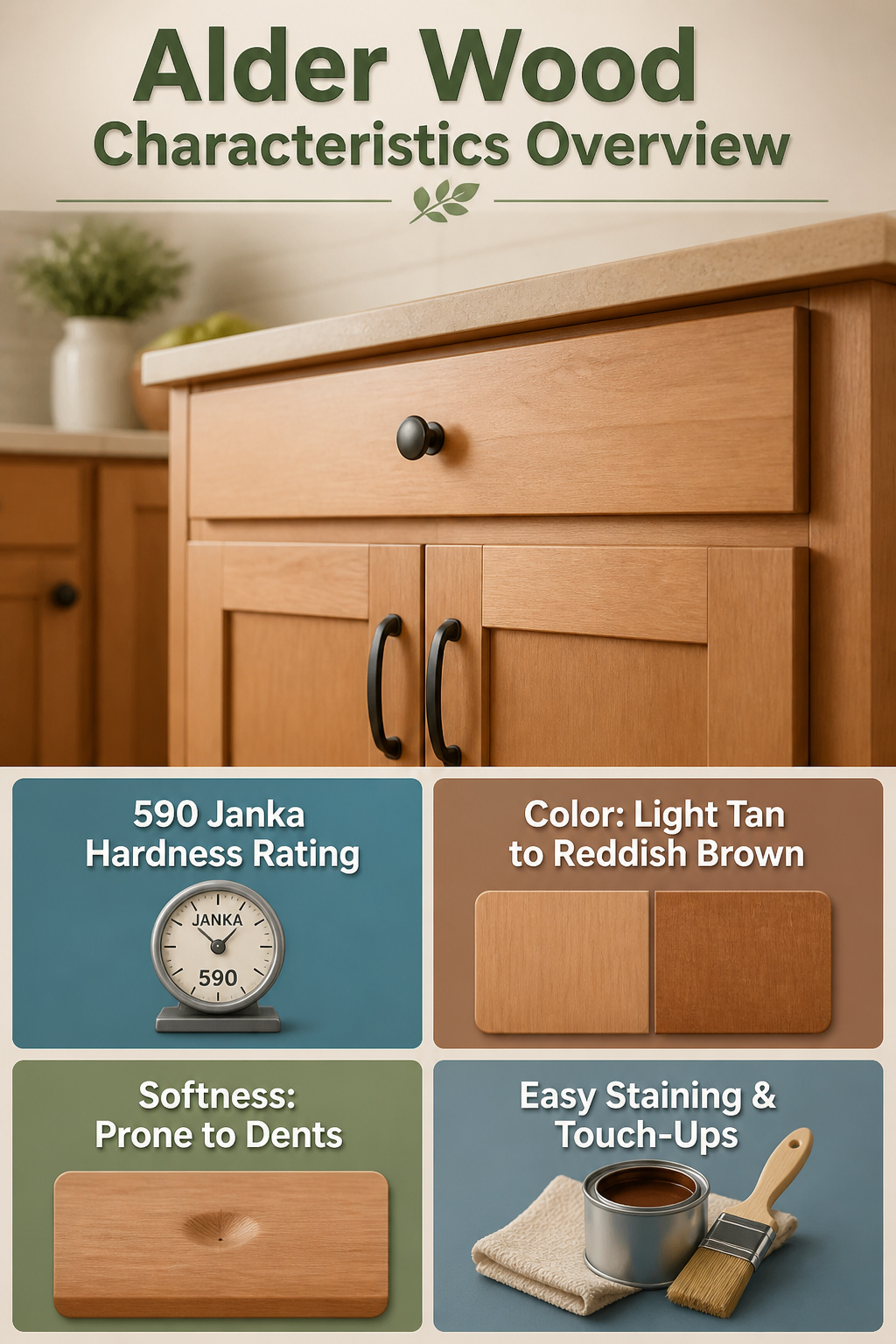
Alder sits at 590 on the Janka hardness scale, well below maple at roughly 1,450 and oak around 1,290. That gap matters in a kitchen.
The wood dents more readily than those harder species, so a dropped can or a heavy pot corner will leave a mark that oak might shrug off.
The color runs light tan to reddish brown with a smooth, even texture and very small pores.
There is no dramatic grain pattern, which is exactly why it takes stain so evenly and why some homeowners choose it over oak’s busier swirls. In daily use, the surface feels warm and consistent rather than rustic.
For households with kids or dogs racing through, that softness is a real tradeoff. The cabinets will show wear faster than hickory or maple would.
But the damage tends to be shallow dents rather than deep gouges, and the uniform texture means a light sanding and touch-up blends in more easily than it would on a wood with pronounced grain.
Recommended Products

Complete Package: the package includes 2 unfinished pine kitchen cabinet doors and 4 cabinet hinges, providing you with a convenient set for effortless installation; No need to source additional doors

Smart Storage Solution: Overall: 15.5"D x 69.2"W x 34.2"H. Designed for versatility, this sideboard buffet cabinet offers ample storage capability with 2 height-adjustable shelves and 2 drawers. Ideal for organizing cookware, linens, and household essentials, the accent cabinet keeps your items neatly tucked away yet easily accessible. Its spacious interior and smart layout ensure everything has its place.

Precision Measurement: Ensure that the 11W x 18H dimensions match your existing cabinet openings to avoid fitting issues
Design Compatibility
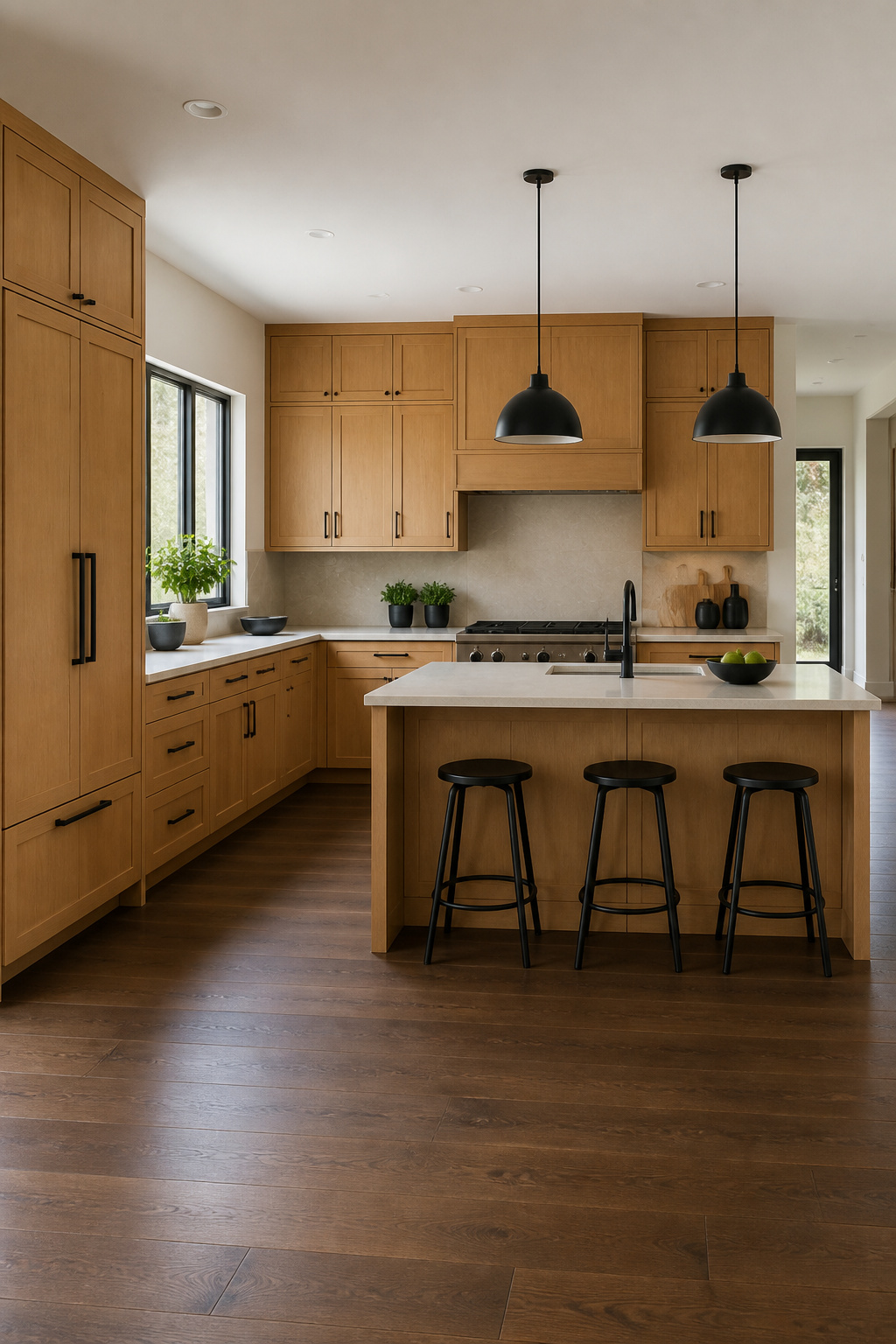
Clear alder’s even grain and minimal knots read as intentional and controlled, which makes it the natural match for modern and transitional kitchens where you want warmth without rustic busyness.
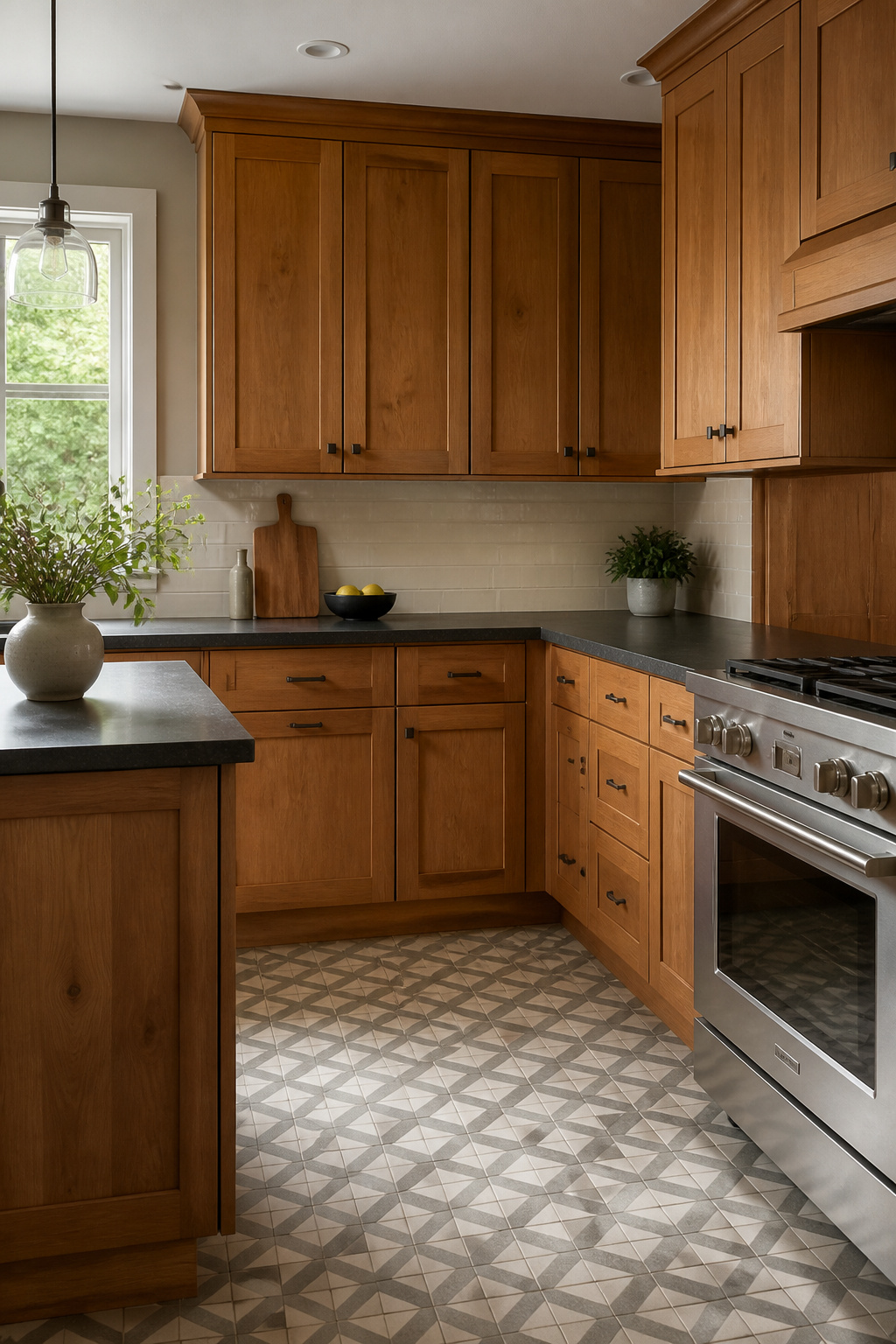
In those settings, brushed bronze or matte black hardware sits quietly against the wood rather than competing for attention, and countertops with subtle veining or honed stone surfaces keep the palette grounded.
Cool-toned stones or bright white quartz fight the wood’s warmth and make the kitchen feel like two rooms combined by accident, so the warmer porcelains or soapstones are the safer bet.
Knotty alder, with its visible knots and more variation, shifts the whole personality toward rustic and farmhouse aesthetics.
The same hardware finishes still work, but the casual texture invites simpler pairings: subway tile or handmade ceramic in warm white, zellige in cream tones, or even plain painted plaster behind the range.
Wall colors matter for both, though the effect reverses. Clear alder stays refined against warm whites or muted sage greens; knotty alder can handle deeper terracotta or clay tones without looking busy.
What separates the two is not just the amount of character but the kind of intention each signals: one polished, one relaxed, neither interchangeable with the other.
Recommended Products

RECESSED IN WALL (CUT A HOLE IN THE WALL) WITH A 180 DEGREE SWIVEL

Rustic Black Cabinet Pulls Dimensions: Distance from hole to hole:=3-3/4 inch(96mm),length=6.1inch(155mm),Widdth=2.2 inch(56mm),Projection=1 inch(25mm)

🛁🍀【VARIOUS STORAGE CHOICES】This practical bathroom cabinet features spacious compartments, four drawers, and two hidden space with internal shelving, providing a mix of accessible and concealed spaces to neatly organize your belongings.
Aging and Patina
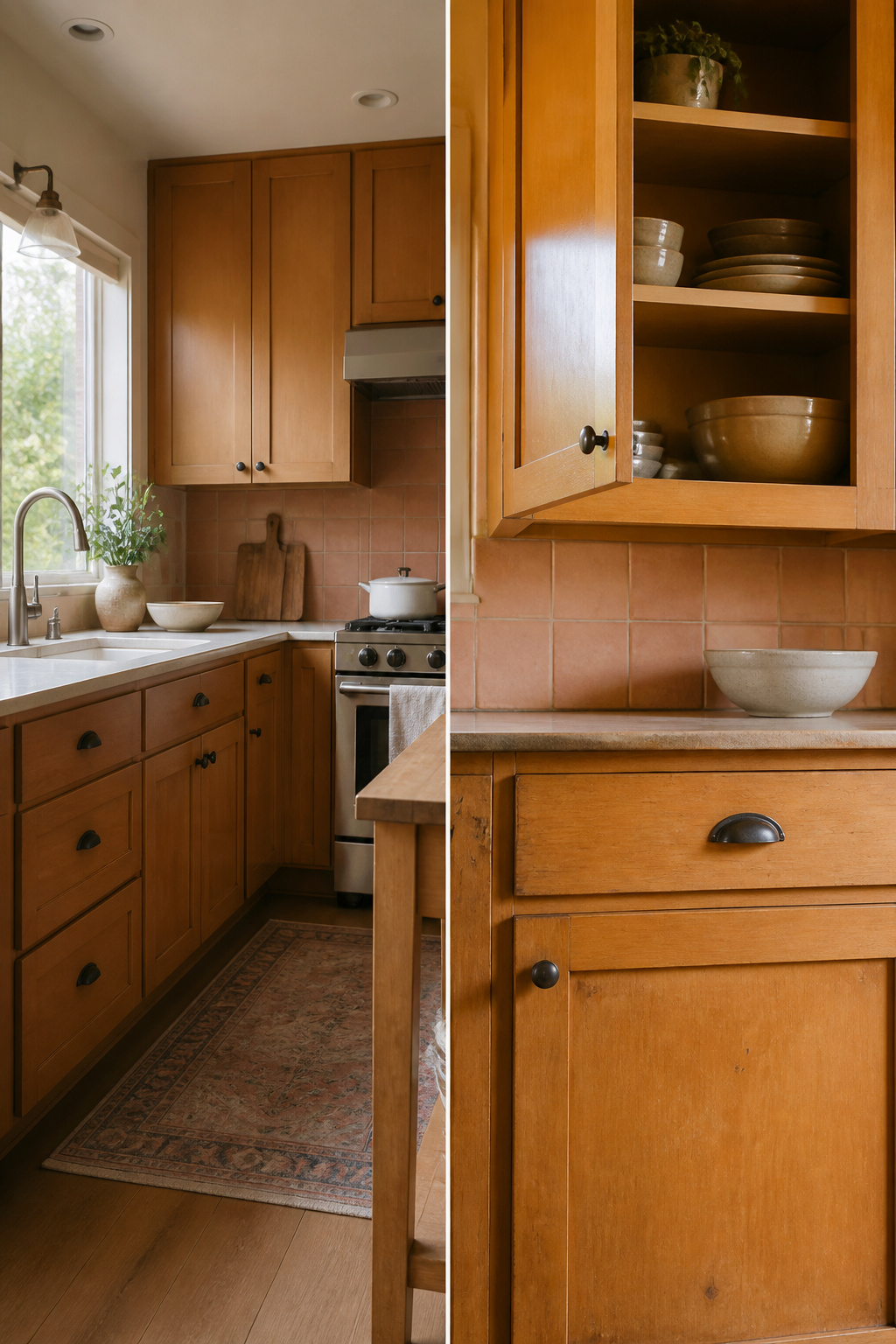
Alder darkens with age, but the shift stays modest compared to the dramatic reddening of cherry or the orange turn oak takes.
After five years, clear alder kitchen cabinets carry a slightly deeper honey tone; by ten, that warmth has settled in without ever looking like a different wood. The grain softens visually too, becoming more familiar rather than more pronounced.
This is not a transformation to build your whole color scheme around. Plan for the tone you install today, not the tone you hope it becomes.
If the current shade feels slightly lighter than ideal, that future deepening works in your favor. If it is already at the edge of too dark, time will not reverse that.
Wear behaves the same way. Dents and scratches blend into alder’s natural warmth rather than standing out as fresh damage.
A ten-year-old kitchen looks seasoned, not worn out. That quality suits homeowners who prefer a lived-in feel over showroom perfection, though anyone wanting cabinets to stay visually identical across decades will find the gradual shift frustrating rather than charming.
Recommended Products

Natural Elegance, Built to Last: Get your home beautifully organized with this freestanding pantry cabinet crafted from 100% solid Brazilian pine. Its clean design and timeless Aqua color finish bring refined style to any kitchen, dining or living room. Wooden Shaker doors and premium construction make this cabinet a durable and elegant addition to your home

Natural Elegance, Built to Last: Get your home beautifully organized with this freestanding pantry cabinet crafted from 100% solid Brazilian pine. Its clean design and timeless Sage color finish bring refined style to any kitchen, dining or living room. Wooden Shaker doors and premium construction make this cabinet a durable and elegant addition to your home
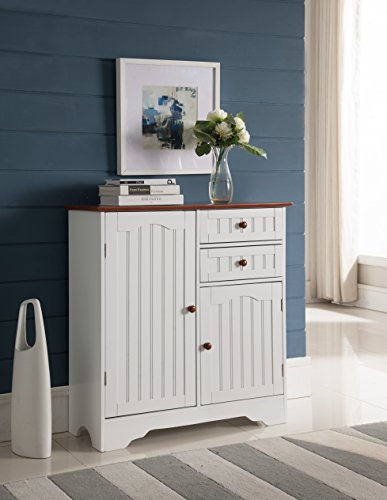
Maximize your kitchen's storage potential with this beautifully designed buffet cabinet from Kings Brand Furniture.
Finishing Recommendations
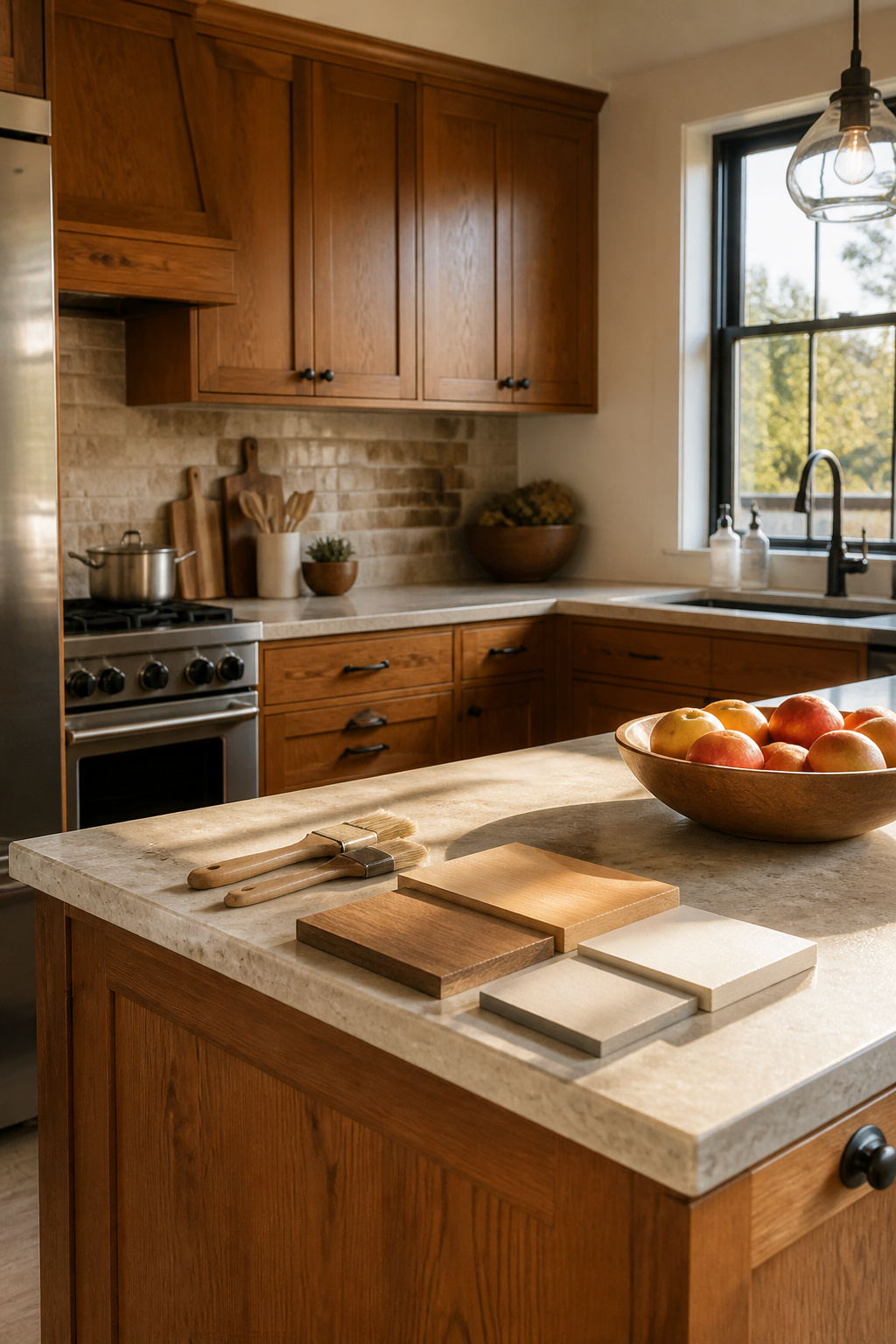
Stain is the finish alder was built for, and most manufacturers reserve this species for stained lines alone. Paint covers the fine, even grain that makes clear alder worth the premium over paint-grade materials in the first place.
If painted anyway, the grain can telegraph through over time, creating faint lines that break the smooth surface you wanted.
HDF handles that job better, which is why two-tone kitchens often pair painted HDF uppers with stained alder lowers or an island where the wood gets to show off.
Alder takes stain evenly from light natural tones to deep, rich colors, and manufacturers often build in toners to keep the color consistent across large kitchen runs.
The warmth stays visible, the texture stays honest, and the cabinet earns its place as real wood rather than pretending to be something else.
Recommended Products

365-Day Evaluation: We're confident you'll appreciate the Ravinte handle. We invite you to use it for a full year, and if it doesn't meet your expectations, we're here to assist

Asimerdeco after-sales service:No matter what problem you encounter,you can contact us via Amazon.com and we will try our best to solve it for you!

Dimensions: Hole centers:5in(128mm); Overall length:5-7/10in(145mm);Width:3/5in(16mm);Projection:1-1/10in(29mm)
Frequently Asked Questions
Are alder cabinets good for kitchens?
u003cpu003eYes, alder works well in kitchens where daily life actually happens.u003c/pu003e u003cpu003eThe wood takes stain evenly across its smooth grain, costs less than cherry or walnut, and carries enough warmth to read as a deliberate hardwood choice rather than a budget shortcut.u003c/pu003e u003cpu003eJust know that at 590 on the Janka scale, it dents more easily than maple or oak, so households with heavy traffic from kids or dogs will see wear faster.u003c/pu003e
Does alder change color over time?
u003cpu003eAlder deepens slightly as it ages, shifting toward a richer honey tone over five to ten years. The change stays modest compared to cherry’s dramatic reddening or oak’s orange turn.u003c/pu003e u003cpu003ePlan around the color you see when installed, not the shade you hope it becomes.u003c/pu003e
Can alder cabinets be painted?
u003cpu003eMost manufacturers advise against painting alder because it wastes the very grain that justifies choosing this wood. Paint also pools unevenly in any open knots and can telegraph grain lines through the surface over time.u003c/pu003e u003cpu003eIf you want a painted look, HDF handles it better; reserve alder for stained finishes where its even grain and warm undertones show through.u003c/pu003e
Do alder cabinets scratch easily?
u003cpu003eAlder dents and scratches more readily than harder species like maple or hickory because of its 590 Janka rating. The damage tends to be shallow rather than deep, though, and blends into the wood’s warm tone over time.u003c/pu003e u003cpu003eWhat looks like wear on maple often reads as patina on alder.u003c/pu003e