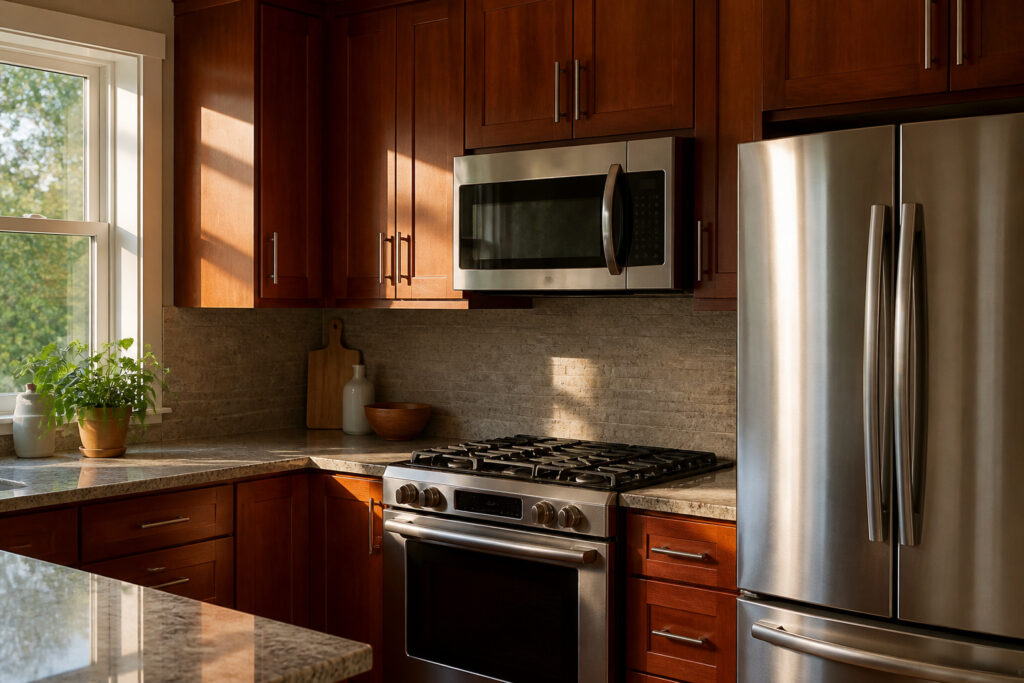
Cherry cabinets with stainless steel appliances create a kitchen pairing that shifts over time because the wood darkens while the metal stays fixed.
The contrast reads crisp in year three, softer by year eight, and that living quality is either the point or the problem.
Painted finishes like Vintage Dove White or Onyx let you reset the look without replacing the boxes, which matters when you are renting toward ownership and the cabinets came with the place.
1. Dramatic Contrast With Painted Cherry
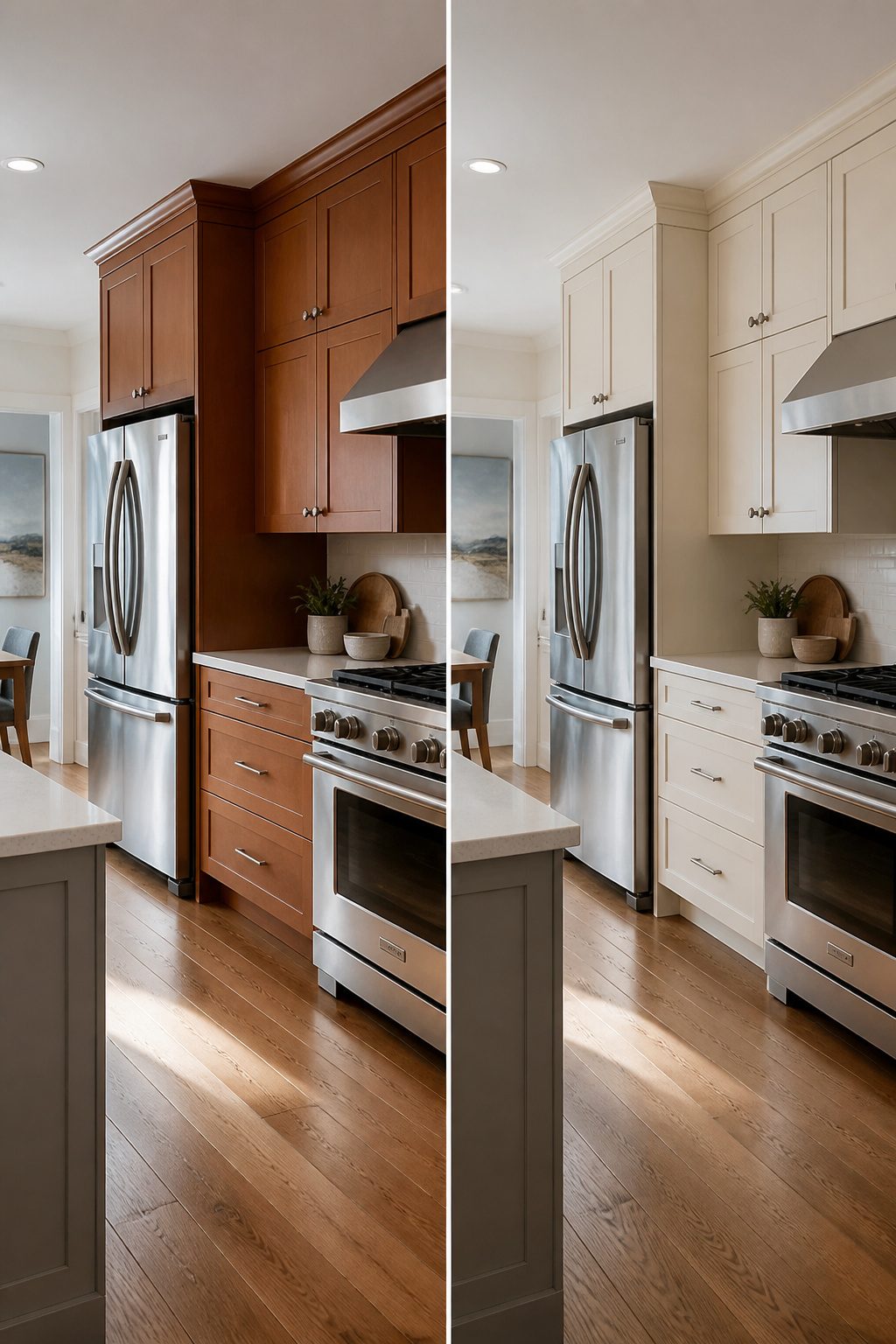
Painted cherry cabinets strip away the heavy, traditional feel people expect and leave you with a surface that takes color like maple but keeps that faint grain texture underneath.
Against stainless steel, Vintage Dove White reads almost as a warm neutral, not a stark clinic white, so the appliances look intentional rather than industrial dropped into a farmhouse kitchen.
Vintage Onyx does the opposite job: it pulls the steel forward as the brightest thing in the room, which works especially well in a galley layout where you want the eye to travel the full length.
I spent an afternoon once flipping between swatches of these two in a friend’s kitchen while her old refrigerator hummed in the corner, and the decision came down to how much natural light the room got by four o’clock.
Dove White needed the afternoon sun to keep from going flat; Onyx looked deliberate even under a single pendant.
Either way, the painted finish means you can refresh five years down the road without replacing the boxes, which matters when you are renting toward ownership and the cabinets came with the place.
2. Duo Tones and a Burnished Rye Island
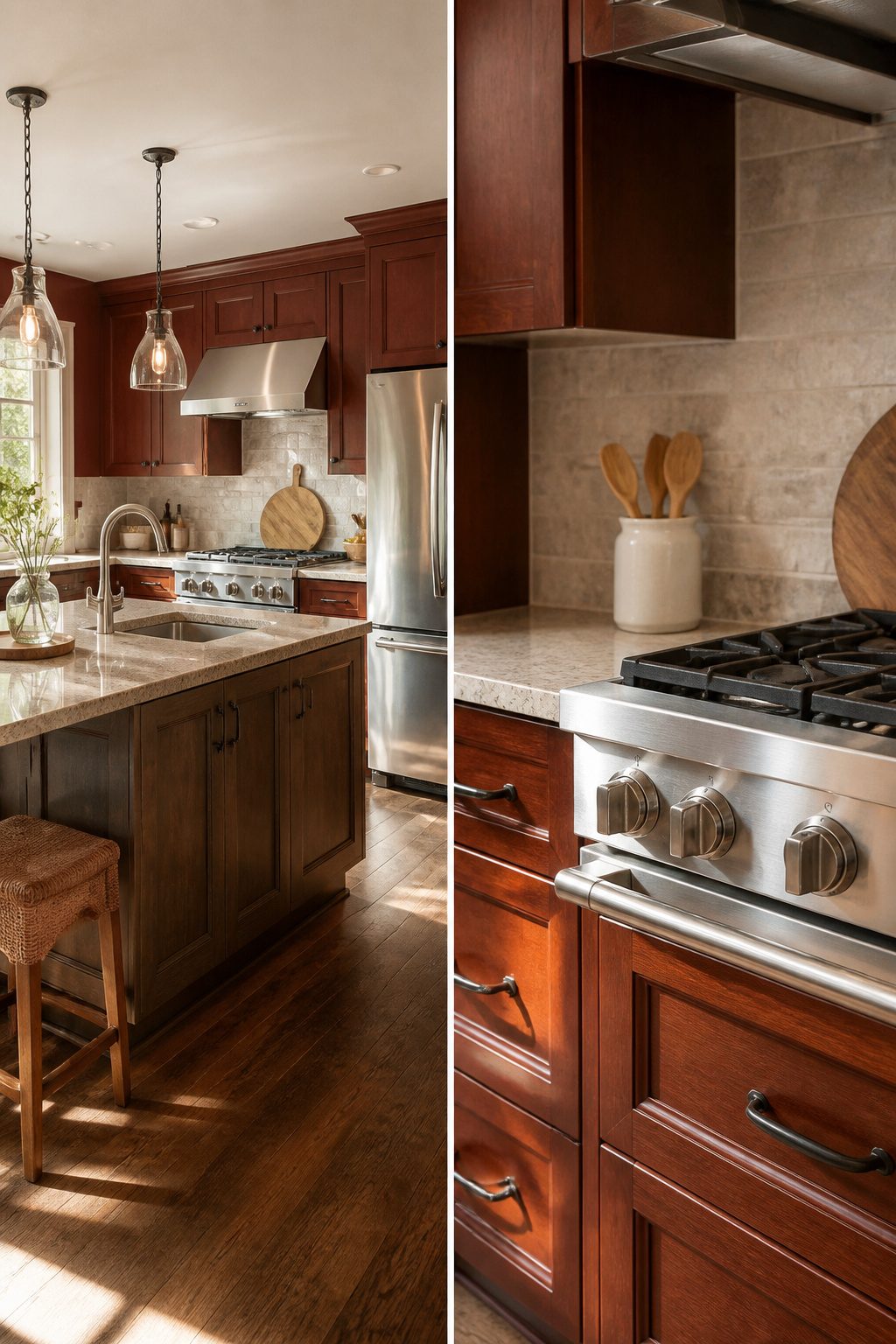
A two-tone kitchen lets cherry cabinets do the warm work while the island carries its own story.
The main cabinets keep that smooth grain and color that deepens over the years, and the island in Burnished Rye adds a rustic counterweight that reads farmhouse without going full country.
Stainless steel appliances sit between the two wood tones like a neutral referee, their cool surface keeping the rye from looking too heavy and the cherry from feeling too formal.
The trick is letting the finishes stay in conversation without matching. Burnished Rye has enough depth to stand up to cherry’s natural richness, and both share an undertone that makes the jump feel intentional rather than accidental.
A stainless range or refrigerator bridges the gap physically and visually, reflecting light back into the space so the darker woods don’t flatten the room.
What I’d watch for is hardware consistency. The source material notes that glazed or antiqued styles fight with stainless steel’s modern lines, so keep the island’s hardware simple and match the metal to the appliances.
Brushed nickel or plain stainless pulls on both cabinet sets let the wood do the contrasting, not the metal.
3. Slab-Style Cherry for Minimal Kitchens
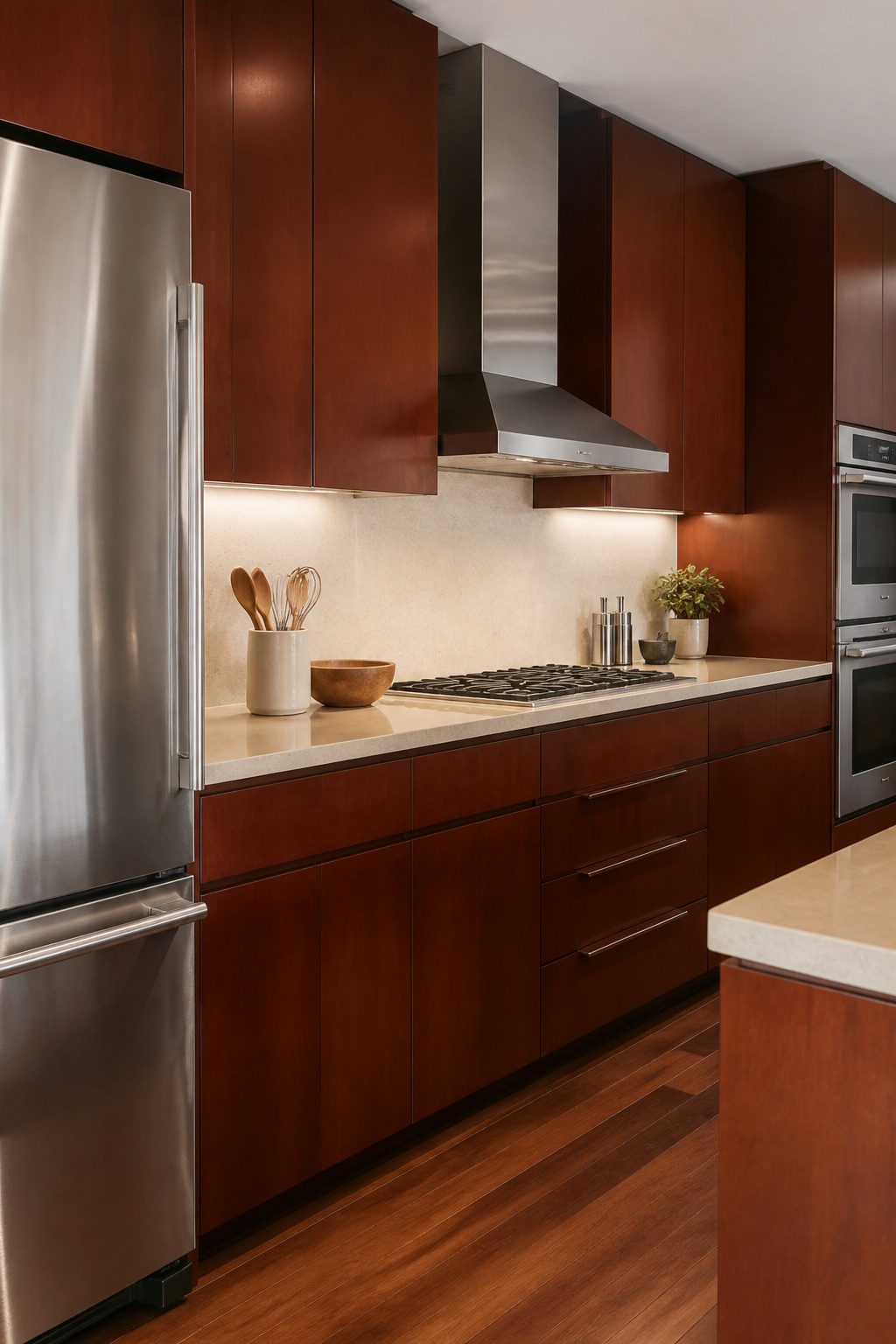
Flat-panel cherry cabinets strip away every raised edge, every decorative molding, every excuse for dust to collect. The result reads as deliberate quiet rather than unfinished simplicity.
Cherry’s natural reddish-brown carries enough visual weight that the door needs nothing added; over years, the wood darkens and develops a patina that supplies the interest hardware and carving usually pretend to provide.
Stainless steel appliances share the same ethic: surfaces that do their job without announcing it. Pairing the two means the warmth comes from the material, not from ornament stacked on top of it.
The fine grain and smooth, lustrous finish of cherry give the kitchen depth that keeps the space from feeling like a showroom floor, while the steel’s cool, sleek lines keep the wood from reading as traditional.
The risk is installation precision.
Slab doors leave no profile variation to hide a gap or a slightly off-level run. Every hinge sits flush, every panel alignment is visible, and the overall effect depends on that restraint holding across the whole kitchen.
Where raised-panel construction forgives a little unevenness by breaking the surface into smaller visual fields, slab demands the discipline it appears to offer in return.
4. Glass Inserts for Visual Lightness
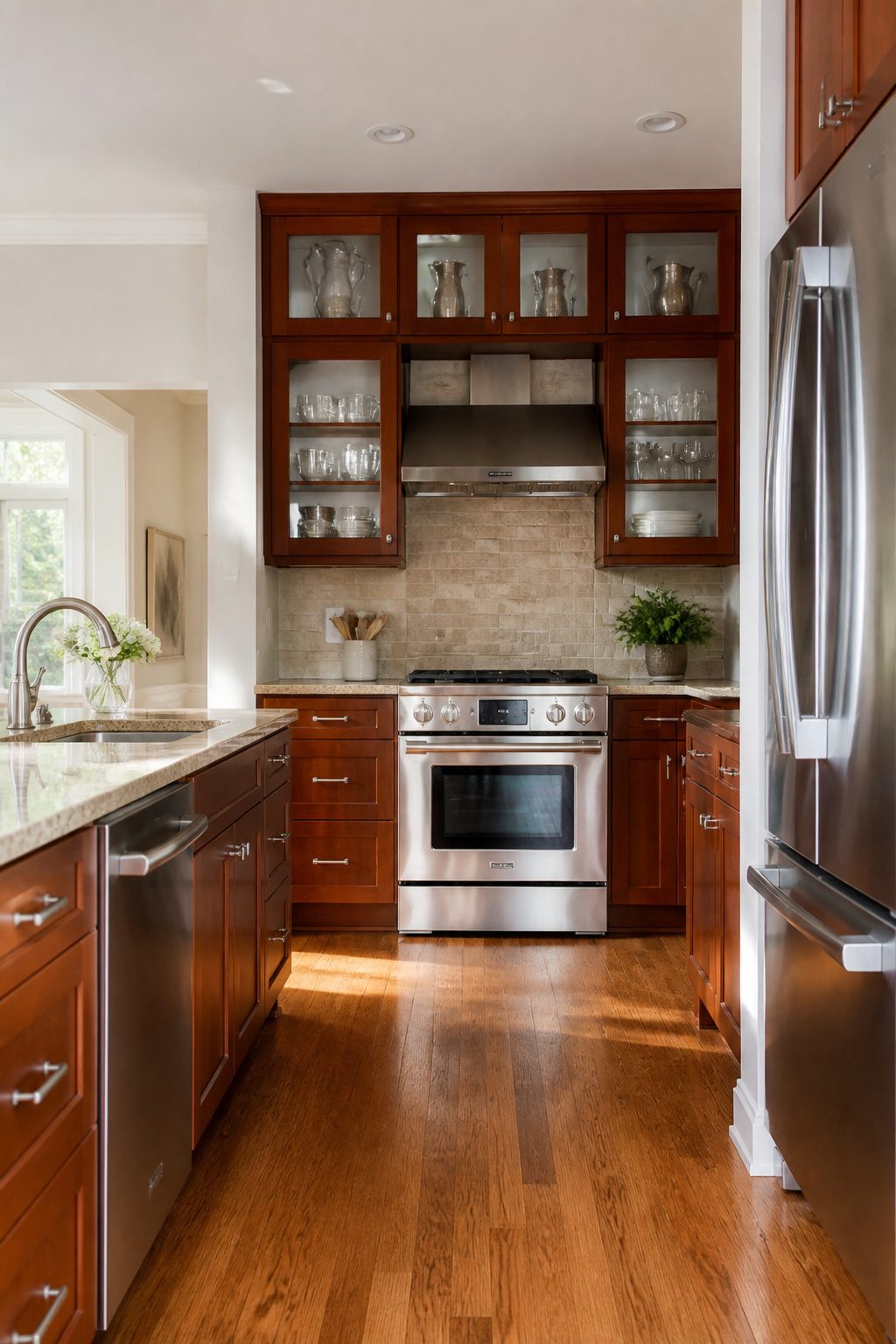
Cherry cabinets run heavy, and in a compact kitchen that weight can press the room inward. Glass inserts in a few upper doors change the physics entirely.
The panels catch daylight and bounce it toward the steel across the room, so the appliances read less as isolated silver blocks and more as part of a single, lighter composition.
I saw this shift most clearly in a galley layout where the refrigerator wall faced the sink wall directly.
Solid cherry on both sides would have turned the corridor into a tunnel. Replacing two upper doors with seeded glass left the wood grain visible at the frames but opened sightlines straight through to the brushed handles on the range.
The steel did not have to compete with the cherry; it shared the same lit space.
The patina cherry develops over time, that deepening reddish-brown the sources describe, actually helps the pairing.
Glass breaks up the wood mass without erasing it, so the warm tone lingers in the room while the appliances keep their cooler, sleek presence. You get contrast without opposition.
For renters, this is one of the lower-risk modifications.
Many upper cabinets accept standard-size glass panels from a hardware store, swapped in for the existing raised panel on a Saturday. Keep the original doors and you can reverse it when the lease ends.
5. Dark Cherry With Light Countertops
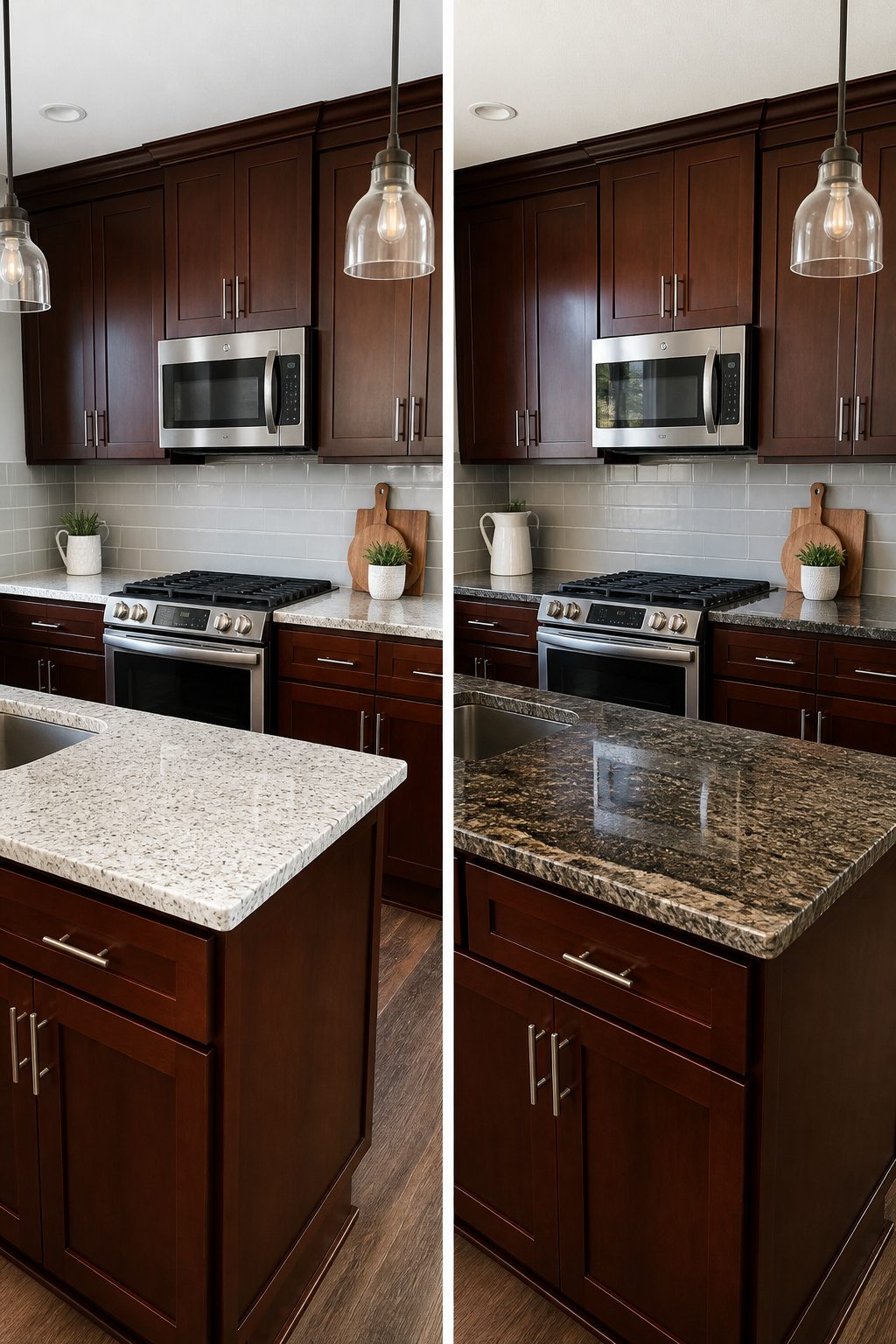
Dark cherry cabinets read almost black in low light, and that depth can swallow a kitchen whole if the surfaces around them stay dark too. The counter is where you correct that.
A light granite or a honed quartz in warm white or soft gray bounces daylight back up into the cabinet faces and keeps the stainless steel from looking like the only reflective thing in the room.
I learned this the hard way in a rental with cherry cabinets that were already installed: the previous owner had paired them with a charcoal laminate counter, and the space felt like a cave even at noon.
After the landlord agreed to swap the counter for a pale speckled granite, the same cabinets looked intentional, almost custom. The steel appliances finally had something to talk to.
The light counter also buys you flexibility on the backsplash. A simple gray subway tile, something easy to wipe and easy to replace later, sits quietly between the two tones without fighting for attention.
That triangle, dark below and light across the work surface with steel at eye level, is what makes the combination feel designed rather than inherited.
The counter is the translator between the cabinets and the appliances; get it wrong and the two main elements glare at each other across the room.
6. White Cabinets as Bright Backdrop
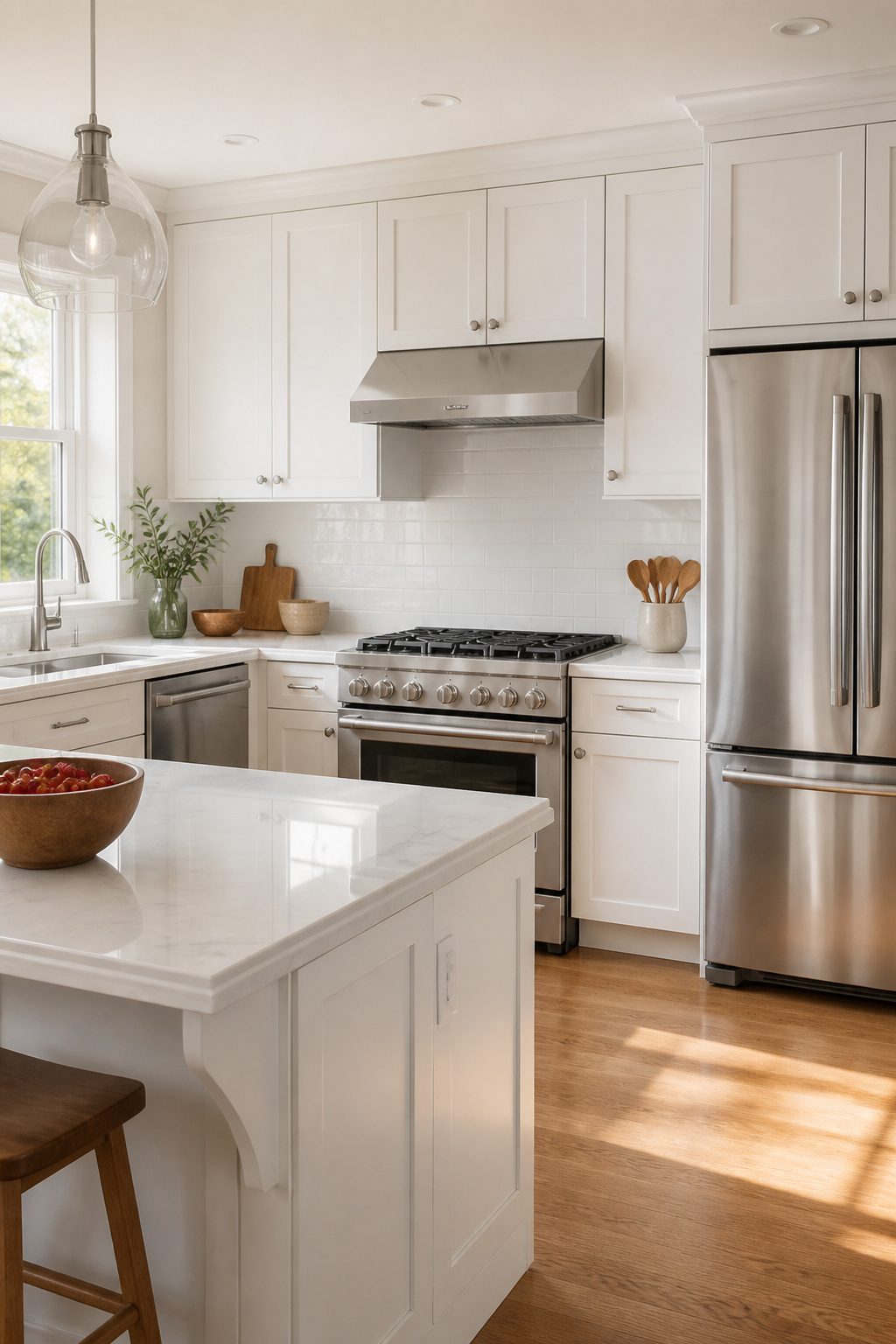
White cabinets still dominate the kitchen market because they do exactly what most homeowners need: they get out of the way.
The reflective surface bounces light around the room, and that brightness pairs naturally with the polished look of stainless steel. Appliances read as intentional rather than industrial when they sit against a clean white field.
Painted white cabinets have been the industry’s default for years, partly because they wipe clean and partly because they tolerate almost any hardware or countertop change later.
That versatility matters if you are mid-project and already committed to stainless appliances but still deciding on the surrounding finishes.
Cherry enters this conversation when you want the opposite effect. Where white retreats, cherry advances; its color deepens with age and pulls warmth into a space that steel can otherwise cool too far.
The sources note cherry in a Vintage Dove White painted finish, which suggests the two ideas can even merge, though the wood grain peeking through distressed paint reads as a compromise rather than a solution.
For a straight rental refresh or a first home with resale in mind, white remains the safer bet.
Cherry pays off only if you plan to stay long enough to watch that mellowing happen, or if your kitchen’s light is strong enough to balance the darker tone against all that metal.
7. Oak Cabinets for Warm Balance
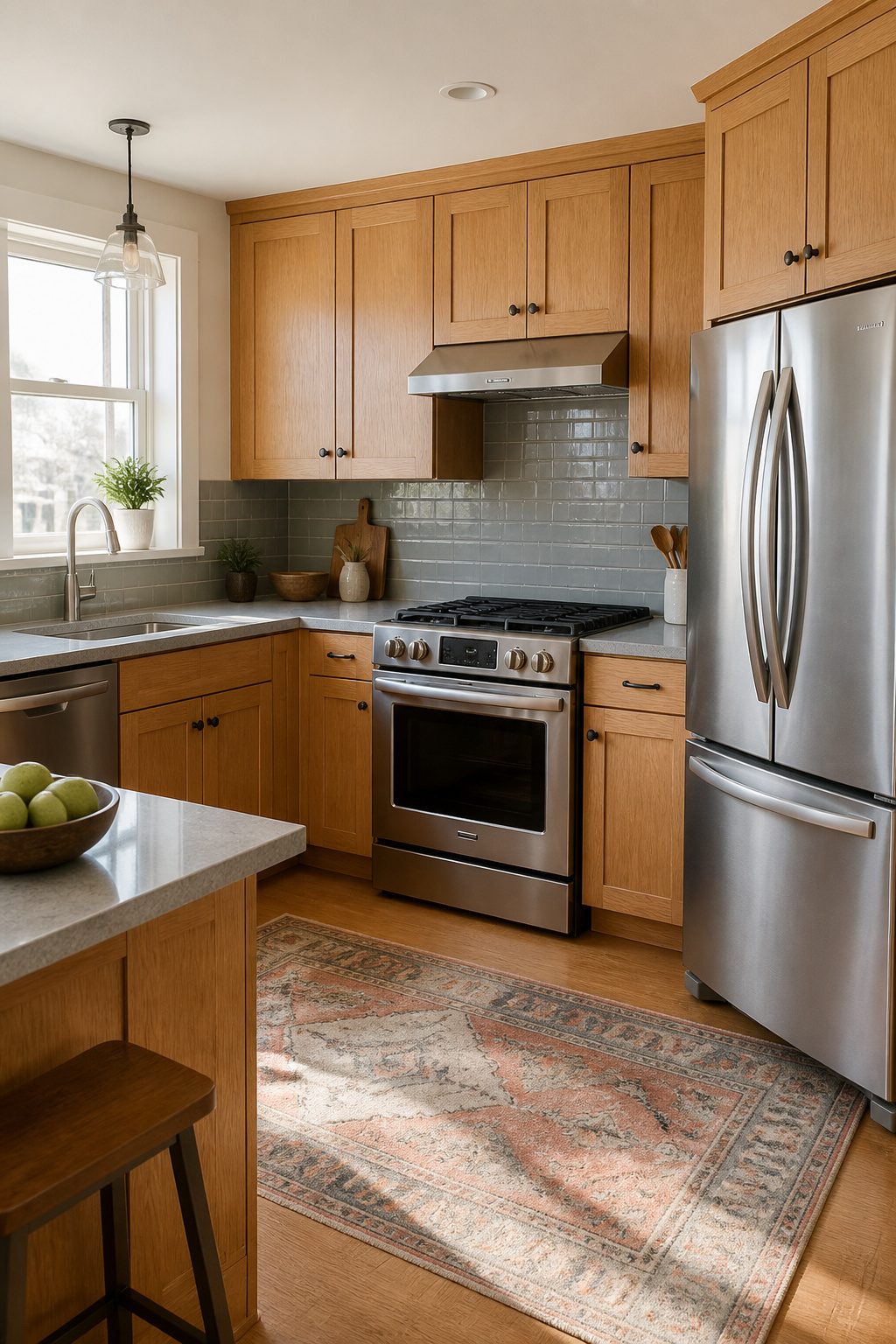
Oak’s natural grain patterns and earthy tones strike a different balance against stainless steel than cherry’s deeper, reddish-brown hue.
Where cherry leans into luxury and a more formal warmth, oak keeps things lighter and more casual, almost like bringing a bit of the outdoors in without the weight of a darker wood.
The grain itself becomes the feature, not the color, and that texture keeps a kitchen from feeling too sterile against all that reflective metal.
I tend to reach for oak when the space itself needs the warmth rather than the cabinetry demanding attention.
Cherry wins in a kitchen with good natural light and room for drama; oak wins when the room is smaller, the ceiling lower, or the budget tighter because oak generally costs less and reads as approachable rather than polished.
The stainless steel still reads modern, but the overall effect is harmonious rather than contrasting, which some kitchens need more than they need a showpiece.
Both woods age, though differently.
Cherry darkens and develops that lustrous patina over time, deepening its richness. Oak stays closer to where it started, its character coming from the grain opening slightly with seasonal movement rather than from dramatic color shift.
For a weekend project you want to live with for years without the kitchen feeling like a different room every season, that stability matters.
8. Gray Cabinets for Modern Appeal
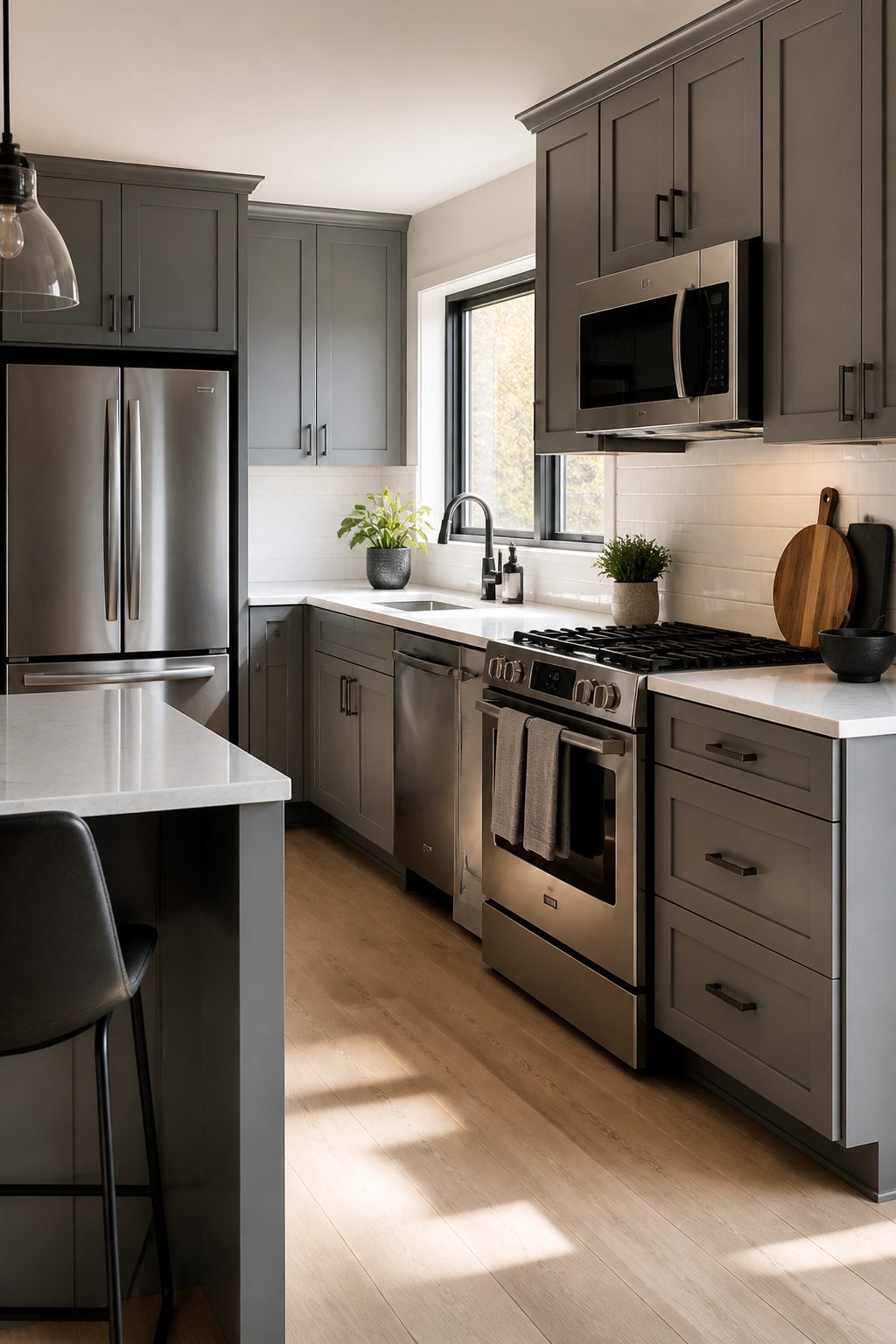
Gray cabinetry sits in the middle ground that cherry and white refuse to share. Where cherry leans warm and traditional, gray keeps the cool, neutral backbone that lets stainless steel read as intentional rather than inserted.
The reflective qualities of the appliances actually need that restraint; gray steps back so the metal can do the work.
I watched this play out in a friend’s remodel last spring. She started set on cherry, then realized her 2019 stainless fridge and range fought the wood’s redness rather than complementing it.
Gray gave her the modern edge the appliances already claimed, without the clinical flatness she feared from white. The industrial chic notes come through, but the space still feels like a kitchen, not a showroom.
Homeowners skip cherry for exactly this tension.
Cherry wants warmth, tradition, a certain richness. Stainless wants sleek, minimal, contemporary.
Gray resolves the argument by speaking both languages at half volume. It is the choice when you cannot commit to either camp, or when your appliances arrived before your cabinets did and now dictate the room’s era.
9. Navy Blue for Bold Contrast
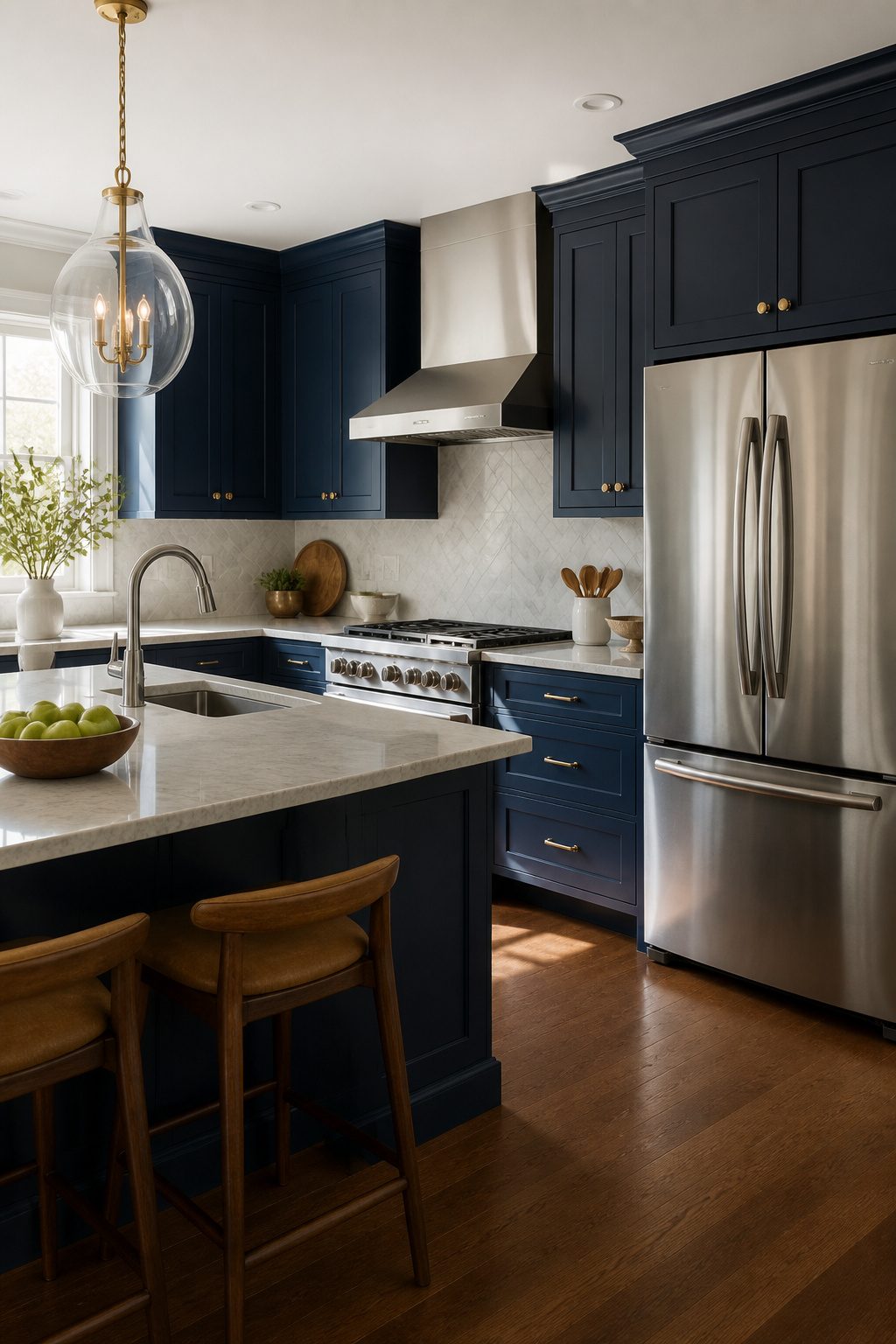
Navy blue cabinets hit differently than cherry when stainless steel appliances are involved. The deep, rich tone pulls the eye straight to the brushed metal finish and makes it read as an intentional focal point rather than just kitchen equipment.
Where cherry competes with steel for attention, navy steps back just enough to let the appliances register as elegant.
Warm reds and oranges tend to fight the cool cast of stainless, especially under LED lighting where everything shifts slightly blue already.
Navy sidesteps that tension entirely. It carries enough saturation to feel deliberate, enough darkness to ground the room, and enough warmth in its undertone to keep the space from feeling like a showroom.
For renters or anyone testing a bold color before a full renovation, navy also ages more gracefully than cherry-leaning alternatives.
The color stays current longer, and chips or wear at the edges read as character rather than damage. A weekend paint job on existing cabinets gives you the pairing without the commitment of new wood.
10. Dark Brown for Sophisticated Warmth
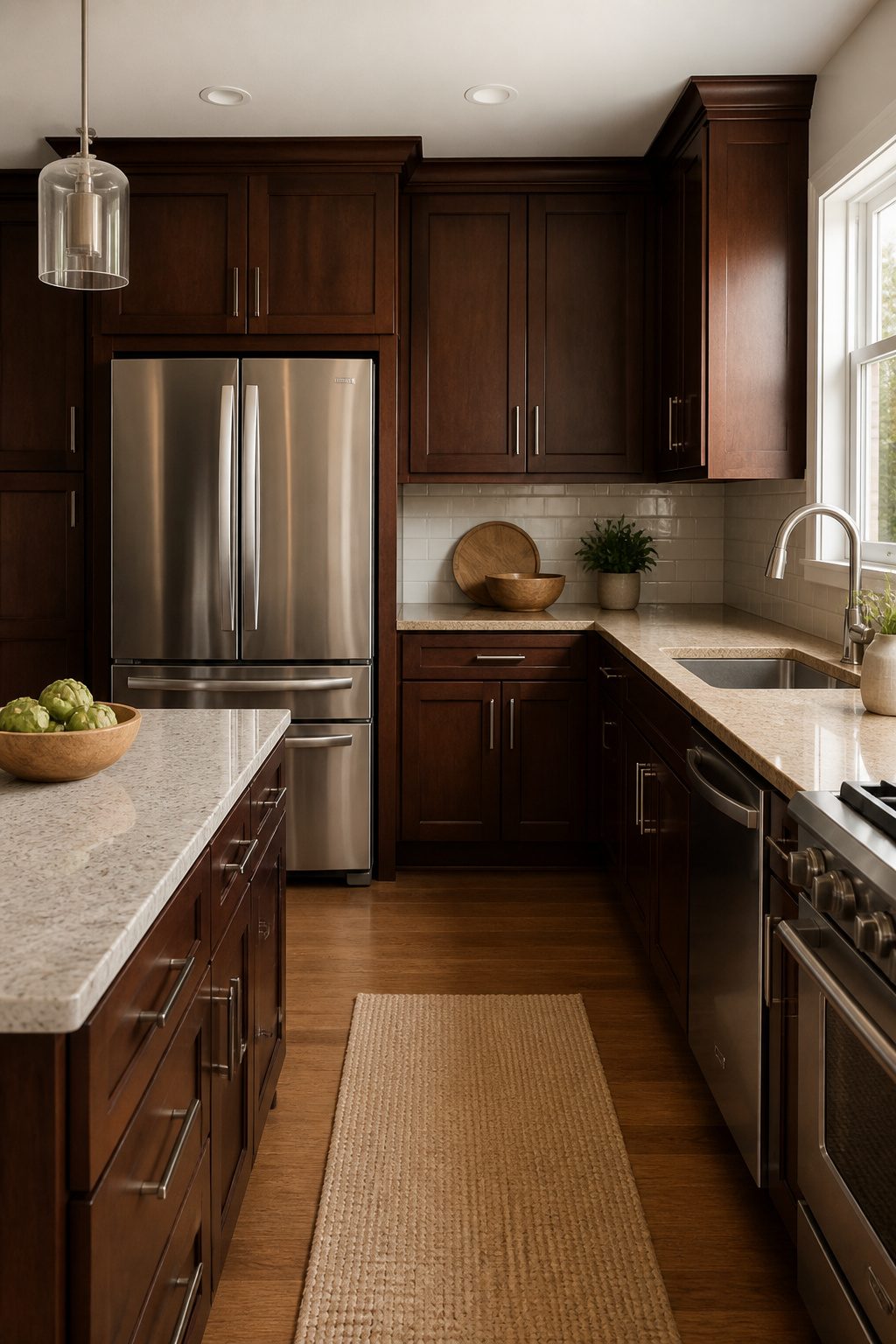
Dark brown cabinets bring a different warmth than cherry’s red undertone, and the distinction matters under kitchen lighting.
Where cherry shifts toward burgundy as it ages, dark brown stays grounded in chocolate and espresso tones that read as sophisticated rather than fruity.
That stability pays off with stainless steel, because the reflective surfaces pick up whatever color sits across from them.
A red-leaning cherry can throw pinkish highlights onto a refrigerator door in afternoon sun; dark brown reflects back a quieter, deeper glow that feels intentional.
The practical similarity is in the grain. Both woods carry enough movement to keep flat-front cabinets from looking like laminate, and both darken over time, though cherry does it faster and more dramatically.
If you want the warmth without the color journey, dark brown is the steadier bet.
I would still test a sample panel against your actual appliances before ordering, because "dark brown" spans from milk chocolate to nearly black, and the lighter end can look muddy next to brushed steel.
11. Maple for Natural Simplicity
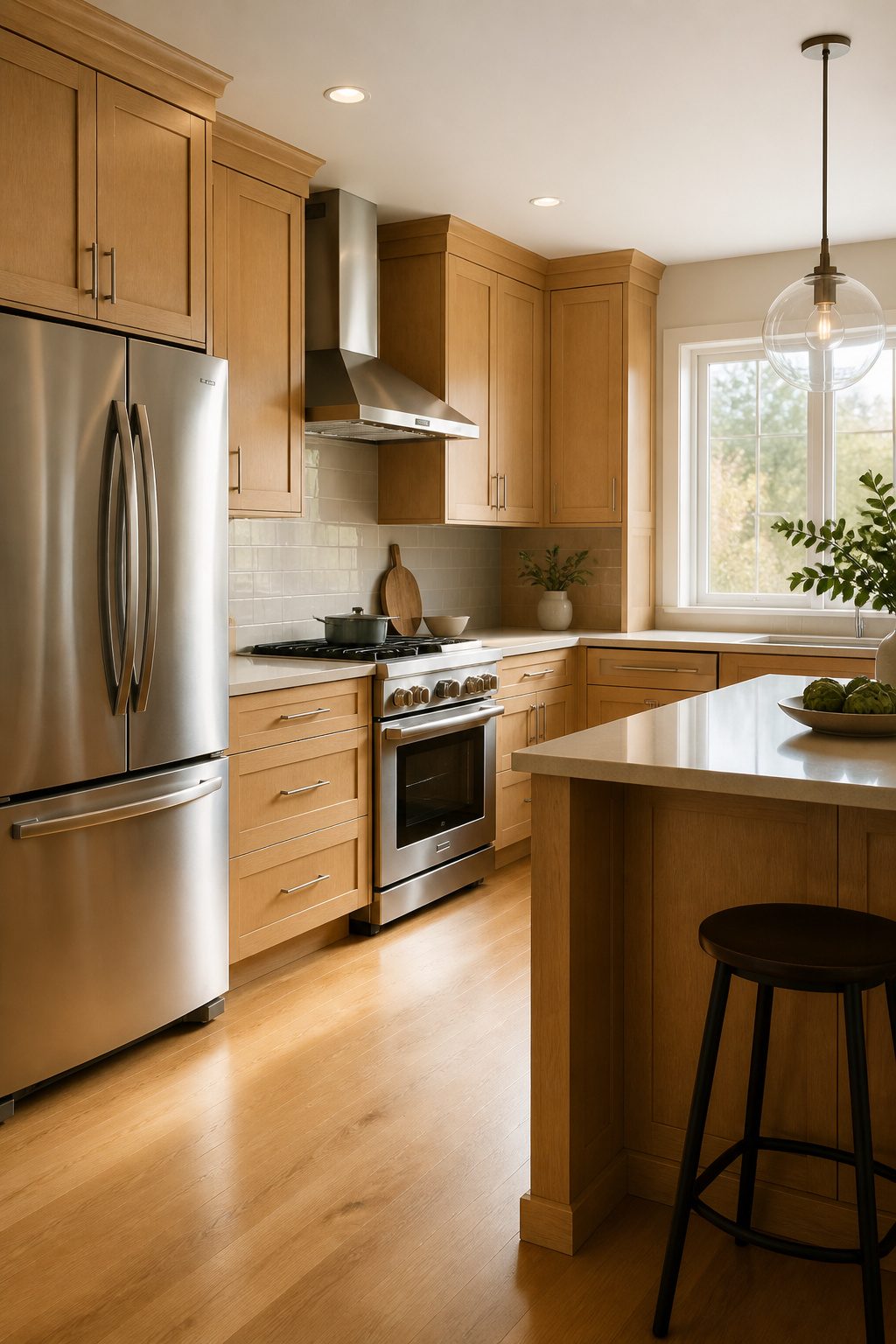
Maple carries a quieter grain than cherry, fine and even where cherry’s pattern runs deeper and more dramatic.
That difference matters in a kitchen with stainless steel appliances, because maple lets the metal take the visual lead while the wood settles into a warm, neutral backdrop. Cherry demands attention; maple steps aside.
The undertone stays warm, so the pairing never turns cold or clinical, but the overall effect reads as simpler and more contemporary.
Where cherry cabinets deepen toward a rich reddish-brown over the years, maple holds closer to its original tone with subtler shifts.
For a renter or a first-time owner who wants natural wood without the statement, maple fades into the background in a way cherry simply won’t.
A maple cabinet run with stainless appliances gives you the warmth of wood grain without competing against the refrigerator’s reflective surface. The harmony feels intentional rather than staged, and the space stays welcoming without trying for luxury.
12. Cherry Wood’s Aging Character
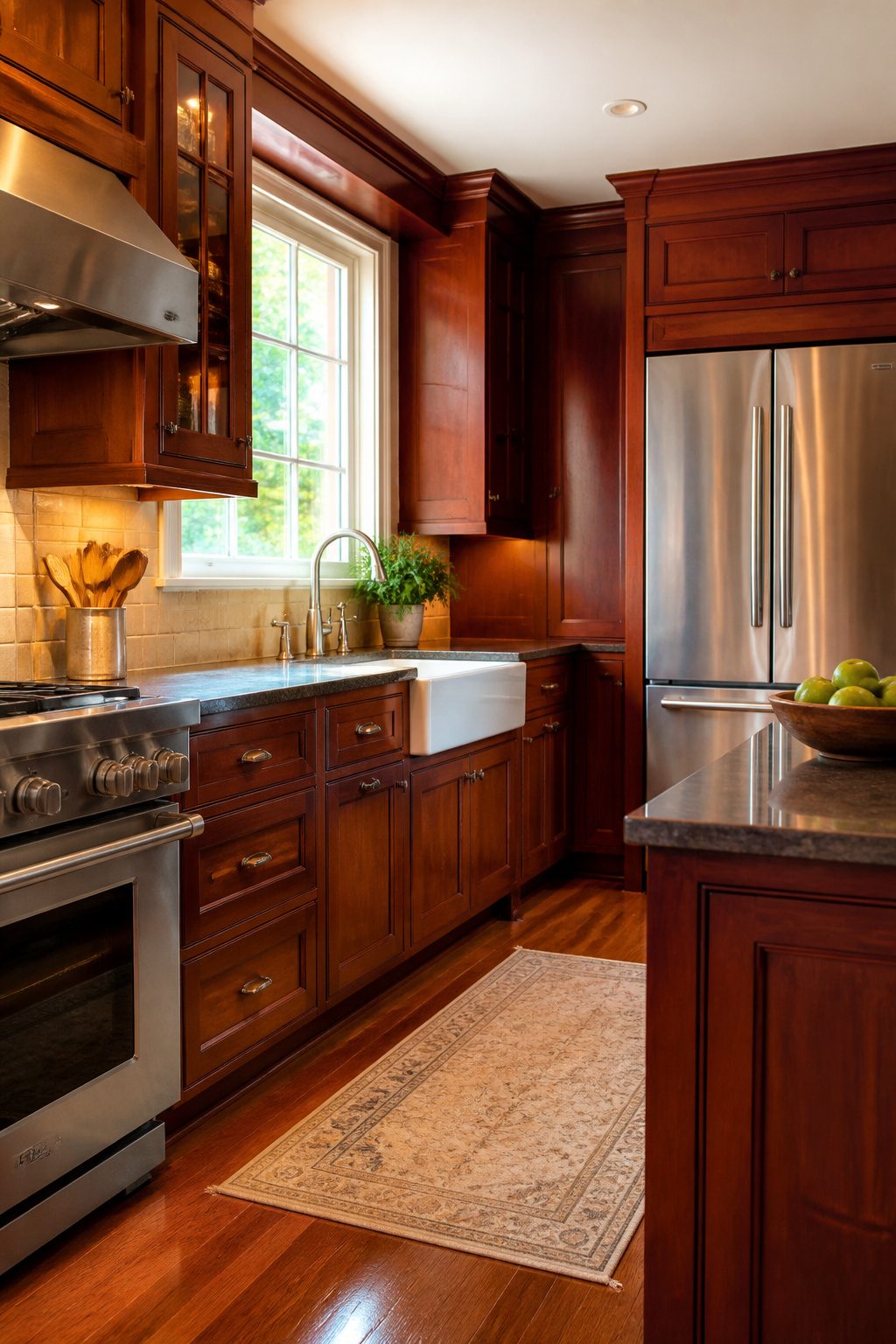
Cherry wood carries a deep reddish-brown hue and a smooth, lustrous grain that sets it apart from harder-edged cabinet options.
What matters for a kitchen with stainless steel appliances is that this color is not fixed. The wood mellows and deepens over time, developing a patina that shifts the room’s warmth while the appliances stay exactly as they arrived.
That living quality creates a pairing challenge worth planning for.
Stainless steel holds its cool, neutral tone for the life of the appliance. Cherry, meanwhile, will darken toward a richer, more saturated tone across years of sun and use.
The contrast that reads crisp in year three may settle into something softer and more integrated by year eight, which is neither better nor worse, but it is not reversible.
A kitchen with both materials therefore commits to two timelines: the fixed present of the appliances and the evolving character of the wood.
The smooth grain helps, keeping the cabinets readable even as the color shifts, but the pairing works best when you want the steel to provide steady counterweight against wood that keeps changing.
Cabinet Styles That Work With Steel
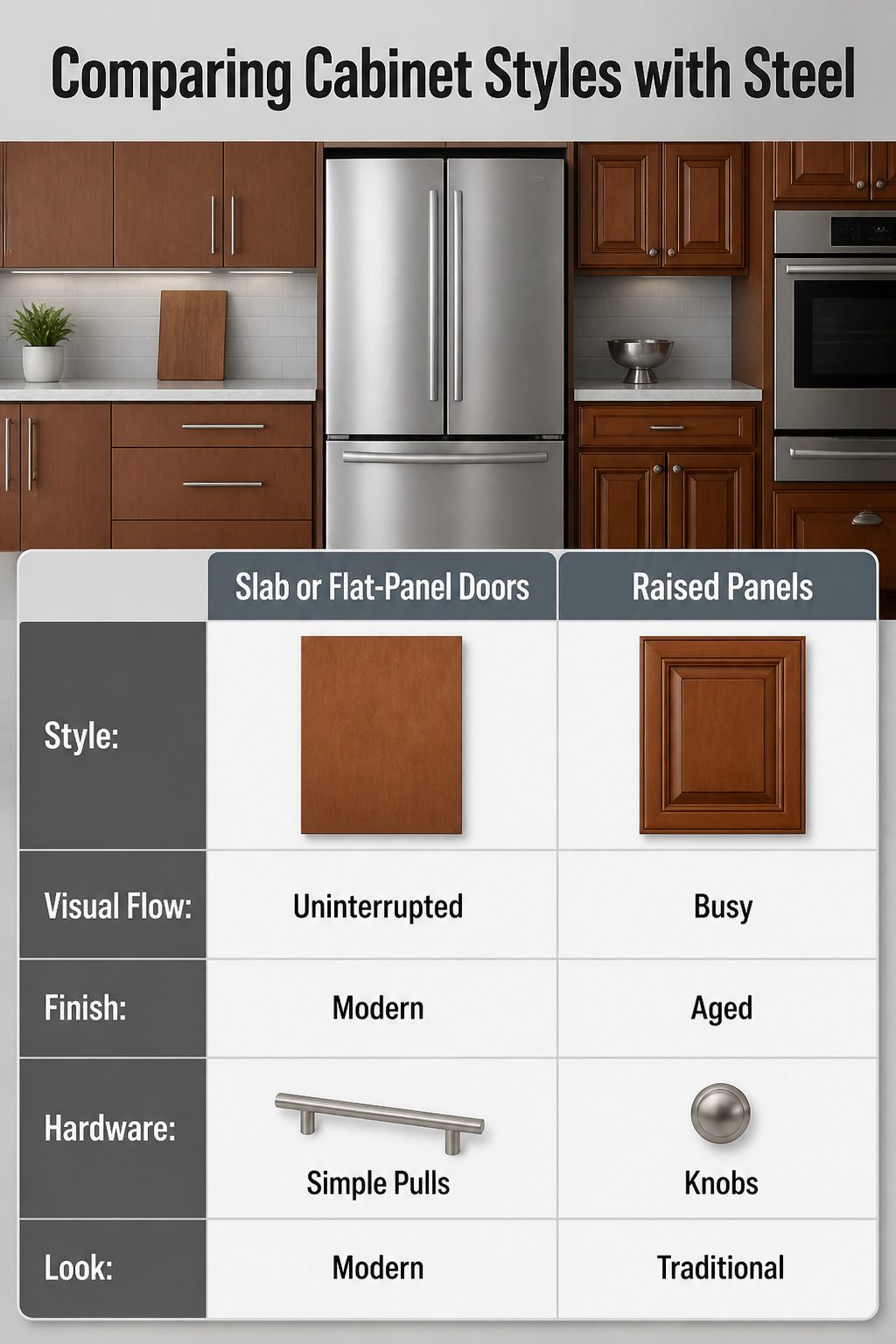
The door style you choose for cherry cabinets either amplifies stainless steel’s clean lines or fights them.
Slab or flat-panel doors keep the visual plane uninterrupted, which is what the appliances are already doing. Raised panels add shadow lines and tradition; with cherry’s own grain movement, the combination can feel busy against steel’s uniform surface.
Glazed and antiqued finishes are where I draw the line. The passages I trust on this agree: those treatments read as deliberately aged, and stainless steel reads as deliberately now.
The two aesthetics don’t negotiate, they argue. One source put it plainly that this pairing "can feel like a noncohesive project," and after looking at enough kitchen photos to cross my eyes, I see why.
The glaze catches light differently than brushed metal, creating two competing focal points where you wanted one calm room.
Hardware is the bridge. Simple bar pulls in brushed nickel or stainless carry the appliance finish onto the cabinet without shouting.
I skip knobs entirely on slab cherry; they break the flat surface the same way raised panels do. For a softer look, a slim pull with slightly rounded ends still reads modern without going clinical.
Countertop Choices That Complete the Pairing
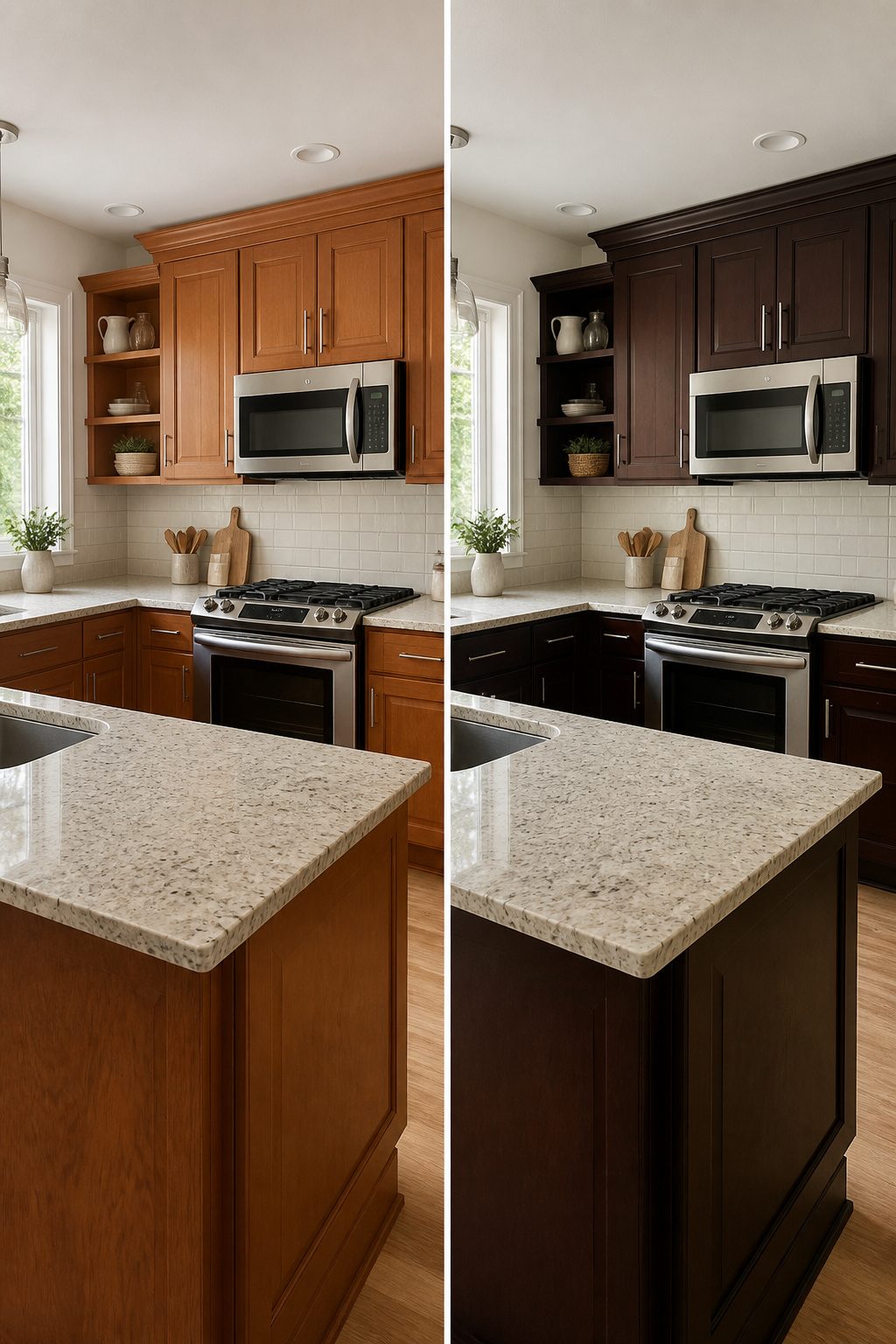
Light countertops against dark cherry cabinets create a depth that reads as luxury without demanding a luxury budget.
The pale surface, whether granite or quartz, catches light and reflects it back into the stainless steel zone, so the appliances stop looking like isolated silver blocks and start reading as part of a deliberate layer.
The steel becomes the middle tone, not the odd one out.
Flip that contrast and the whole room shifts. Darker countertops absorb light instead of bouncing it, which pushes visual weight downward and leaves the stainless steel to carry the top half of the kitchen almost alone.
The effect can feel grounded and intentional, but it also risks making the appliances look like they landed in a darker room than they belong in.
I have seen both work; the difference is usually how much natural light the space gets before anyone picks up a sample chip.
A granite with movement in it, like the simple gray subway tile pairing one homeowner chose, gives the eye somewhere to travel so the contrast does not flatten into two slabs fighting each other.
Touchless Faucets and Hands-Free Hardware
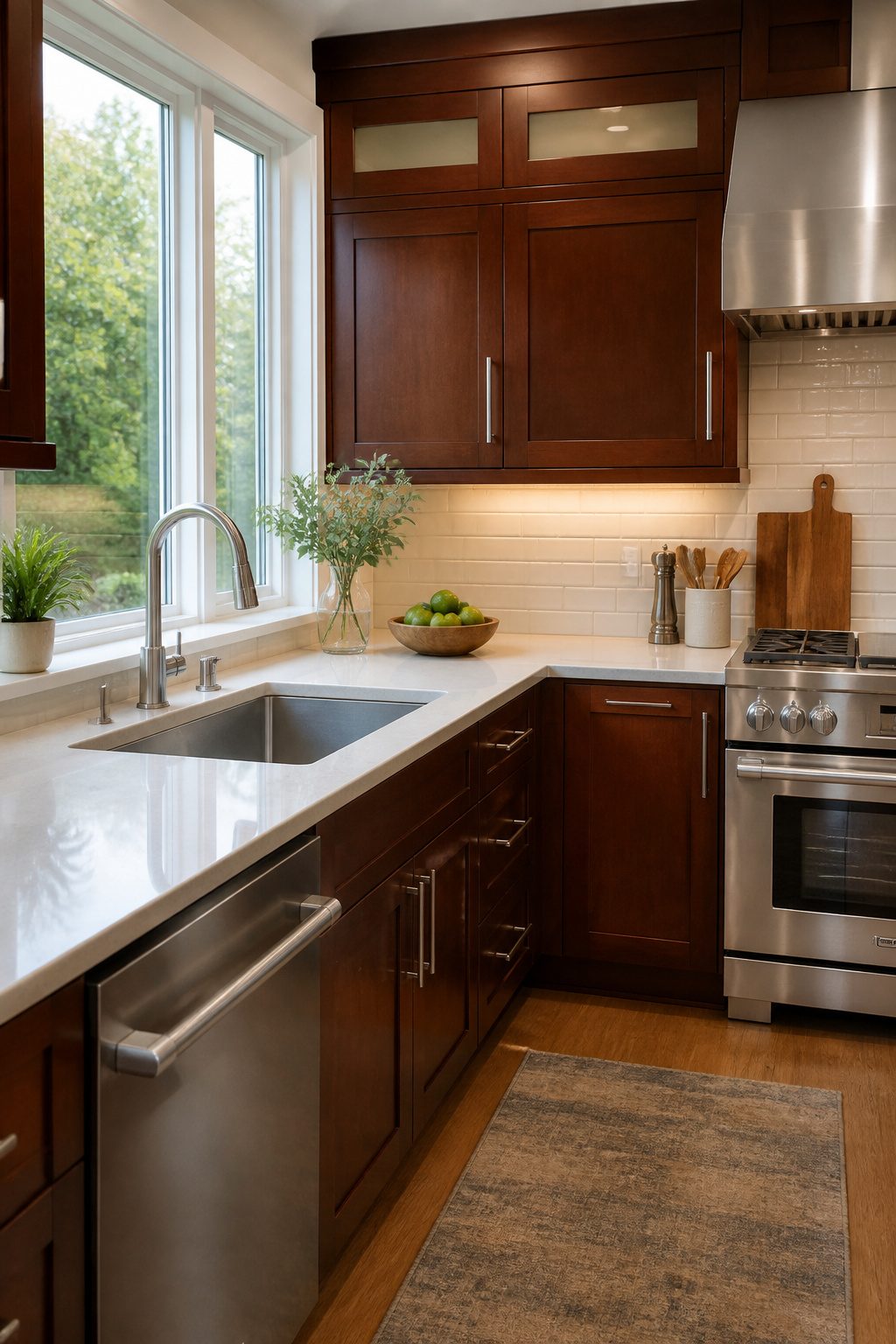
The Prevoir Stainless Steel Undermount 2-Bowl Kitchen Sink measures 35 by 18 inches, a footprint that demands a 39-inch base cabinet.
In a cherry kitchen, that extra width eats into storage, but the large-small bowl combo fits the way most people actually work: soaking pans on one side while rinsing vegetables on the other.
The 18-gauge stainless steel and included bottom grids hold up to the kind of heavy use that makes a weekend project feel like a real upgrade.
Pairing it with the Beale Pull-Down Kitchen Faucet with Selectronic Hands-Free Technology pushes the look further toward contemporary than traditional cherry usually leans.
The wave-to-activate sensor and magnetic Dock-Tite spray-head docking are genuinely useful when your hands are covered in raw meat or bread dough, though the sliding sensor door for manual mode is the detail that saves it from gimmick territory.
The Re-Trax retraction system keeps the pull-down from dangling, which matters more than you’d think in a busy kitchen.
The question is whether the tech justifies the visual shift. Cherry cabinets with stainless appliances already bridge warm and modern; adding a touchless faucet tips the balance toward the latter.
For a renter or first-time owner doing one major project a year, the hands-free feature pays off in daily use, but the sleek profile reads more commercial than cozy.
If your cherry runs dark, the brushed satin finish ties in without fighting the wood tone. Lighter cherry might need the warmth of a more traditional faucet to keep the kitchen from feeling like a showroom floor.
Frequently Asked Questions
What are the best cabinet colors for stainless steel appliances?
u003cpu003eWhite, oak, gray, navy, dark brown, and cherry all pair well with stainless steel.u003c/pu003e u003cpu003eEach brings a different balance: white and gray keep things cool and contemporary, oak adds casual warmth, navy creates bold contrast, dark brown offers sophisticated grounding, and cherry introduces living warmth that deepens over time.u003c/pu003e u003cpu003eThe right choice depends on how much contrast you want and whether you prefer the appliances to blend in or stand out.u003c/pu003e
How can I pair cherry cabinets with stainless steel appliances?
u003cpu003eSet cherry against light countertops so the wood does not swallow the room, and choose simple hardware in brushed nickel or stainless that echoes the appliance finish.u003c/pu003e u003cpu003eSlab-style or flat-panel doors keep the look modern rather than traditional, and glass inserts in a few uppers break up the visual weight so the steel reads as part of the composition rather than an isolated accent.u003c/pu003e u003cpu003eThe patina cherry develops over years actually helps the pairing, softening the contrast into something more integrated.u003c/pu003e
What styles of cabinets work best with stainless steel?
u003cpu003eSlab or flat-panel doors work best because they share the same uninterrupted visual plane as the appliances.u003c/pu003e u003cpu003eRaised panels add shadow lines that fight steel’s uniform surface, and glazed or antiqued finishes create a noncohesive argument with stainless’s deliberately modern presence.u003c/pu003e u003cpu003eSimple bar pulls in matching metal carry the appliance finish onto the cabinet without breaking the quiet surface.u003c/pu003e