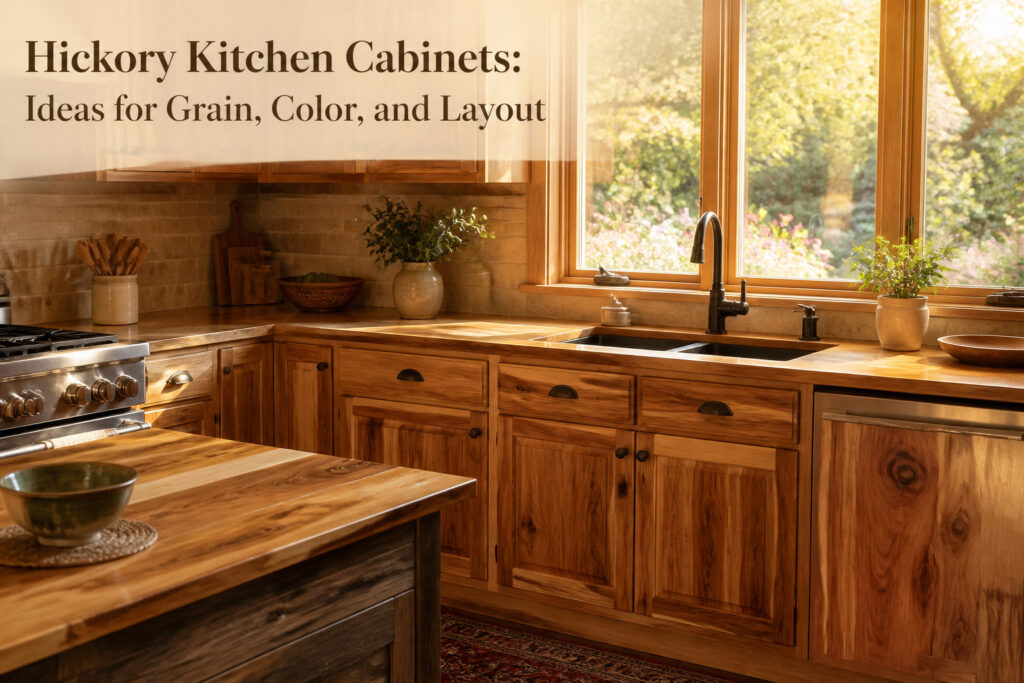
Hickory kitchen cabinets are built from one of the hardest native North American woods, with a Janka rating of 1,820 that outperforms oak on dent resistance.
That density comes with tradeoffs: the wood is heavier, harder to machine, and runs $150–$250 per linear foot before installation.
What you gain is decades of square doors and smooth drawers in a kitchen that actually gets used hard, provided the bold grain and streaked color variation are what you want living at center stage.
1. Why Hickory Lasts
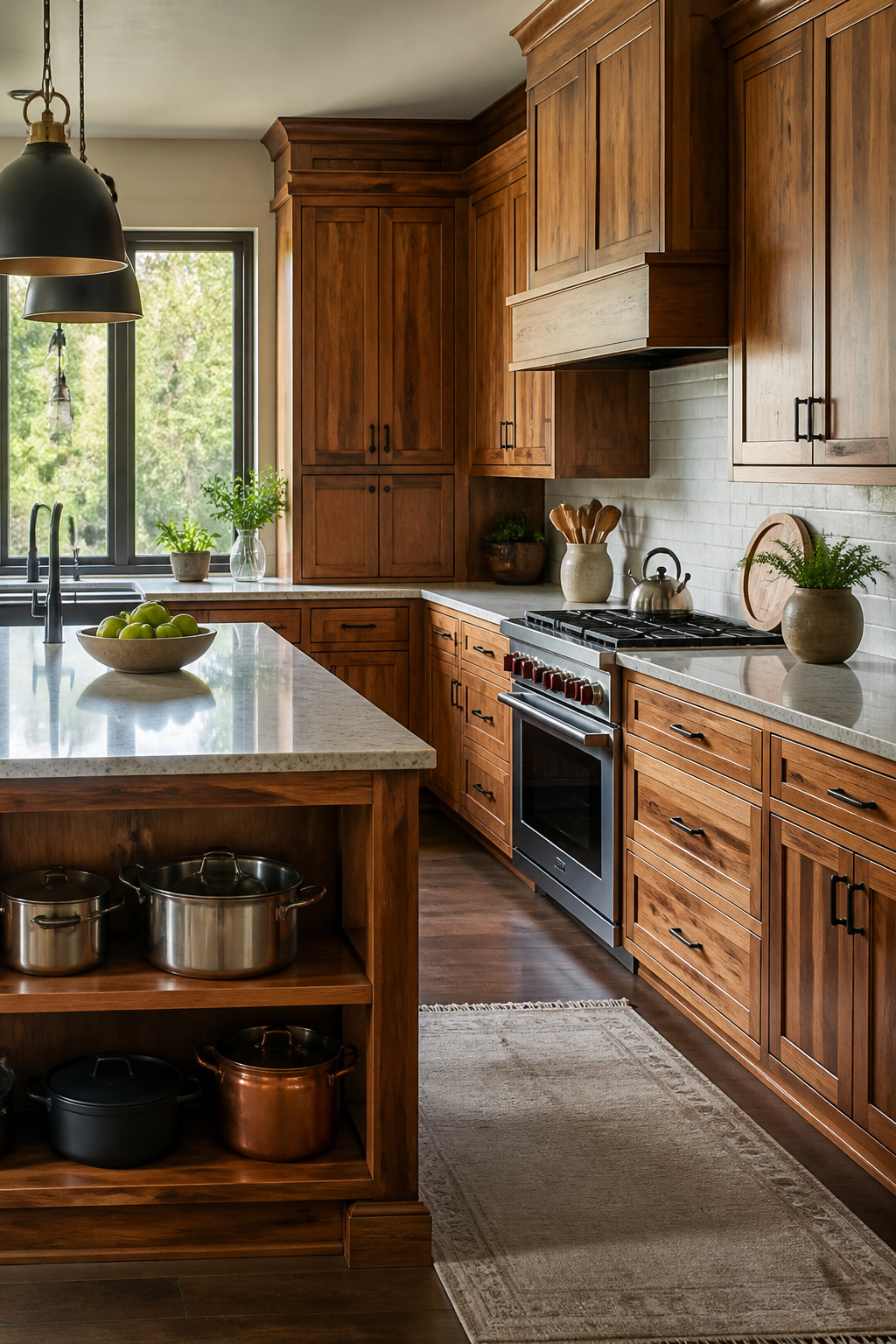
Hickory carries a Janka Hardness Rating of 1,820, which puts it among the hardest woods native to North America and well above oak on dent resistance.
That density is what lets these cabinets survive decades in a hardworking kitchen, shrugging off the impacts that softer hardwoods absorb as permanent marks.
Hickory has a Janka Hardness Rating of 1,820, making it one of the hardest woods native to North America. It’s also dense and moisture resistant, so it will stand the test of time even in hardworking kitchens.
For the reader mid-project, that hardness translates to cabinets that still close square and drawers that still glide after years of slammed doors and heavy pots.
The tradeoffs are real though: the same density that resists dents makes hickory heavier than maple or oak, harder to machine cleanly, and more expensive than softer alternatives.
Installation takes more hands or more care, and not every cabinet shop will quote it without a premium. Whether that cost earns itself back depends on how hard you plan to live in the kitchen.
Recommended Products

VERSATILE AND DECORATIVE: The Hickory Hardware cabinet hinge boasts a beautiful finish that matches seamlessly with White decorative hardware, providing an elegant upgrade to your cabinets. Its semi-concealed design ensures a stylish appearance, enhancing both traditional and modern cabinet styles.

Modern Knobs for Cabinets and Drawers: These drawer knobs feature a contemporary square design that stands out from traditional kitchen cabinet knobs while maintaining a simple, elegant silhouette, perfect for updating your cabinet hardware

This cabinet door shown in Red Oak Select with a clear finish.
2. Reading Hickory’s Grain
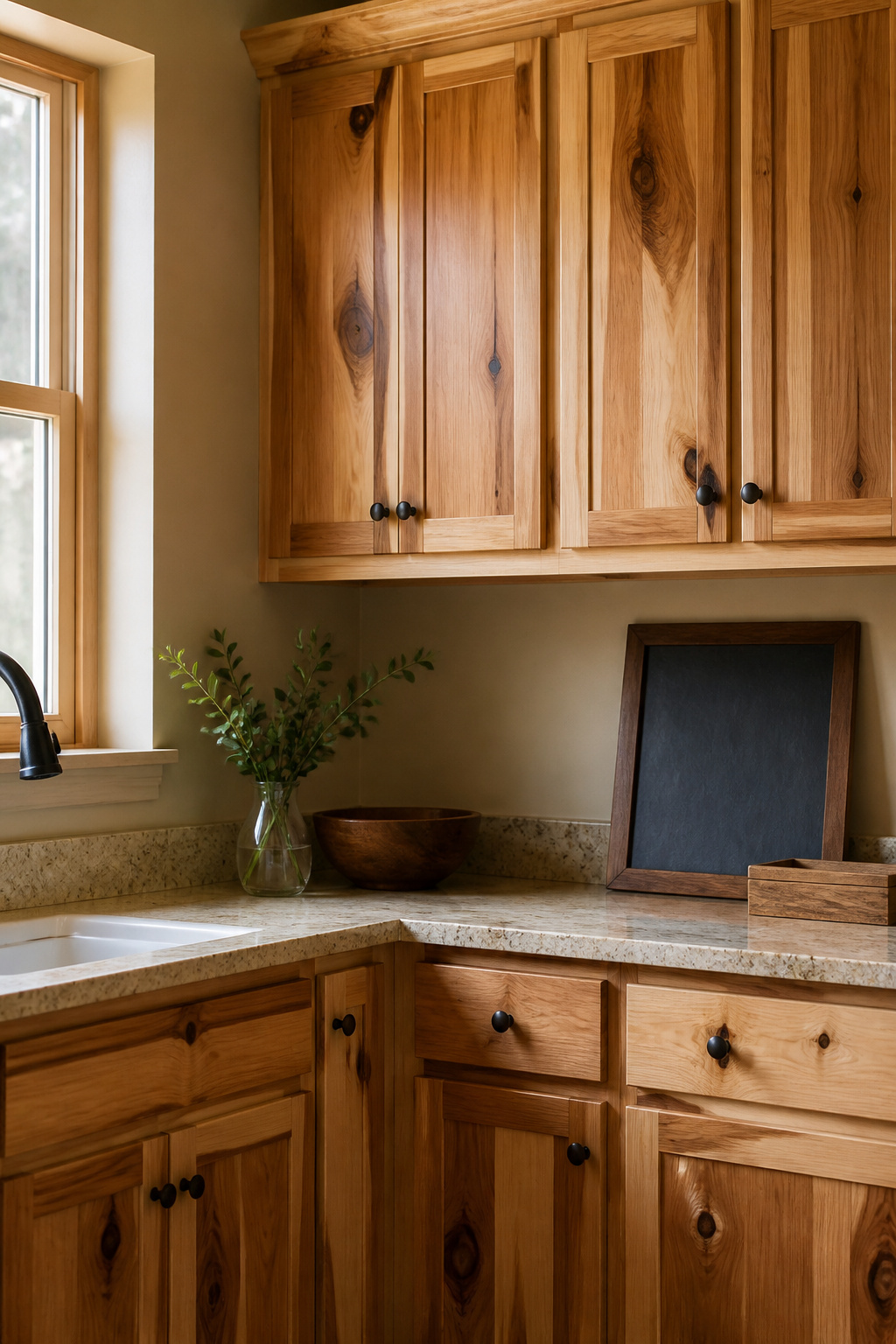
Hickory’s grain reads like a map of the tree itself. Random waves, knots, and irregular swirls track the jagged way branches grew, while streaks between light sapwood and deep brown heartwood make no two boards match.
That natural contrast is not a flaw; it is the reason people choose this wood over more uniform hardwoods.
A clear or light stain finish works best because anything heavier fights what hickory wants to show. Medium stain can soften the contrast if the variation feels too loud, but paint wastes the whole point.
The same inconsistency that gives each cabinet its own fingerprint also makes matching a challenge across a full kitchen run.
Rustic hickory leans even harder into this by selecting boards with extra mineral streaks and tight knots, amplifying the drama rather than hiding it.
The look still fits current kitchens, though not every style. Mid-century modern and upscale farmhouse spaces carry it as well as cabins and country homes.
What hickory offers is texture without artificial distressing, a surface that feels real rather than overly polished.
For renters or first-home owners doing one project a year, the question is whether you want that much personality across every cabinet, or whether the variation becomes tiring at kitchen scale.
Recommended Products

HIGH-QUALITY, SOLID METAL CORE: Crafted with a solid metal core, our cabinet pulls and knobs stand far above the hollow knockoffs flooding the market. Embrace the difference as you feel the weight and sturdiness in your hands, experiencing the unmistakable mark of true high-end hardware. Built to last, these pulls exude unparalleled durability, ensuring they withstand the test of time and daily use. Elevate your space with our superior, solid core pulls and knobs- the epitome of elegance, strength, and unmatched craftsmanship.

HIGH-QUALITY, SOLID METAL CORE: Crafted with a solid metal core, our cabinet pulls and knobs stand far above the hollow knockoffs flooding the market. Embrace the difference as you feel the weight and sturdiness in your hands, experiencing the unmistakable mark of true high-end hardware. Built to last, these pulls exude unparalleled durability, ensuring they withstand the test of time and daily use. Elevate your space with our superior, solid core pulls and knobs- the epitome of elegance, strength, and unmatched craftsmanship.
HIGH-QUALITY, SOLID METAL CORE: Crafted with a solid metal core, our cabinet pulls and knobs stand far above the hollow knockoffs flooding the market. Embrace the difference as you feel the weight and sturdiness in your hands, experiencing the unmistakable mark of true high-end hardware. Built to last, these pulls exude unparalleled durability, ensuring they withstand the test of time and daily use. Elevate your space with our superior, solid core pulls and knobs- the epitome of elegance, strength, and unmatched craftsmanship.
3. Modern Hickory Kitchens
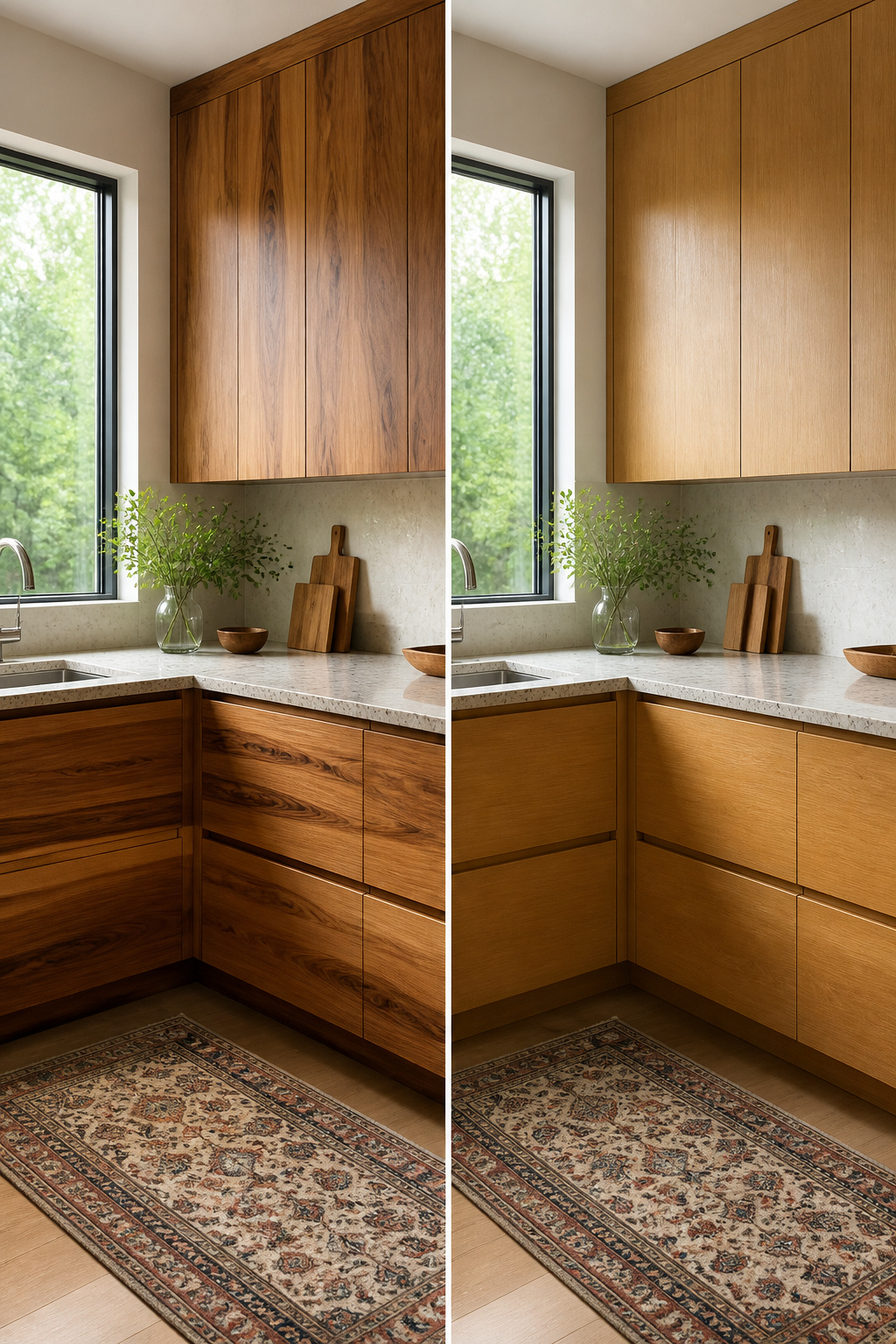
Flat-panel doors change the whole conversation around hickory. The wood’s grain is already doing the visual work; slab doors step back and let it.
I kept the hardware minimal on the last kitchen I planned this way, and the difference was immediate. No raised panels, no decorative edges, just the clean face and the streaked grain running uninterrupted.
The finish matters as much as the door style. A clear natural coat keeps the color honest; staining hickory toward something darker usually fights the wood rather than helping it.
Pair that with quartz or light granite countertops and the kitchen stays airy instead of heavy. The contrast softens without hiding the texture.
For hardware, matte black or brushed nickel pulls read contemporary against the grain. Oil-rubbed bronze tips the look toward farmhouse; satin brass warms it up without going vintage.
I skip antique bronze entirely in this combination; it nudges hickory back toward rustic territory the flat panels just escaped.
Mixing materials helps too. Running hickory on the island alone, with painted perimeter cabinets, keeps the wood present but not loud.
The eye gets the texture in one controlled block instead of wrapping every wall.
Recommended Products

PROTECT WOOD SURFACES – Minwax Polycrylic Protective Finish protects and adds beauty to your interior wood projects, including woodwork, furniture, doors and cabinets. The clear top coat protects against scratches, spills, dirt and more.
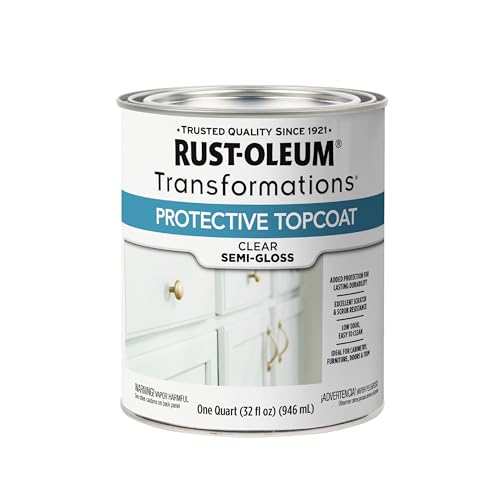
SCRATCH & STAIN RESISTANT PROTECTION: Resistance to everyday scratches and stains, providing a durable protective layer for interior painted, stained, or bare wood surfaces
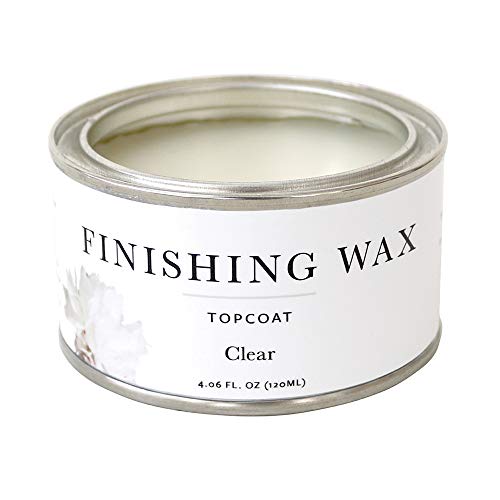
Durable Protection: Seals and protects interior furniture, cabinetry, and home decor. Suitable for painted, stained, or raw wood surfaces.
4. Natural and Rustic Styles
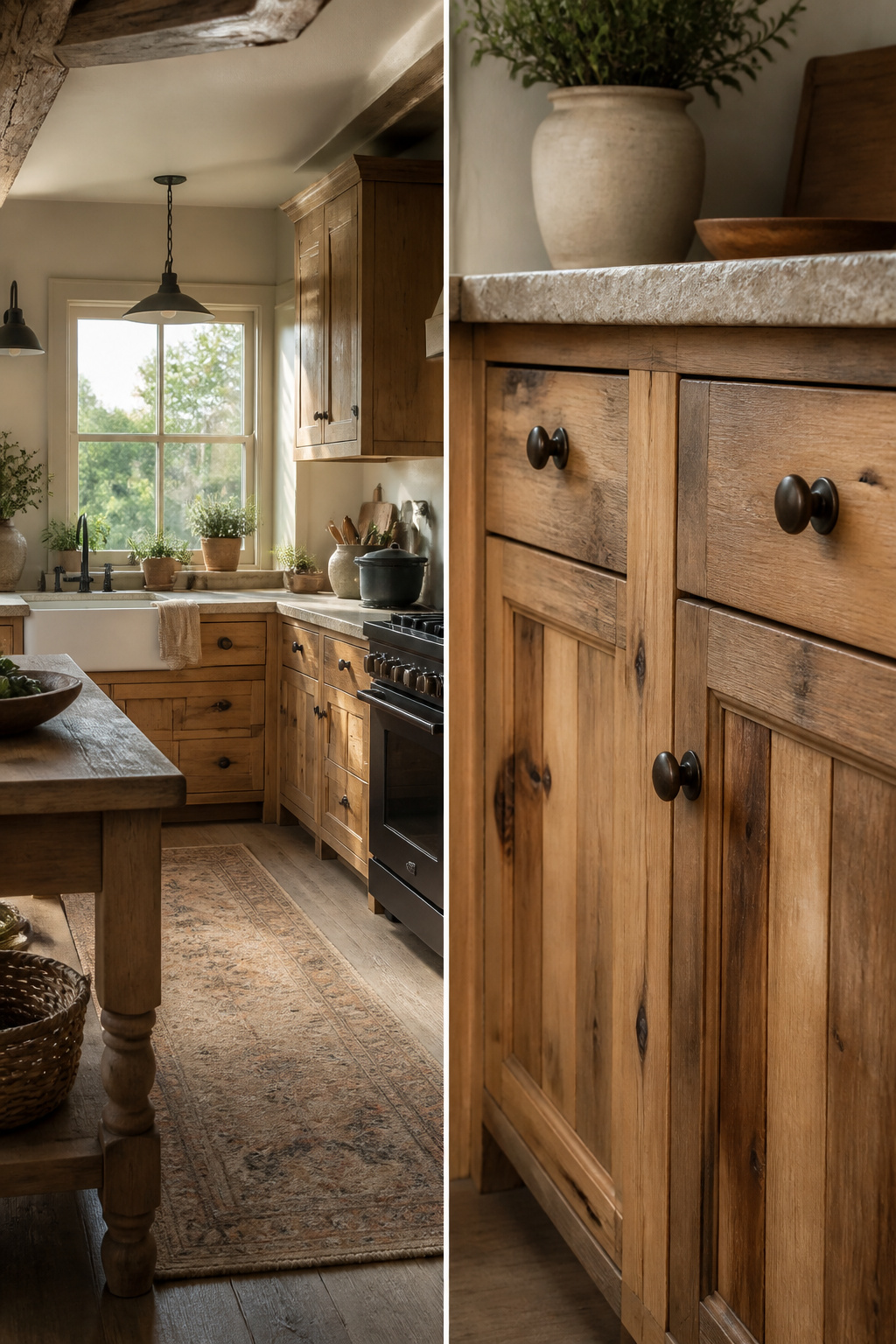
Hickory’s natural finish is the look most people picture first, and for good reason.
The wood does the heavy lifting: heartwood and sapwood streak across each board in vivid contrast, with knots and random waves from the tree’s jagged branch structure left fully visible.
A clear or lightly tinted finish keeps all of that variation on display rather than flattening it into something uniform. This is the safest starting point if you want hickory cabinets that read as intentional rather than busy.
Rustic hickory pushes the same idea further by selecting boards with extra mineral streaks, tight knots, and pecks. Hand-scraped or distressed surfaces add physical texture to match the visual chaos.
The result feels less like furniture and more like something pulled from a decades-old cabin.
That works beautifully in spaces that already have farmhouse sinks, vintage lighting, or other weathered elements, but it can feel overwhelming if the rest of the kitchen skews sleek.
Farmhouse adaptations tame the wildness through door style rather than wood grade. Beadboard panels or Shaker frames give the eye a predictable rhythm to rest on, which helps balance hickory’s natural irregularity.
Flat or simple door styles generally work better than ornate ones; the wood already carries enough interest that carved details compete rather than complement. Quartz or light granite countertops soften the contrast further, grounding the cabinets without fighting them.
Recommended Products

WOOD GEL STAIN – Minwax Gel Stain is specifically designed to give you full control over the staining process and help you achieve beautiful results. Recommended uses include woodwork, furniture, doors, molding, trim, cabinets, and accessories.

Mohawk Ultra Mark Wood Stain Touch Up Marker, Oak, Hickory, Nutmeg #2394500, M281-0336, 1 Count touch up paint pen for furniture and wooden surfaces

THICK, NO-DRIP FORMULA: Less mess than traditional wood stains and applies smoothly on horizontal and vertical surfaces including wood, metal, fiberglass and more
5. Colors That Settle Hickory Down
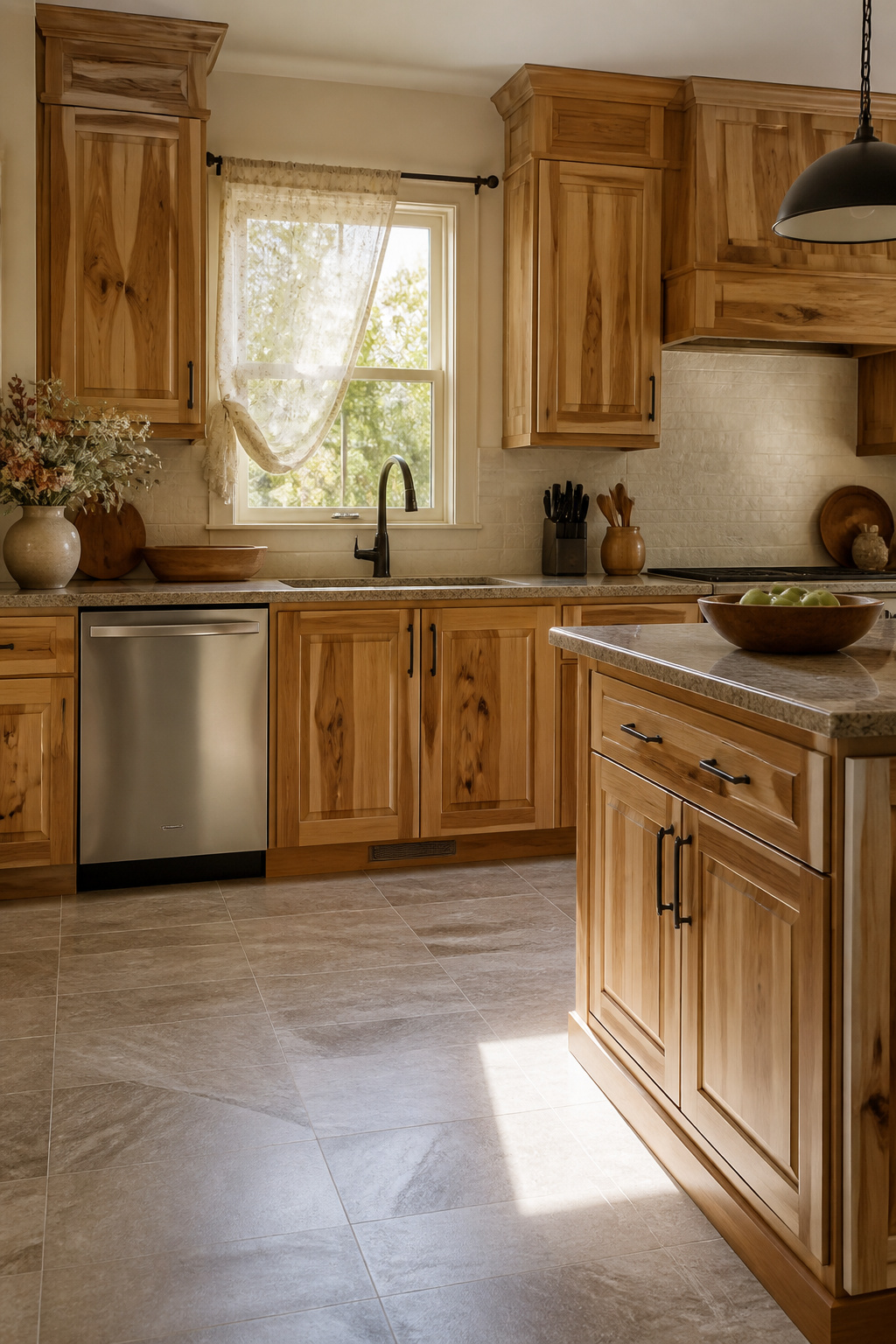
Warm neutrals settle hickory better than anything else. Cream, taupe, and beige let the grain show without turning the kitchen into a wood box, which is the risk when every surface competes with those streaks.
I learned that the hard way in my first rental, where a butter-yellow wall turned the cabinets orange by afternoon light.
Soft greens work if you stay earthy. Sage or olive pick up the organic side of hickory without pushing rustic into cabin territory.
Muted blues like slate or dusty navy do something different: they cool the room down and make the golden undertones in the wood read as intentional, not dated. It is a modern move, but it needs restraint.
Go too saturated and the wall starts fighting the grain for attention.
Light grays and greige tone the bold streaks down for transitional kitchens.
Off-white or antique white brightens the space and softens the visual weight, which matters in smaller galley layouts where hickory can feel like a lot of wood in not much room.
What fails is the warm end of the spectrum. Strong oranges and yellows double down on what hickory already brings, and the result reads as leftover from another decade.
If the wall color looks good against honey oak, it is probably wrong for hickory.
Recommended Products

HIGH-QUALITY, SOLID METAL CORE: Crafted with a solid metal core, our cabinet pulls and knobs stand far above the hollow knockoffs flooding the market. Embrace the difference as you feel the weight and sturdiness in your hands, experiencing the unmistakable mark of true high-end hardware. Built to last, these pulls exude unparalleled durability, ensuring they withstand the test of time and daily use. Elevate your space with our superior, solid core pulls and knobs- the epitome of elegance, strength, and unmatched craftsmanship.

Durable Rustic Solid Cast Pulls, with Modern Hammered Texture

HIGH-QUALITY, SOLID METAL CORE: Crafted with a solid metal core, our cabinet pulls and knobs stand far above the hollow knockoffs flooding the market. Embrace the difference as you feel the weight and sturdiness in your hands, experiencing the unmistakable mark of true high-end hardware. Built to last, these pulls exude unparalleled durability, ensuring they withstand the test of time and daily use. Elevate your space with our superior, solid core pulls and knobs- the epitome of elegance, strength, and unmatched craftsmanship.
6. Countertops That Balance the Weight
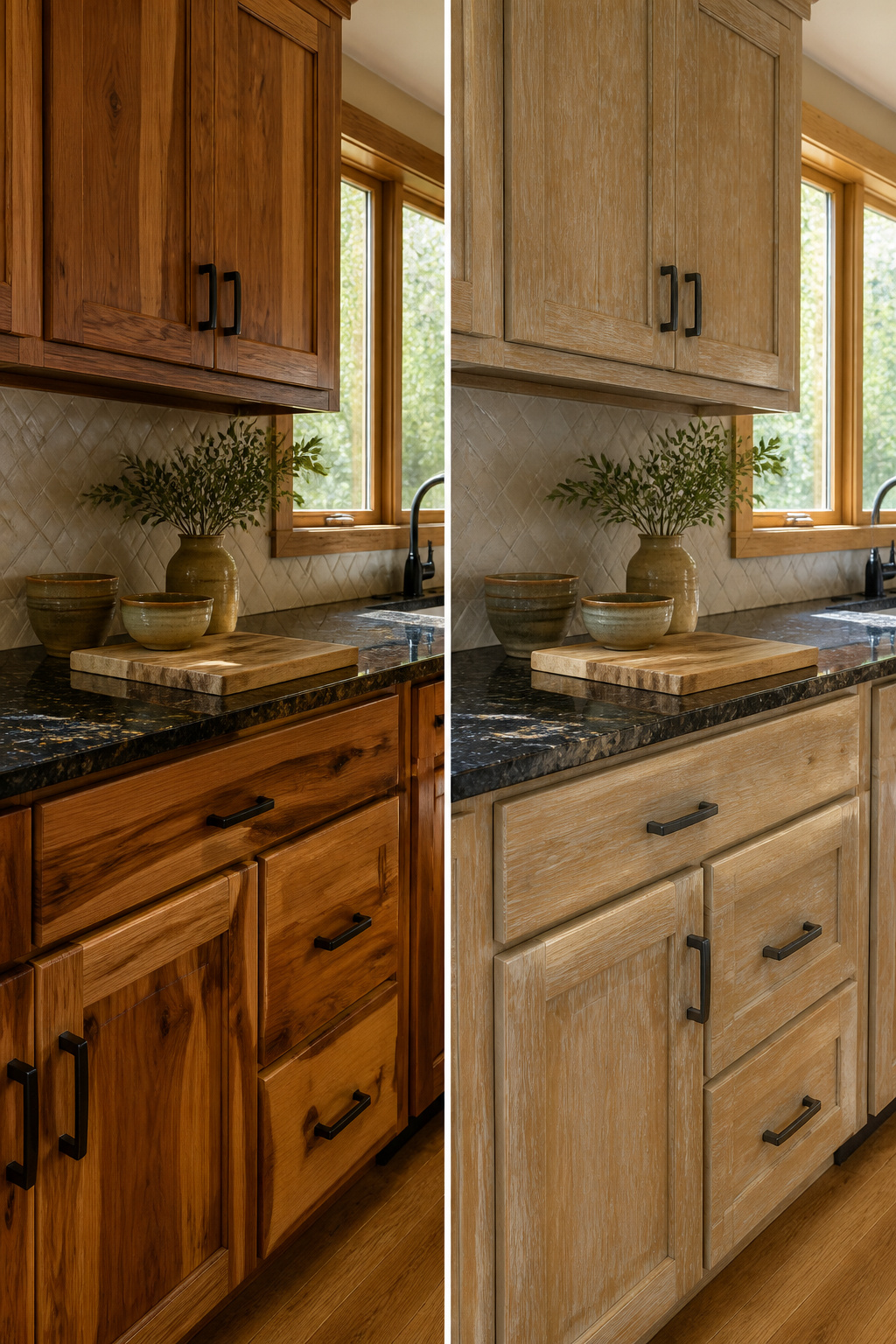
Black granite pulls hickory back to earth. The wood wants to run wild with streaks and knots, and a solid dark counter sits underneath it like a pause in the conversation.
I have seen kitchens where the grain felt chaotic until the counters went in, and then the whole room settled.
White quartz does the opposite job. It opens the space up and lets the grain read as texture instead of clutter.
A marble-look quartz works especially well if you want something closer to Scandinavian restraint; the veining echoes the wood’s movement without competing.
Speckled granite splits the difference, and that is where it gets interesting. A stone that picks up both the blond and the brown streaks in hickory acts like a bridge.
The eye moves from cabinet to counter without the jolt of pure contrast. The risk is busyness on busyness, so the pattern needs to be small and tight rather than bold.
A tight speckle reads as a solid from across the room; a loose one just adds another layer of noise.
Recommended Products
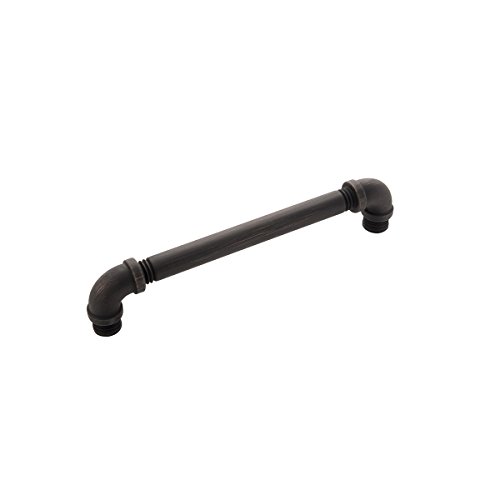
True To The Inspiration: The Pipeline collection is rustic and industrial. This collection pairs well with the industrial décor that is popular today and can be used in more playful and whimsical applications.

DESIGNED IN THE USA SINCE 1893: Our designers reside in our corporate office in Grand Rapids, Michigan. Over the years our designers have sketched, molded and created over 50 unique collections. At Hickory Hardware we offer a range of high-quality and stylish options to choose from. Mix and match pulls, cup pulls, and knobs to create a stunning and cohesive look in your kitchen or bathroom.
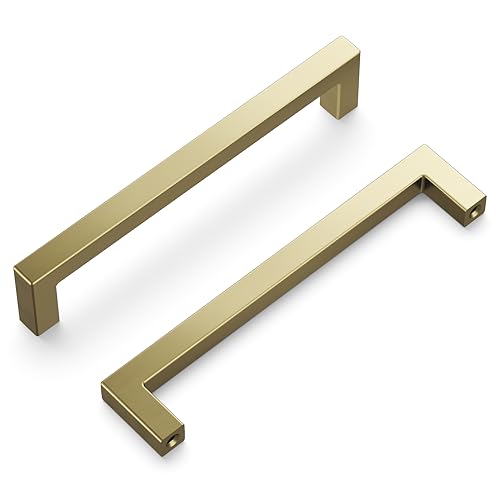
HIGH-QUALITY, SOLID METAL CORE: Crafted with a solid metal core, our cabinet pulls and knobs stand far above the hollow knockoffs flooding the market. Embrace the difference as you feel the weight and sturdiness in your hands, experiencing the unmistakable mark of true high-end hardware. Built to last, these pulls exude unparalleled durability, ensuring they withstand the test of time and daily use. Elevate your space with our superior, solid core pulls and knobs- the epitome of elegance, strength, and unmatched craftsmanship.
7. Flooring Under Hickory Cabinets
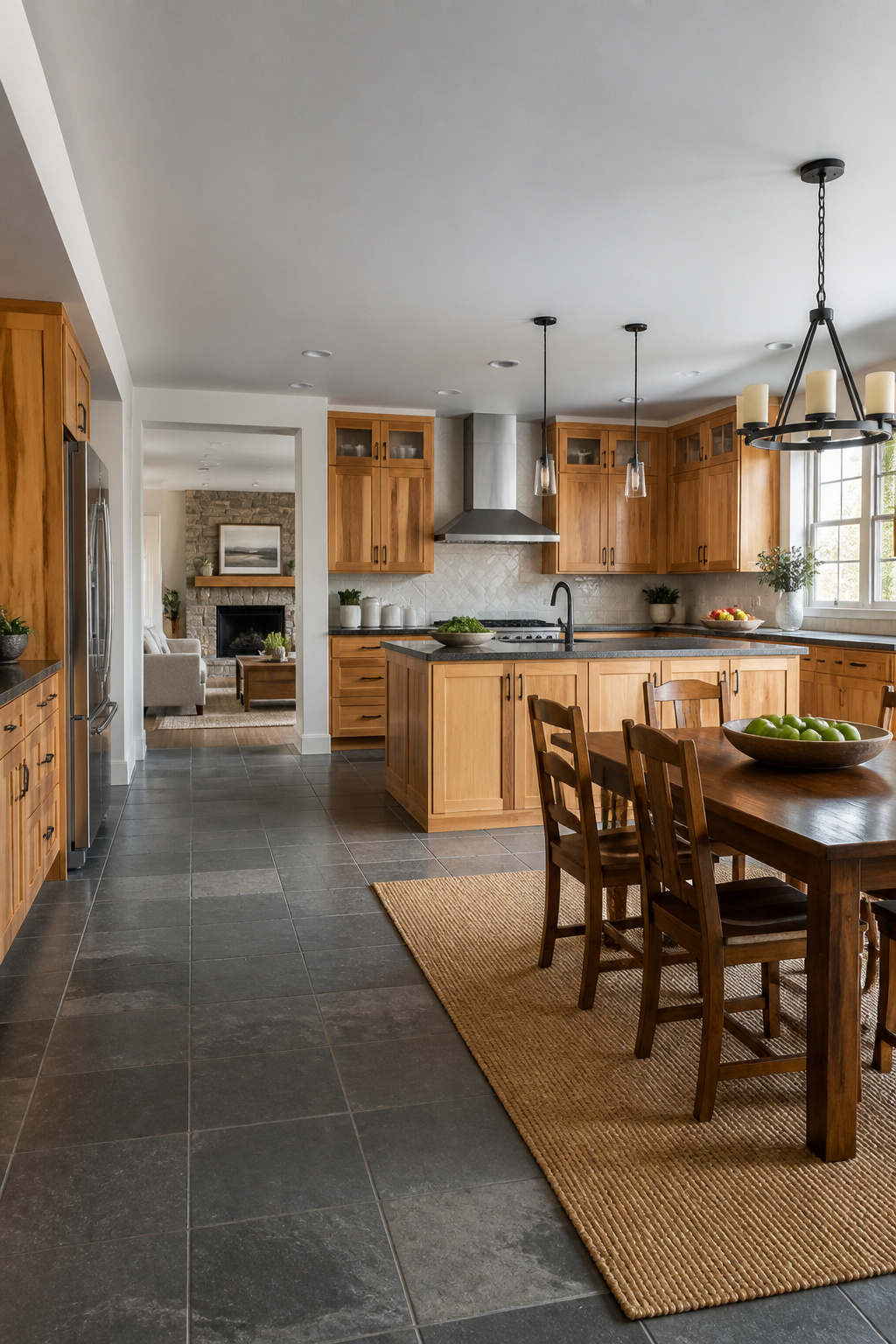
Hickory’s dramatic grain, with its streaks from light cream to deep brown, makes flooring choice a judgment call rather than a default. Wood flooring can work, but matching hickory floor to hickory cabinet flattens both into a single visual plane.
White oak or birch in a lighter tone reads as intentional contrast and lets the cabinet grain stay the star. Tile offers an easier path.
Beige, taupe, or slate gray stone-look tiles settle the kitchen without competing, and the texture suits rustic hickory styles without echoing the wood pattern. Laminate and vinyl both reward renters and first-home owners with tighter budgets.
In laminate, cool browns or grays avoid the clash that warm competing grains create.
Luxury vinyl in weathered or light wood tones handles the water and traffic a real kitchen sees, and the lighter color keeps the base of the room from feeling heavy against those bold cabinet faces.
The rule is simple: contrast the tone, never compete with the pattern.
Water resistance matters more with hickory than with some cabinets because the busy grain already draws the eye; you do not need scuffed or water-damaged flooring adding to the visual noise. Cleanability follows the same logic.
A floor that shows every crumb fights a cabinet that shows every streak, so mid-tone solids or subtle variegation in tile or vinyl read calmer than high-contrast plank patterns.
Where flooring meets cabinet base, a clean line of contrast reads modern, while a tone closer to the hickory’s lighter streaks softens the transition and suits natural or farmhouse moods.
Recommended Products

HIGH-QUALITY, SOLID METAL CORE: Crafted with a solid metal core, our cabinet pulls and knobs stand far above the hollow knockoffs flooding the market. Embrace the difference as you feel the weight and sturdiness in your hands, experiencing the unmistakable mark of true high-end hardware. Built to last, these pulls exude unparalleled durability, ensuring they withstand the test of time and daily use. Elevate your space with our superior, solid core pulls and knobs- the epitome of elegance, strength, and unmatched craftsmanship.
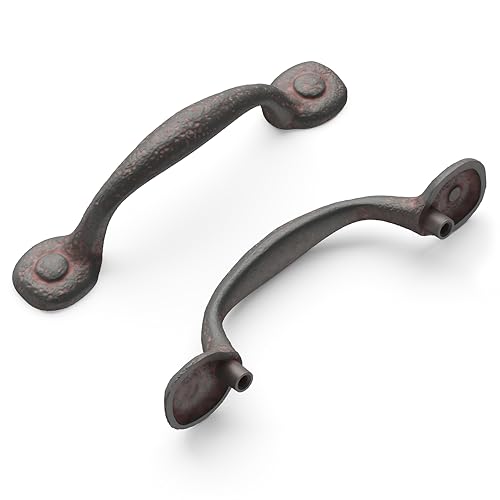
HIGH-QUALITY, SOLID METAL CORE: Crafted with a solid metal core, our cabinet pulls and knobs stand far above the hollow knockoffs flooding the market. Embrace the difference as you feel the weight and sturdiness in your hands, experiencing the unmistakable mark of true high-end hardware. Built to last, these pulls exude unparalleled durability, ensuring they withstand the test of time and daily use. Elevate your space with our superior, solid core pulls and knobs- the epitome of elegance, strength, and unmatched craftsmanship.

HIGH-QUALITY, SOLID METAL CORE: Crafted with a solid metal core, our cabinet pulls and knobs stand far above the hollow knockoffs flooding the market. Embrace the difference as you feel the weight and sturdiness in your hands, experiencing the unmistakable mark of true high-end hardware. Built to last, these pulls exude unparalleled durability, ensuring they withstand the test of time and daily use. Elevate your space with our superior, solid core pulls and knobs- the epitome of elegance, strength, and unmatched craftsmanship.
8. Hardware Finishes That Work
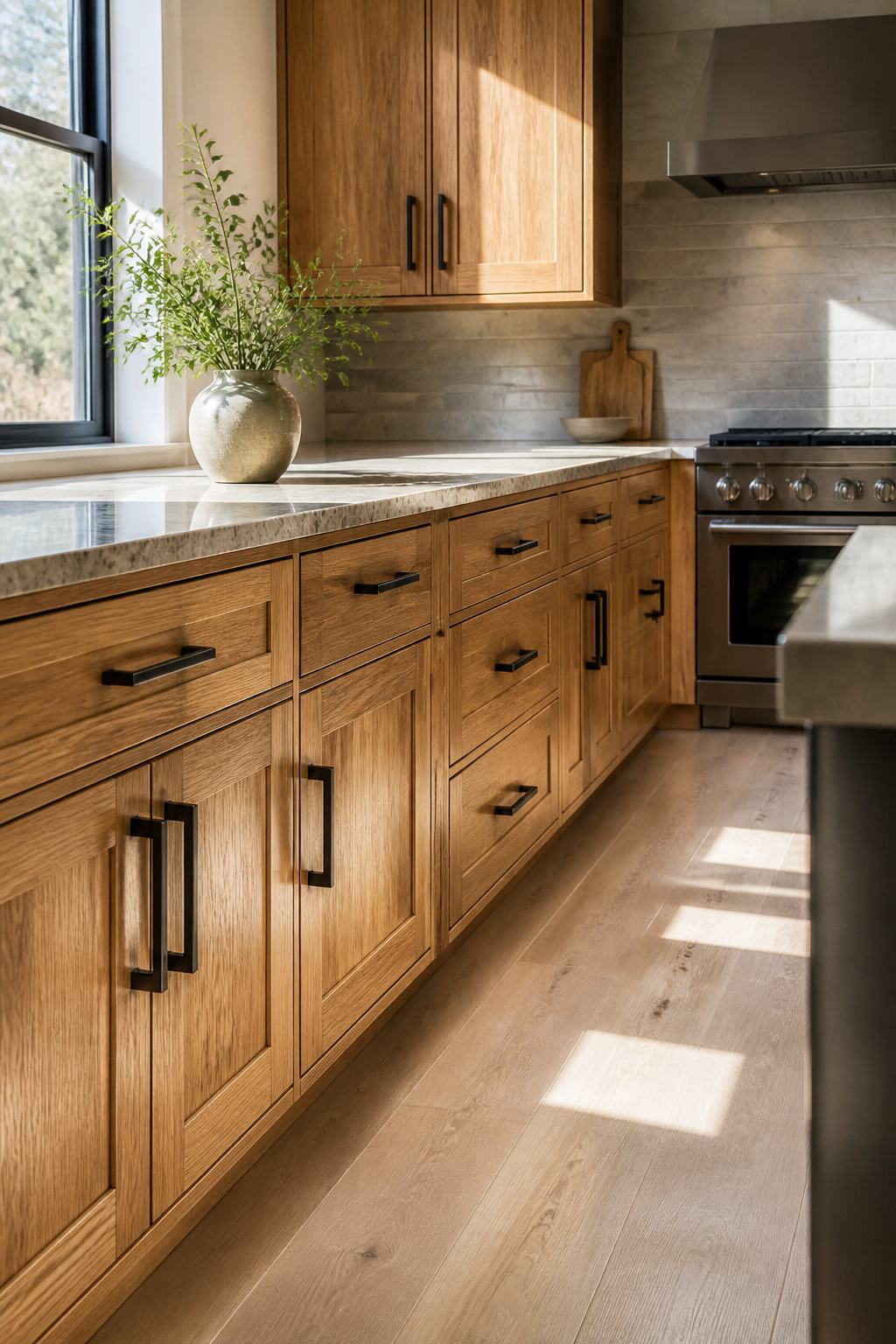
Matte black hardware against hickory’s natural grain creates a striking contrast that works best in rustic or industrial kitchens, though on lighter stains like Praline or Barley it can feel too aggressive for smaller spaces.
Brushed nickel offers more flexibility, reading clean and modern against both golden glow and near-black pockets without competing for attention.
For farmhouse or vintage looks, oil-rubbed bronze adds depth and aged character that dark Slate finishes absorb; the same bronze on Natural finish hickory pops distinctly, while on Saddle it nearly disappears into shadowy character.
Satin brass threads a narrow middle path, subtle enough for modern applications yet warm enough to complement rustic kitchens. Antique bronze leans fully into the warmth, enhancing rich tones without the starkness of matte black.
The real decision comes down to whether you want the hardware to recede or to punctuate: brushed nickel and antique bronze tend to settle back against busy grain, while matte black and satin brass insist on being noticed.
Recommended Products
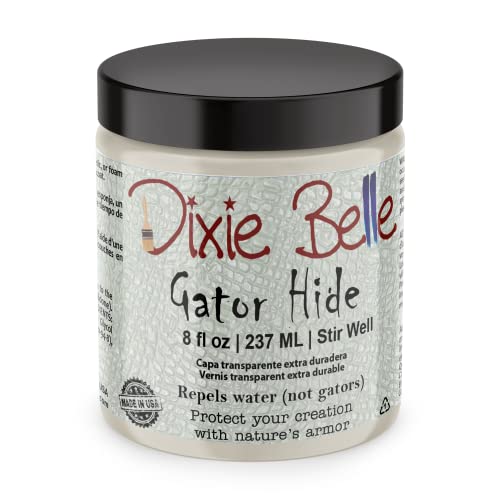
TOUGHEST TOPCOAT ? As the name implies, this polyacrylic topcoat is tough as Gator?s Hide. Add Gator Hide to your chalk painted kitchen or bathroom cabinets for long lasting durability. Paint on almost any surface including wood, metal, laminate, and glass. On average, each 8 oz of Gator Hide should cover about 30 square feet using our recommended three very thin coats.

Eco-Friendly, Low VOC: Crafted with an ultra-low VOC formula, our 4oz clear coat keeps your creative space fresh and inviting. Enjoy sealing your projects without worrying about harsh smells or chemicals.
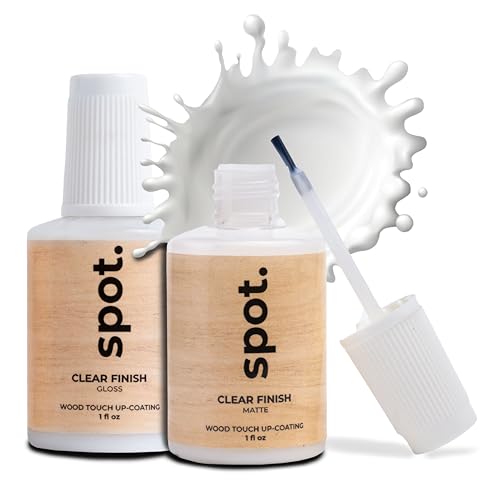
Seal and Protect Wood Stain Repairs: Includes one matte and one gloss clear coat designed to seal stained touch-up areas while preserving wood color and grain
9. Keeping Hickory Looking Right
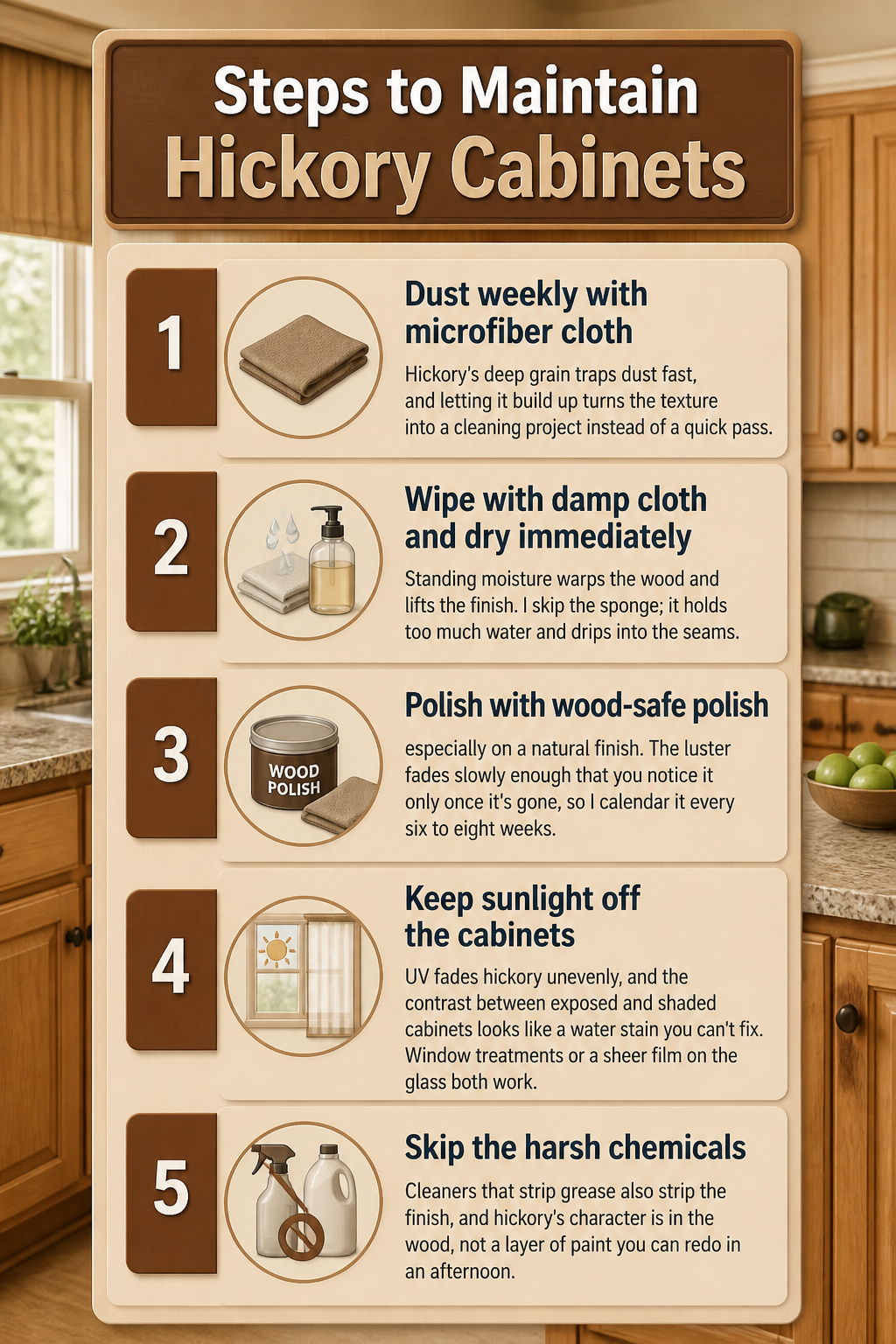
- Dust weekly with a soft microfiber cloth. Hickory’s deep grain traps dust fast, and letting it build up turns the texture into a cleaning project instead of a quick pass.
- Wipe with a damp cloth and mild soap, then dry immediately. Standing moisture warps the wood and lifts the finish. I skip the sponge; it holds too much water and drips into the seams.
- Polish occasionally with a wood-safe polish, especially on a natural finish. The luster fades slowly enough that you notice it only once it’s gone, so I calendar it every six to eight weeks.
- Keep direct sunlight off the faces. UV fades hickory unevenly, and the contrast between exposed and shaded cabinets looks like a water stain you can’t fix. Window treatments or a sheer film on the glass both work.
- Skip the harsh chemicals. Cleaners that strip grease also strip the finish, and hickory’s character is in the wood, not a layer of paint you can redo in an afternoon.
Recommended Products

High-quality pigments produce rich, dark colors; Can be hand-applied or sprayed.

Experience the fast and easy way to finish wood

Restor-A-Finish is a unique finish-penetrating formula that restores wood finishes while blending out minor scratches, blemishes and abrasions
10. Hickory in a Small Kitchen
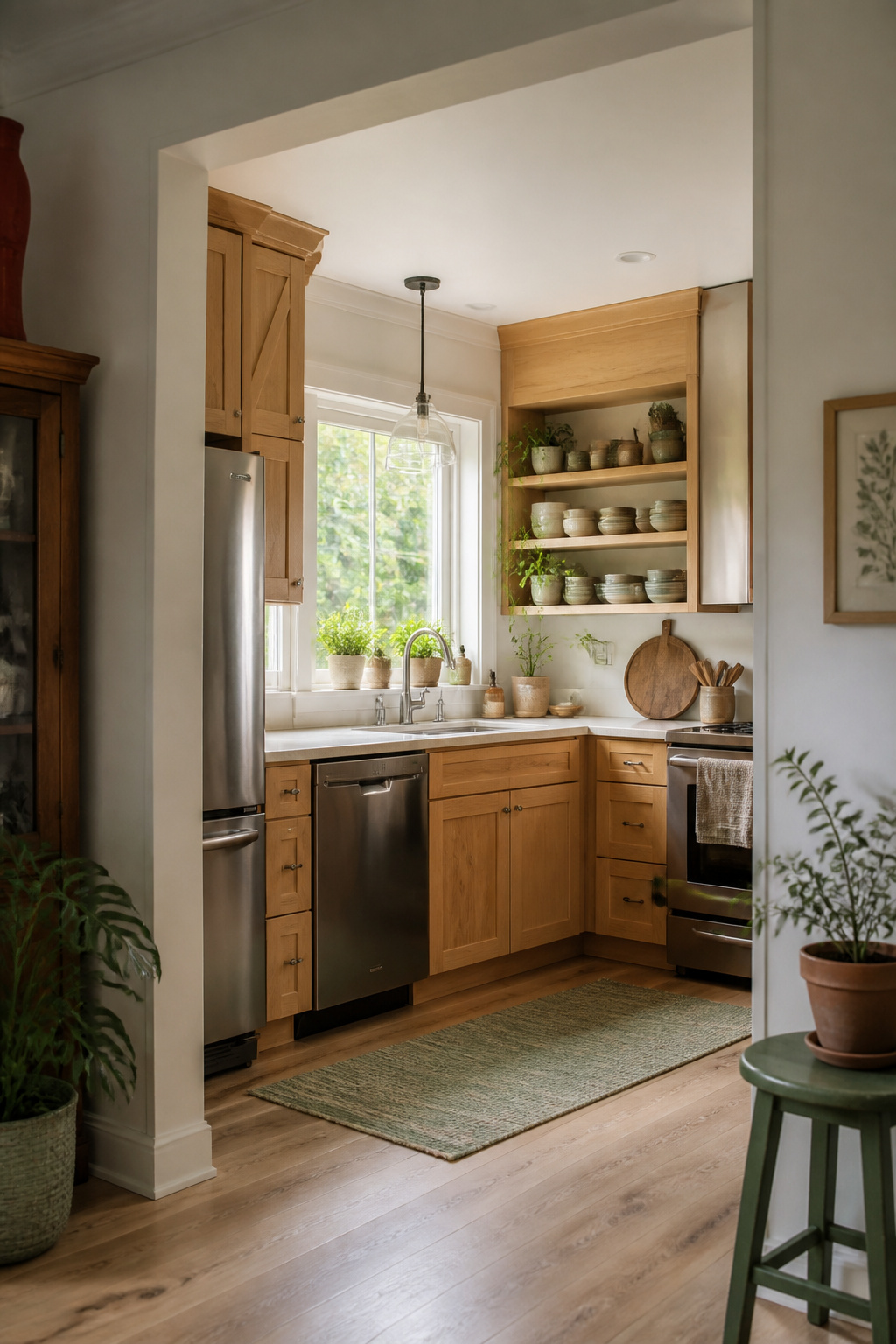
Light-stained or natural hickory is the safer call in a tight kitchen.
The paler finish bounces what light you have back into the room instead of drinking it up, and that matters when your square footage is already working against you.
I have seen darker stains pull off the same trick, but only where the lighting budget gets as much attention as the cabinets themselves.
Under-cabinet LEDs are non-negotiable in that scenario; they carve out actual workspace from what would otherwise be a shadow line across your counters.
Glass-front uppers or a run of open shelving do more than show off dishes. They let your eye travel through the cabinet instead of stopping at the face, which reads as depth you do not actually own.
The hickory frame still brings its warmth, but the glass keeps the wood from walling you in.
The harder question is when hickory’s own personality becomes the problem. Compared to maple, it is more textured and less uniform; next to oak, harder and more visually dynamic.
That boldness needs room to breathe. In a galley kitchen where cabinets run floor to ceiling on both sides, the grain can start to feel like wallpaper with an opinion.
If the layout forces hickory onto every vertical surface, a painted island or a section of slab-front uppers gives the eye somewhere to rest. Otherwise you are living inside the wood’s drama, and not every small kitchen can handle that.
Recommended Products

All essential mounting hardware included for an effortless installation.


Solid Rustic Hickory Front with Handcrafted Detail: Features solid hickory doors, a faux drawer front, and a face frame that highlights rich natural grain and tonal variation. Brings authentic rustic character to kitchens, cabins, or RVs with a one-of-a-kind, hardwood finish.
What Hickory Costs
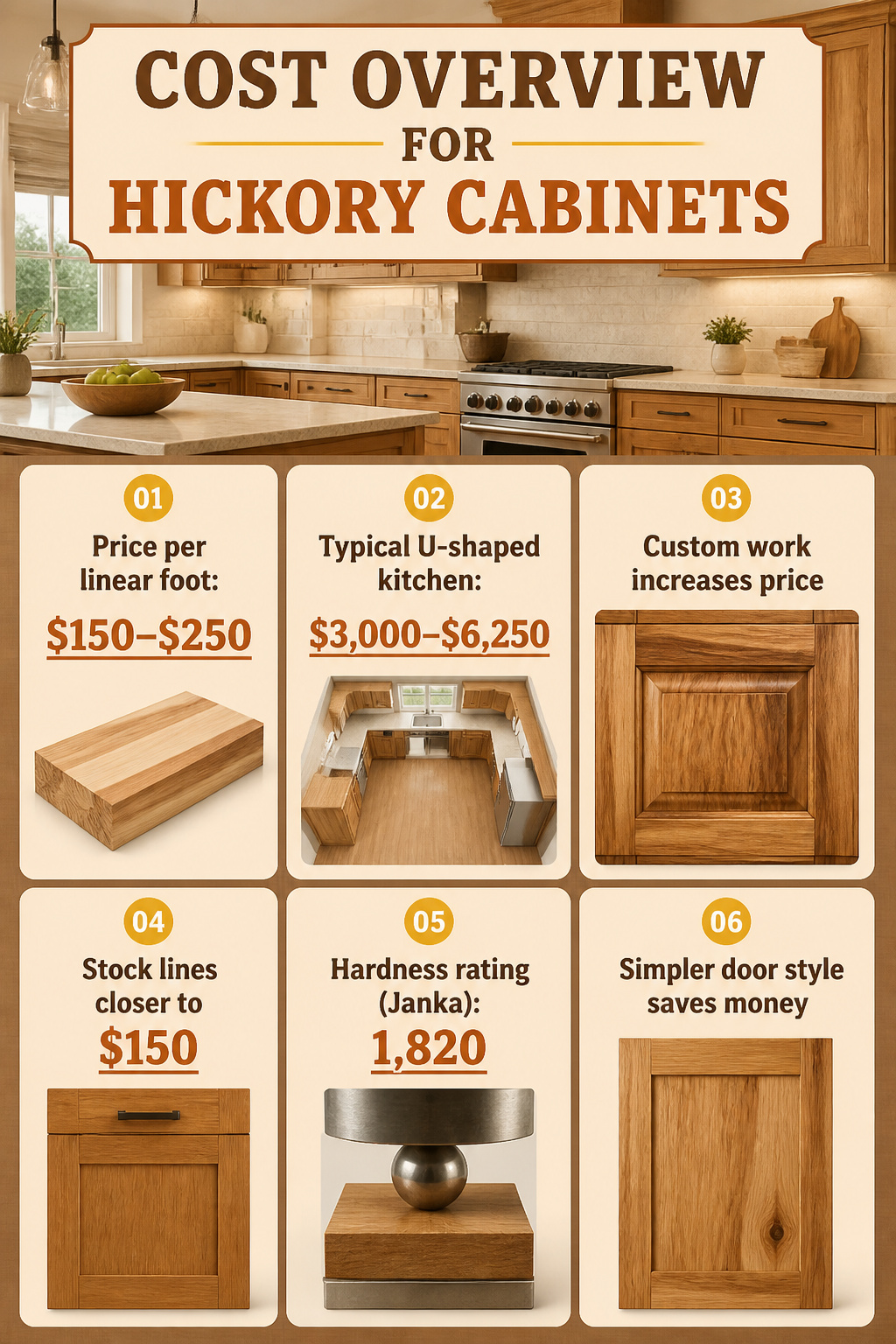
Hickory runs $150–$250 per linear foot, which puts it above oak or maple for a reason: the wood’s density.
A Janka hardness rating of 1,820 makes hickory one of the hardest North American species, and that density means harder milling, tougher joinery, and blades that dull faster on the shop floor. Those costs pass through to the price tag.
For a typical U-shaped kitchen running twenty to twenty-five linear feet of cabinets, that range lands somewhere between $3,000 and $6,250 before installation or hardware. Custom work pushes well past the top of that range.
Stock and semi-custom lines keep the math closer to the $150 end, and since hickory’s grain carries so much visual interest on its own, a simpler door style still looks dynamic without the upcharge for elaborate profiling.
That is where I would save first: let the wood do the work rather than paying for decorative detail that competes with it.
Hickory Against Maple, Oak, and Walnut
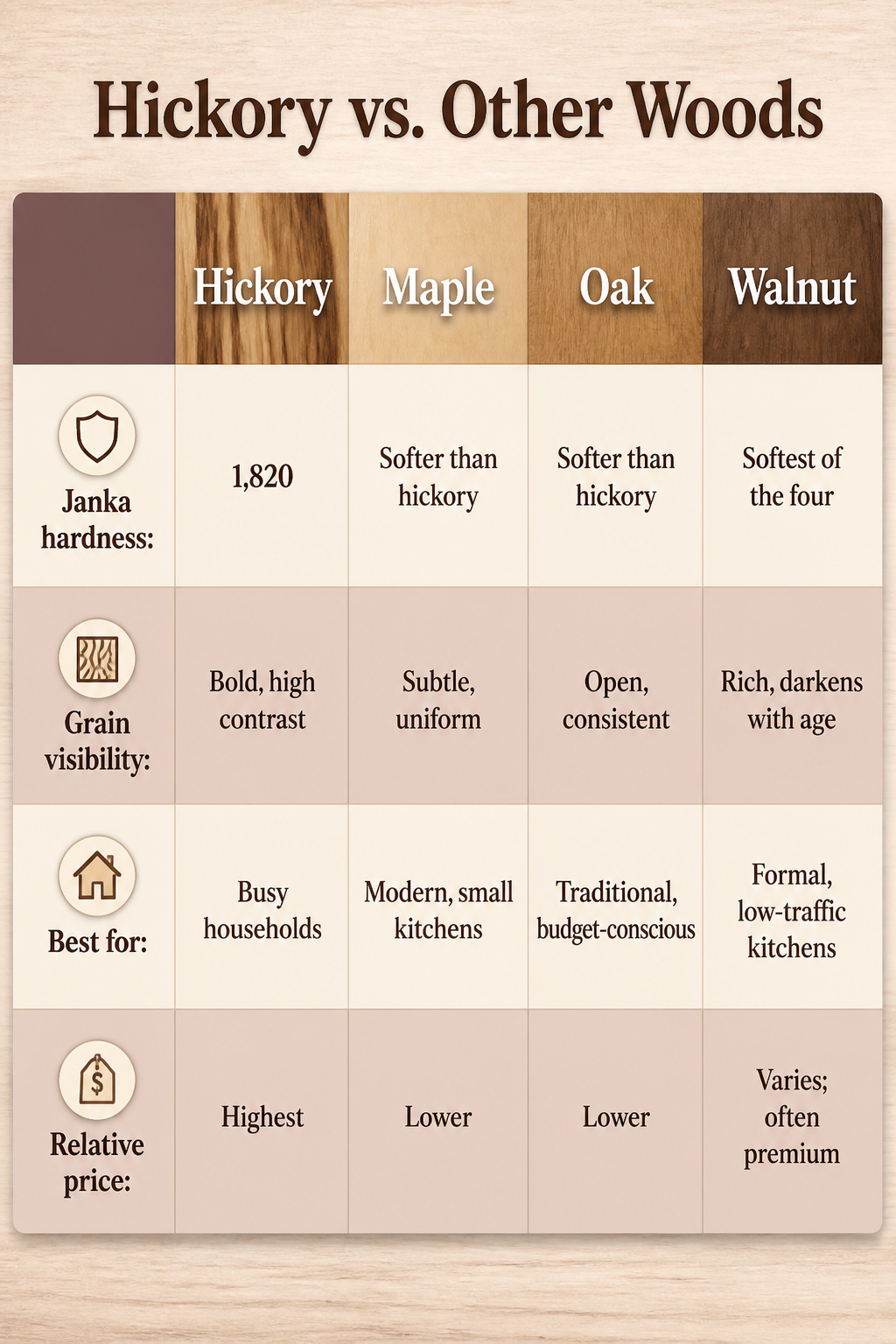
Hickory sits at 1,820 on the Janka hardness scale, which makes it the hardest native North American wood most cabinet shops will stock. Maple and oak run softer, though both still resist dents well enough for most kitchens.
Walnut is softer still, and shows wear faster in a house with kids or a clumsy cook. The tradeoff is workability: hickory’s density chews through bits and blades, so labor runs higher and some shops simply refuse it.
Grain visibility splits the decision more than hardness does. Hickory’s bold, streaky variation hides scratches over time, but the same pattern can look chaotic in a small or modern kitchen.
Maple gives you a cleaner, more uniform face if you want the cabinet style itself to read as the design. Oak’s grain is open and familiar, less dramatic than hickory but more consistent batch to batch.
Walnut darkens and mellows, which suits traditional spaces, though the color shifts as it ages and sun hits it.
Price follows the same order. Hickory cabinets run $150–$250 per linear foot, above oak or maple, and custom work pushes that higher.
You’re paying for the wood and the extra shop time. The resale appeal is real in the right house, but in a starter home or a rental you plan to leave, maple or oak deliver durability without the premium.
| Hickory | Maple | Oak | Walnut | |
|---|---|---|---|---|
| Janka hardness | 1,820 | Softer than hickory | Softer than hickory | Softest of the four |
| Grain visibility | Bold, high contrast | Subtle, uniform | Open, consistent | Rich, darkens with age |
| Best for | Busy households, rustic style | Modern, small kitchens | Traditional, budget-conscious | Formal, low-traffic kitchens |
| Relative price | Highest | Lower | Lower | Varies; often premium |
What you give up choosing hickory is predictability. Every cabinet door will look different, and that variation can fight your countertop or backsplash if you pick competing patterns.
Maple or oak let you control the room’s visual noise. Walnut trades away durability for a sophistication hickory never quite reaches.
My own leaning: hickory wins in a kitchen that actually gets used hard, but if your project is more about looks than living, the extra cost and visual weight are harder to justify.
Frequently Asked Questions
Are hickory cabinets still in style?
u003cpu003eYes, hickory cabinets remain popular in 2025. Designers use them in rustic, farmhouse, and modern organic kitchens because the natural grain and durability never really date themselves.u003c/pu003e u003cpu003eThe wood’s texture reads as authentic rather than trendy, which helps it outlast passing styles.u003c/pu003e
What is the best way to finish hickory kitchen cabinets?
u003cpu003eA clear or light stain finish works best because it lets the wood’s bold grain and natural color variation show through. Medium stain can soften the contrast if needed, but paint wastes hickory’s whole point.u003c/pu003e u003cpu003eHeavy finishes fight what the wood naturally wants to display.u003c/pu003e
What are the disadvantages of hickory wood?
u003cpu003eHickory’s color inconsistency makes matching boards across a full kitchen run difficult. Its density also means heavier cabinets, harder machining, and higher cost than maple or oak.u003c/pu003e u003cpu003eInstallation takes more hands or more care, and some shops charge a premium or refuse the work entirely.u003c/pu003e